HSS Research Institute and David Z. Rosensweig Genomics Research Center, Hospital for Special Surgery, New York, NY 10021, USA.
Institute for Computational Biomedicine and Caryl and Israel Englander Institute for Precision Medicine, Weill Cornell Medicine, New York, NY 10021, USA.
Sci Immunol. 2022 Sep 9;7(75):eadd4906. doi: 10.1126/sciimmunol.add4906.
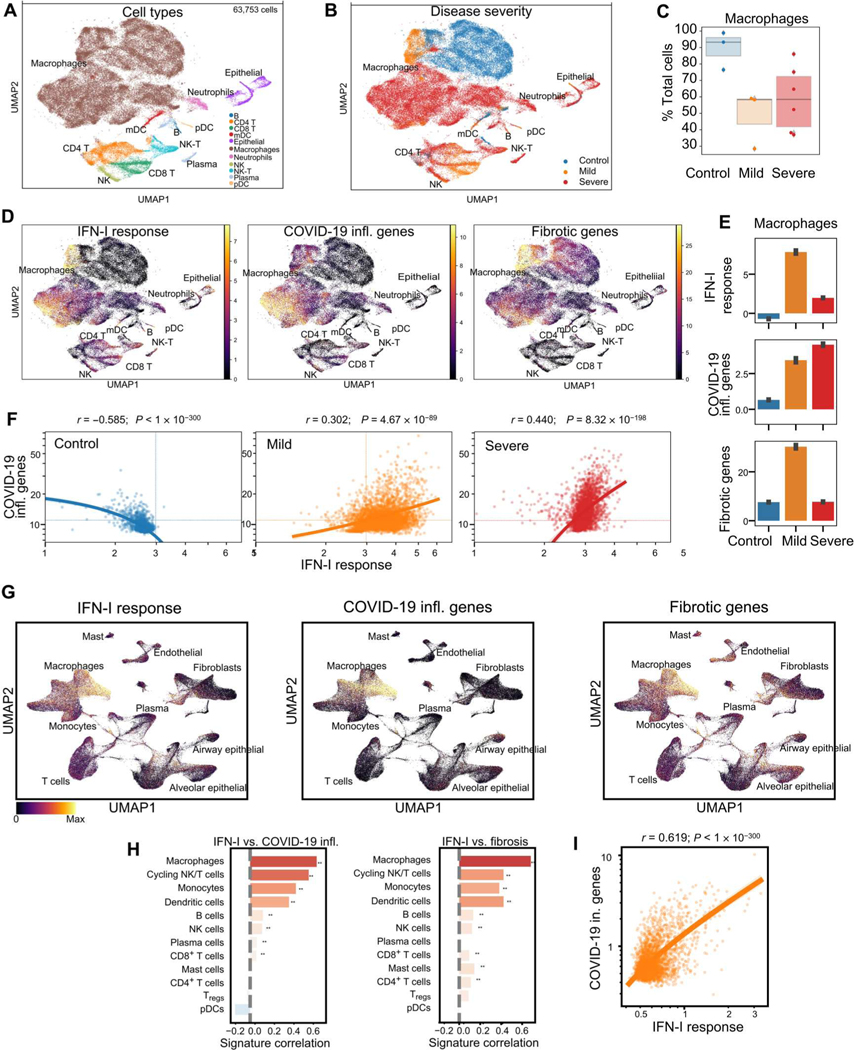
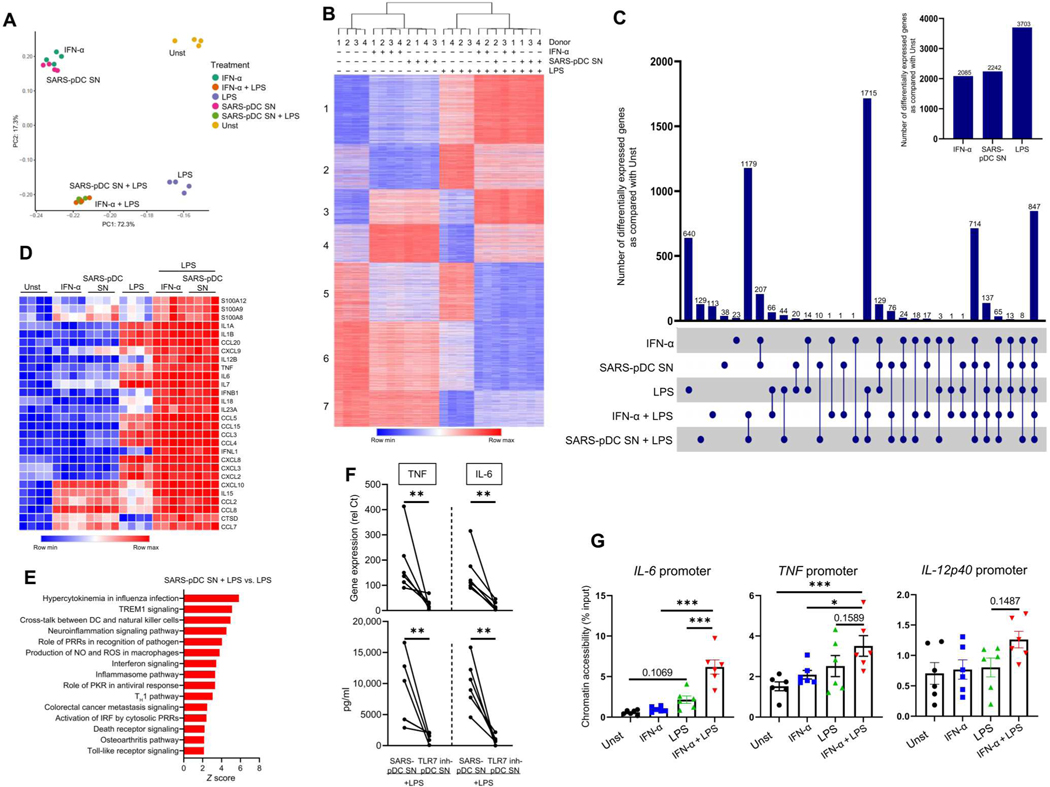
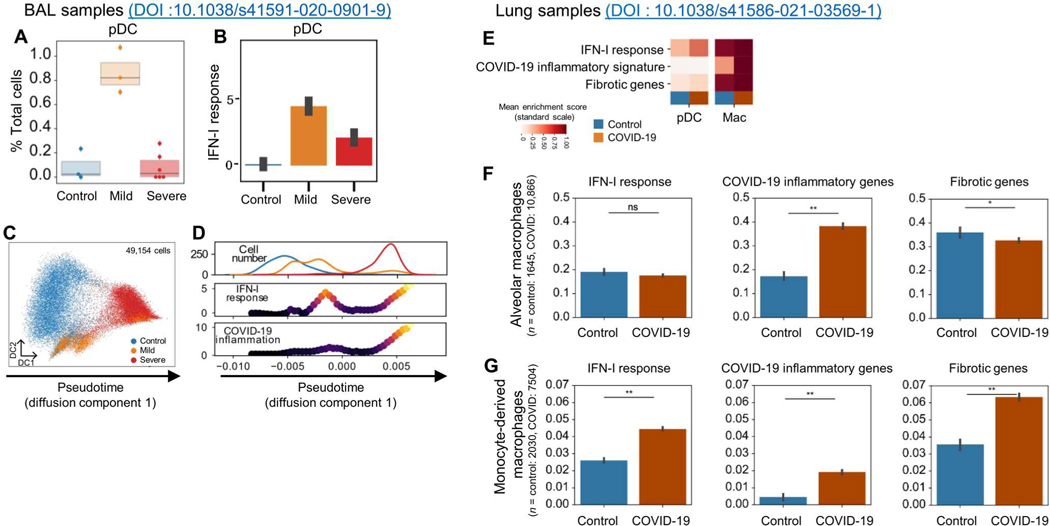
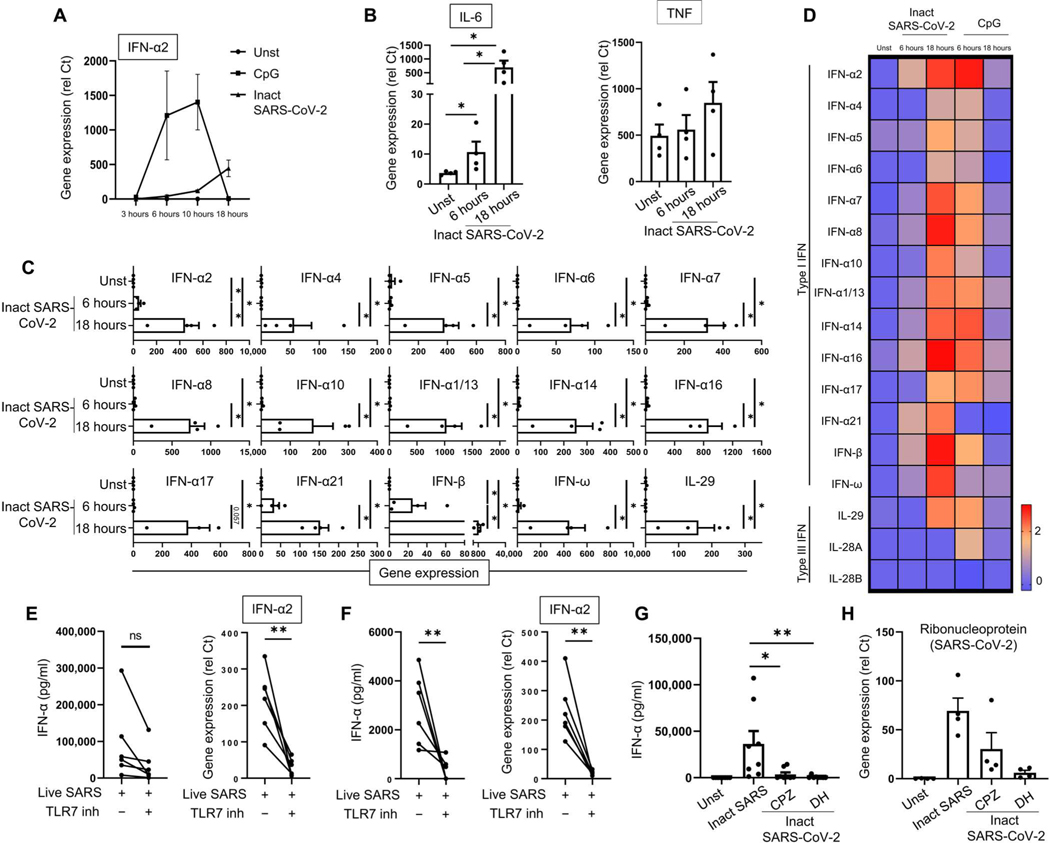
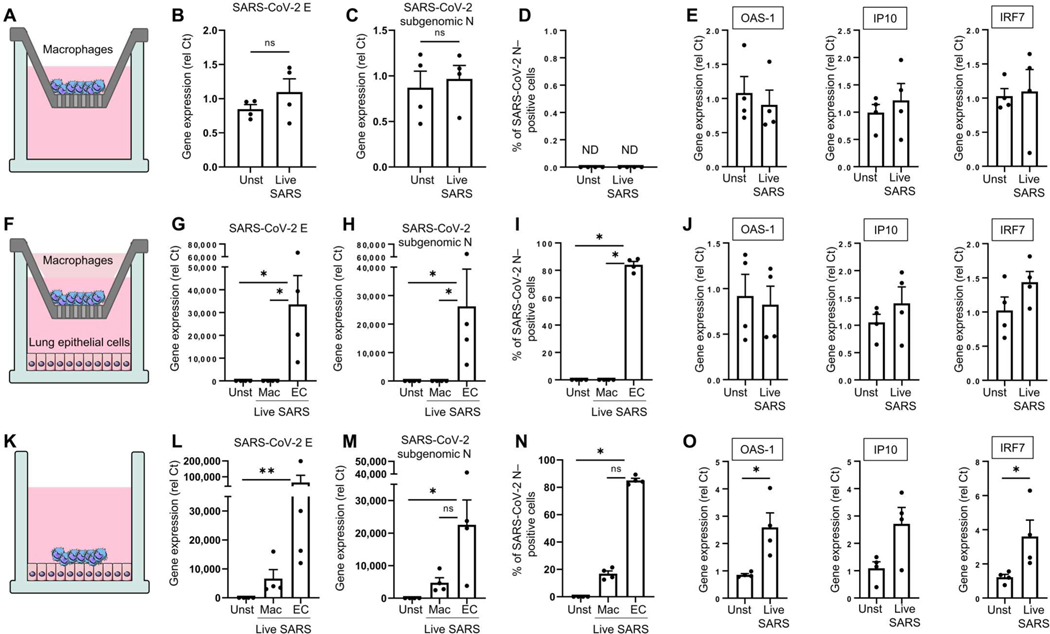
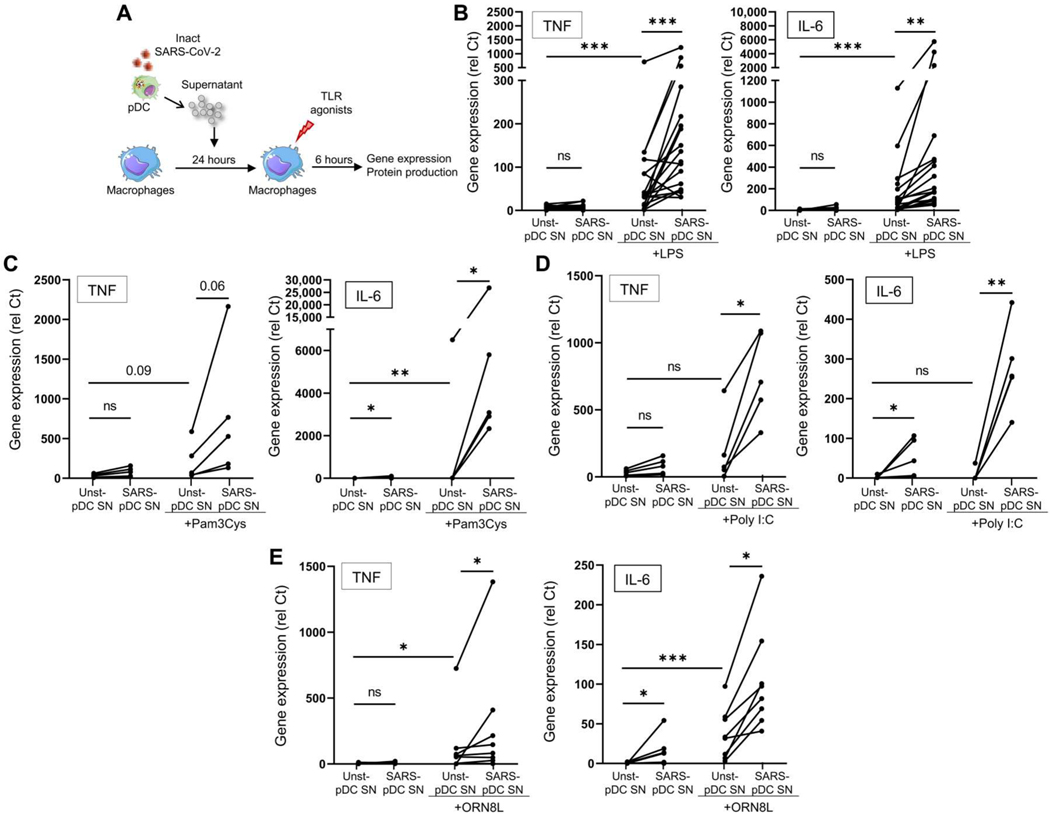
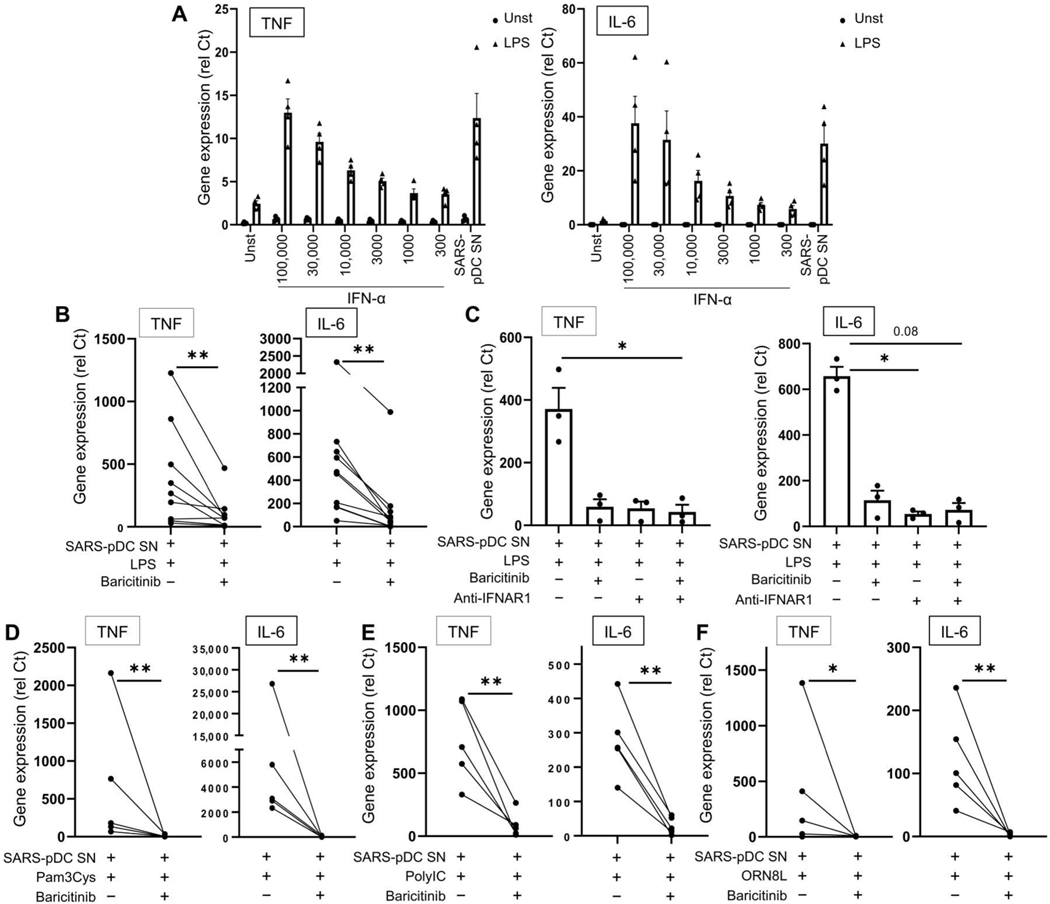
Lung-infiltrating macrophages create a marked inflammatory milieu in a subset of patients with COVID-19 by producing a cytokine storm, which correlates with increased lethality. However, these macrophages are largely not infected by SARS-CoV-2, so the mechanism underlying their activation in the lung is unclear. Type I interferons (IFN-I) contribute to protecting the host against SARS-CoV-2 but may also have some deleterious effect, and the source of IFN-I in the lungs of infected patients is not well defined. Plasmacytoid dendritic cells (pDCs), a key cell type involved in antiviral responses, can produce IFN-I in response to SARS-CoV-2. We observed the infiltration of pDCs in the lungs of SARS-CoV-2-infected patients, which correlated with strong IFN-I signaling in lung macrophages. In patients with severe COVID-19, lung macrophages expressed a robust inflammatory signature, which correlated with persistent IFN-I signaling at the single-cell level. Hence, we observed the uncoupling in the kinetics of the infiltration of pDCs in the lungs and the associated IFN-I signature, with the cytokine storm in macrophages. We observed that pDCs were the dominant IFN-α-producing cells in response to the virus in the blood, whereas macrophages produced IFN-α only when in physical contact with infected epithelial cells. We also showed that IFN-α produced by pDCs, after the sensing of SARS-CoV-2 by TLR7, mediated changes in macrophages at both transcriptional and epigenetic levels, which favored their hyperactivation by environmental stimuli. Together, these data indicate that the priming of macrophages can result from the response by pDCs to SARS-CoV-2, leading to macrophage activation in patients with severe COVID-19.
肺浸润性巨噬细胞通过产生细胞因子风暴在 COVID-19 的一部分患者中造成明显的炎症环境,这与致死率增加相关。然而,这些巨噬细胞在很大程度上不受 SARS-CoV-2 的感染,因此它们在肺部中的激活机制尚不清楚。I 型干扰素(IFN-I)有助于宿主抵抗 SARS-CoV-2,但也可能产生一些有害影响,而感染患者肺部中 IFN-I 的来源尚未明确。浆细胞样树突状细胞(pDCs)是参与抗病毒反应的关键细胞类型,可对 SARS-CoV-2 产生 IFN-I。我们观察到 SARS-CoV-2 感染患者的肺中 pDCs 的浸润,这与肺巨噬细胞中强烈的 IFN-I 信号相关。在 COVID-19 重症患者中,肺巨噬细胞表达强烈的炎症特征,这与单细胞水平上持续的 IFN-I 信号相关。因此,我们观察到 pDCs 在肺部的浸润和相关 IFN-I 特征与巨噬细胞中的细胞因子风暴之间的动力学失耦。我们观察到 pDCs 是血液中针对病毒产生 IFN-α的主要细胞,而巨噬细胞仅在与受感染的上皮细胞物理接触时才产生 IFN-α。我们还表明,pDCs 在 TLR7 感知 SARS-CoV-2 后产生的 IFN-α在转录和表观遗传水平上改变了巨噬细胞,这有利于它们被环境刺激过度激活。总之,这些数据表明,巨噬细胞的激活可以源于 pDCs 对 SARS-CoV-2 的反应,导致 COVID-19 重症患者的巨噬细胞激活。