Babiker Mohamed Mohamed Ali, Abdelwahab Abdelkarim Wael Ahmed, Salih Aabdeen Mohamed Abdulmonem, Elobid Ahmed Tarig Hassan, Sarsour Hassan H H, El-Malky Ahmed M, Amer Yasser S, Alsaleh Nuha, Nazer Rakan I
Leeds University Teaching Hospital, Plastic and Reconstructive Surgery, Leeds, United Kingdom.
Department of Obstetrics and Gynaecology, King Saud University Medical City, Riyadh, Saudi Arabia.
Ann Med Surg (Lond). 2022 May 31;79:103887. doi: 10.1016/j.amsu.2022.103887. eCollection 2022 Jul.
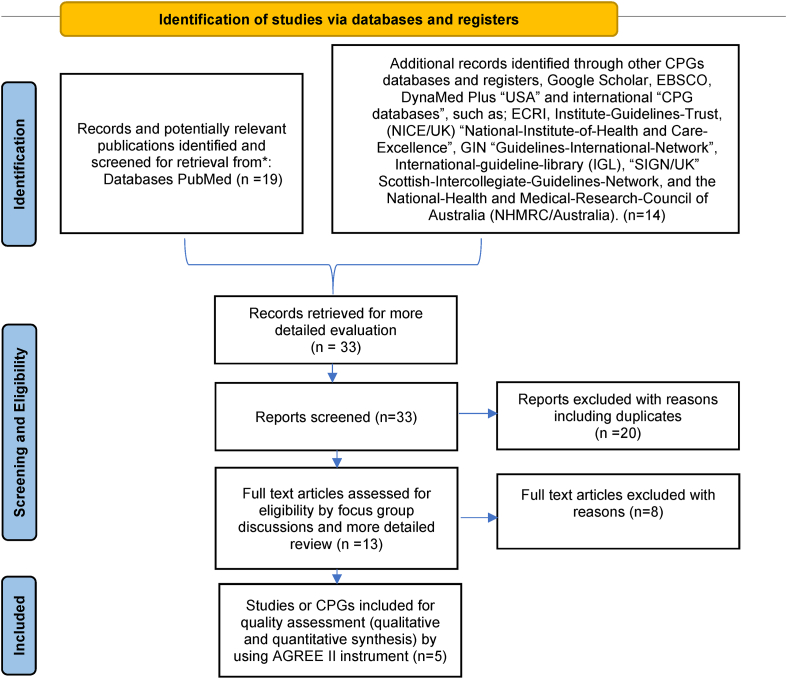
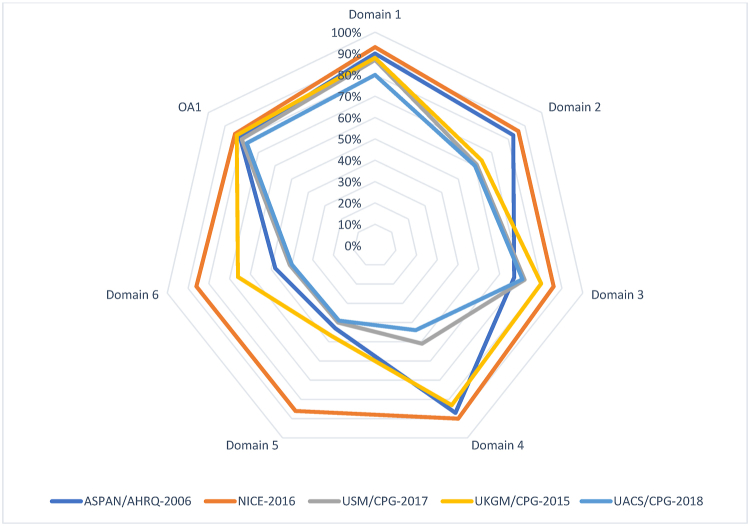
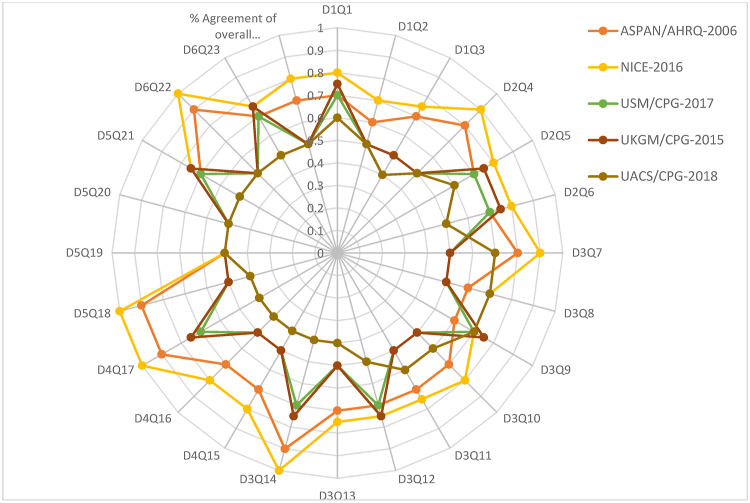
Inadvertent perioperative hypothermia is considered an emergency life-threatening situation. Clinical practice guidelines (CPGs) on how to manage hypothermia, based on evidence and expert opinions, could save lives. This systematic review assessed and compared the most recently approved international CPGs with the AGREE II instrument. We searched international bibliographic databases to identify relevant guidelines for managing perioperative hypothermia. Four independent reviewers (consultant anesthesiologists) critically appraised the selected guidelines with the AGREE II instrument. We analyzed inter-rater agreement and calculated an intra-class correlation coefficient (Kappa). We identified five CPGs for perioperative hypothermia that were eligible for critical appraisal. These CPGs were issued by the National Institute for Health and Care Excellence (NICE-2016); the American Society of Peri-Anesthesia Nurses/Agency for Health Care Research and Quality (ASPAN/AHRQ-2006); the University of Southern Mississippi (USM/CPG-2017); The University Assistance Complex of Salamanca (UACS/CPG-2018); and the Justus-Liebig University of Giessen (UKGM/CPG-2015). The overall assessments of NICE-2016 and ASPAN/AHRQ-2006 scored >80%. These results were consistent with high scores achieved in the six domains of AGREE II: (1) scope and purpose, (2) stakeholder involvement, (3) rigor of development, (4) clarity of presentation, (5) applicability, and (6) editorial independence domains. The NICE-2016, ASPAN/AHRQ-2006, and USM/CPG-2017) scored, respectively, 94%, 81%, and 70% for domain 3, 91%, 87%, and 66% for domain 5, and 90%, 82%, and 77% for domain 6. Generally, the NICE CPGs received significantly better clinical recommendations. However, all five evidence-based CPGs were of high methodological quality and were recommended for use in practice. Saudi Arabia should formulate its own national CPGs for diagnosis and management of perioperative hypothermia and to be published on NICE.
围手术期意外低温被视为一种危及生命的紧急情况。基于证据和专家意见的关于如何处理低温的临床实践指南(CPG)可能会挽救生命。本系统评价使用AGREE II工具对最新批准的国际CPG进行了评估和比较。我们检索了国际文献数据库,以确定管理围手术期低温的相关指南。四名独立评审员(麻醉顾问医师)使用AGREE II工具对选定的指南进行了严格评估。我们分析了评分者间的一致性,并计算了组内相关系数(Kappa)。我们确定了五项适用于严格评估的围手术期低温CPG。这些CPG分别由英国国家卫生与临床优化研究所(NICE - 2016)、美国围麻醉护理学会/医疗保健研究与质量局(ASPAN/AHRQ - 2006)、南密西西比大学(USM/CPG - 2017)、萨拉曼卡大学援助联合体(UACS/CPG - 2018)以及吉森尤斯 - 利比希大学(UKGM/CPG - 2015)发布。NICE - 2016和ASPAN/AHRQ - 2006的总体评估得分>80%。这些结果与在AGREE II的六个领域中取得的高分一致:(1)范围和目的,(2)利益相关者参与,(3)制定的严谨性,(4)表述的清晰度,(5)适用性,以及(6)编辑独立性领域。NICE - 2016、ASPAN/AHRQ - 2006和USM/CPG - 2017在第3领域的得分分别为94%、81%和70%,在第5领域的得分分别为91%、87%和66%,在第6领域的得分分别为90%、82%和77%。一般来说,NICE的CPG获得了明显更好的临床建议。然而,所有五项基于证据的CPG都具有很高的方法学质量,建议在实践中使用。沙特阿拉伯应制定自己的关于围手术期低温诊断和管理的国家CPG,并在NICE上发表。