Department of Immunology, Erasmus MC, University Medical Center Rotterdam, Rotterdam, Netherlands.
Translational and Clinical Research Institute, Newcastle University, Newcastle, United Kingdom.
Front Immunol. 2022 Jul 4;13:840751. doi: 10.3389/fimmu.2022.840751. eCollection 2022.
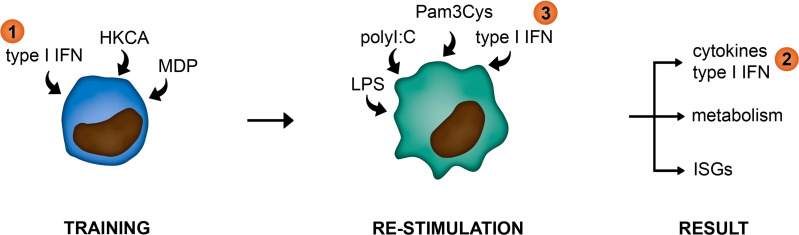
Trained immunity - or innate immune memory - can be described as the long-term reprogramming of innate immune cells towards a hyperresponsive state which involves intracellular metabolic changes. Trained immunity has been linked to atherosclerosis. A subgroup of patients with primary Sjögren's syndrome (pSS) exhibits systemic type I interferon (IFN) pathway activation, indicating innate immune hyperactivation. Here, we studied the link between type I IFNs and trained immunity in an monocytic cell model and peripheral blood mononuclear cells (PBMCs) from pSS patients.
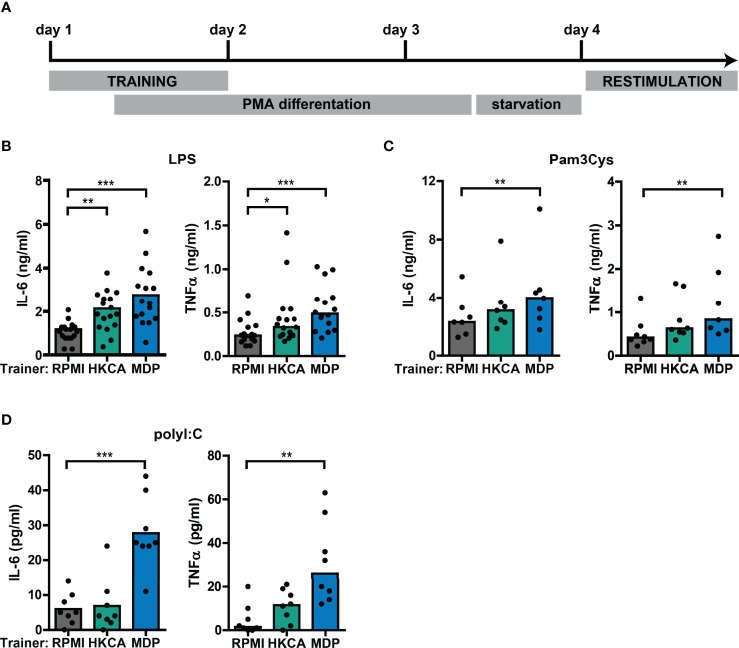
The training stimuli heat killed , muramyl dipeptide, IFNβ, and patient serum were added to THP-1 cells for 24 hours, after which the cells were washed, rested for 48 hours and subsequently re-stimulated with LPS, Pam3Cys, poly I:C, IFNβ or oxLDL for 4-24 hours. PBMCs from pSS patients and healthy controls were stimulated with LPS, Pam3Cys, poly I:C or IFNβ for 0.5-24 hours.
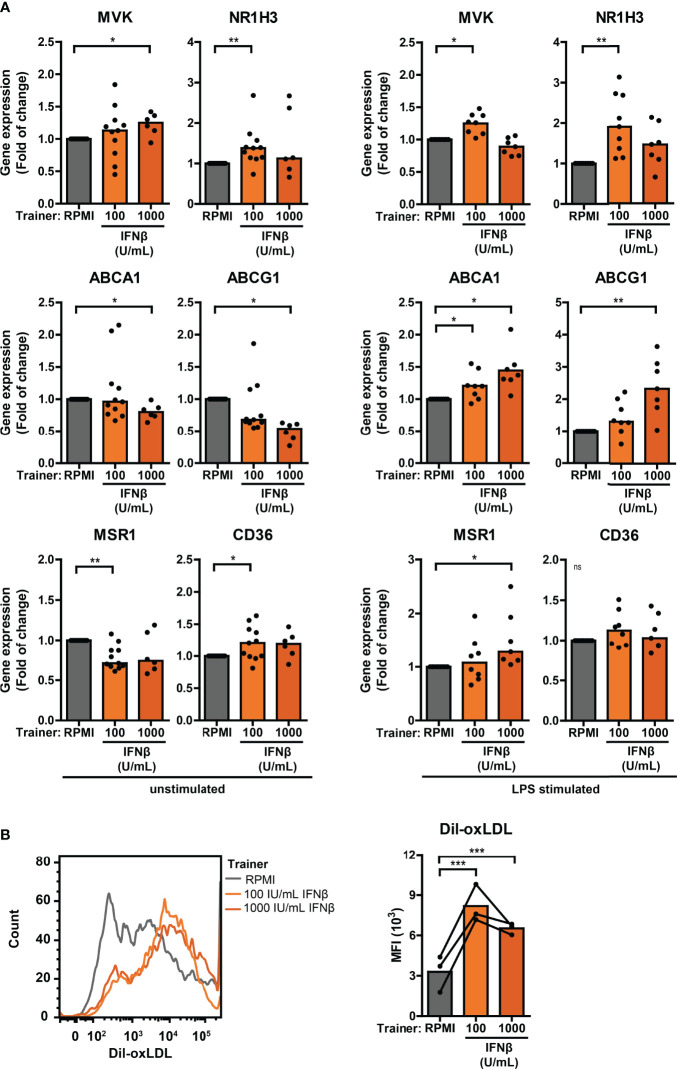
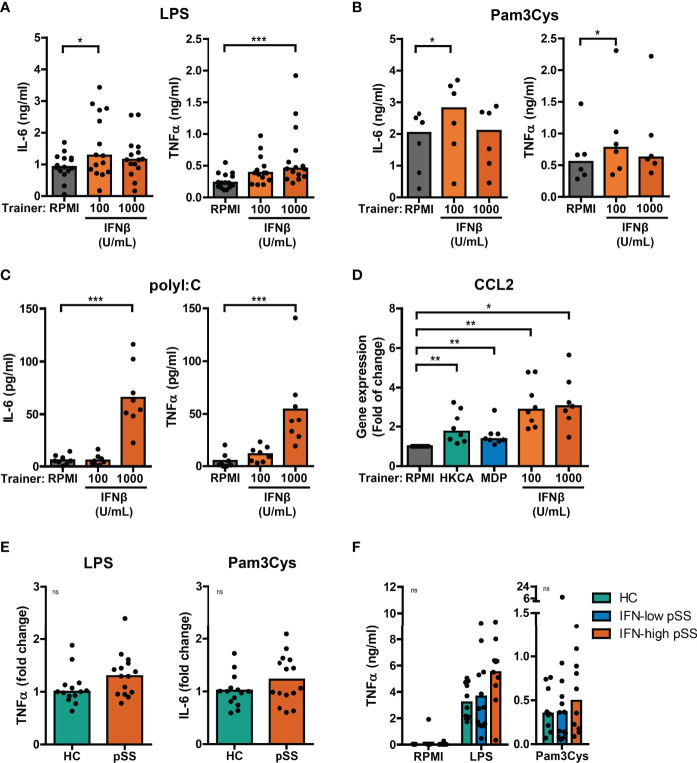
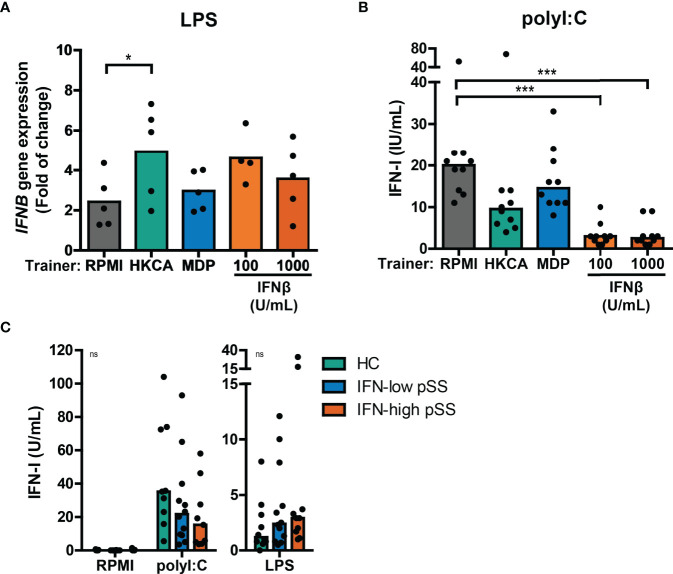
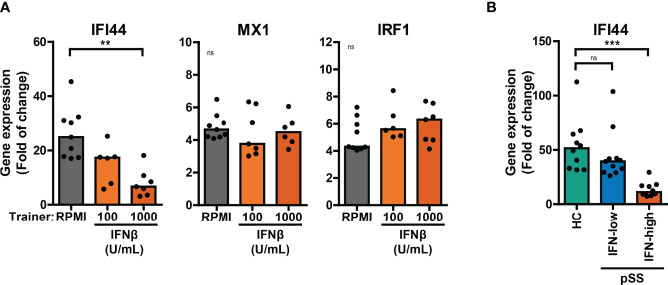
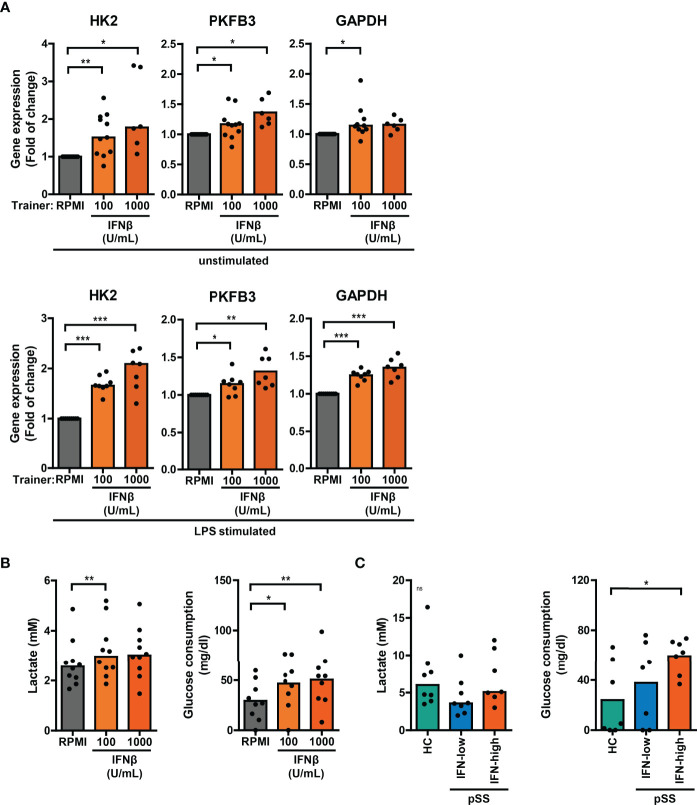
Training with IFNβ induced elevated production of pro-atherogenic cytokines IL-6, TNFα and , differential cholesterol- and glycolysis-related gene expression, and increased glucose consumption and oxLDL uptake upon re-stimulation. Type I IFN production was increased in - and IFNβ-trained cells after LPS re-stimulation, but was reduced after poly I:C re-stimulation. Training with muramyl dipeptide and IFNβ, but not , affected the IFN-stimulated gene expression response to IFNβ re-stimulation. PBMCs from pSS patients consumed more glucose compared with healthy control PBMCs and tended to produce more TNFα and type I IFNs upon LPS stimulation, but less type I IFNs upon poly I:C stimulation.
Type I IFN is a trainer inducing a trained immunity phenotype with pro-atherogenic properties in monocytes. Conversely, trained immunity also affects the production of type I IFNs and transcriptional response to type I IFN receptor re-stimulation. The phenotype of pSS PBMCs is consistent with trained immunity. This connection between type I IFN, trained immunity and cholesterol metabolism may have important implications for pSS and the pathogenesis of (subclinical) atherosclerosis in these patients.
训练免疫——或固有免疫记忆——可以被描述为固有免疫细胞向超应答状态的长期重编程,其中涉及细胞内代谢变化。训练免疫与动脉粥样硬化有关。原发性干燥综合征(pSS)患者的亚组表现出系统性 I 型干扰素(IFN)途径的激活,表明固有免疫的过度激活。在这里,我们在单核细胞模型和 pSS 患者的外周血单核细胞(PBMC)中研究了 I 型 IFNs 与训练免疫之间的联系。
将热灭活的、Muramyl 二肽、IFNβ和患者血清添加到 THP-1 细胞中 24 小时,然后洗涤细胞,休息 48 小时,随后用 LPS、Pam3Cys、poly I:C、IFNβ或 oxLDL 再刺激 4-24 小时。用 LPS、Pam3Cys、poly I:C 或 IFNβ刺激 pSS 患者和健康对照者的 PBMC 0.5-24 小时。
用 IFNβ 训练诱导产生前动脉粥样硬化细胞因子 IL-6、TNFα和,差异胆固醇和糖酵解相关基因表达,并在再刺激时增加葡萄糖消耗和 oxLDL 摄取。LPS 再刺激后,IFNβ 训练的细胞中 I 型 IFN 的产生增加,但 poly I:C 再刺激后减少。用 Muramyl 二肽和 IFNβ训练,但不是,影响 IFNβ 再刺激时 IFN 刺激基因表达的反应。与健康对照者的 PBMC 相比,pSS 患者的 PBMC 消耗更多的葡萄糖,在 LPS 刺激时倾向于产生更多的 TNFα和 I 型 IFNs,但在 poly I:C 刺激时产生的 I 型 IFNs 较少。
I 型 IFN 是一种诱导物,可在单核细胞中诱导具有前动脉粥样硬化特性的训练免疫表型。相反,训练免疫也会影响 I 型 IFN 的产生和对 I 型 IFN 受体再刺激的转录反应。pSS PBMC 的表型与训练免疫一致。I 型 IFN、训练免疫和胆固醇代谢之间的这种联系可能对 pSS 和这些患者(亚临床)动脉粥样硬化的发病机制有重要意义。