Université de Neuchâtel, Institut de Biologie, 2000 Neuchâtel, Switzerland.
Geneva Natural History Museum, 1208 Genève, Switzerland.
G3 (Bethesda). 2022 Aug 25;12(9). doi: 10.1093/g3journal/jkac175.
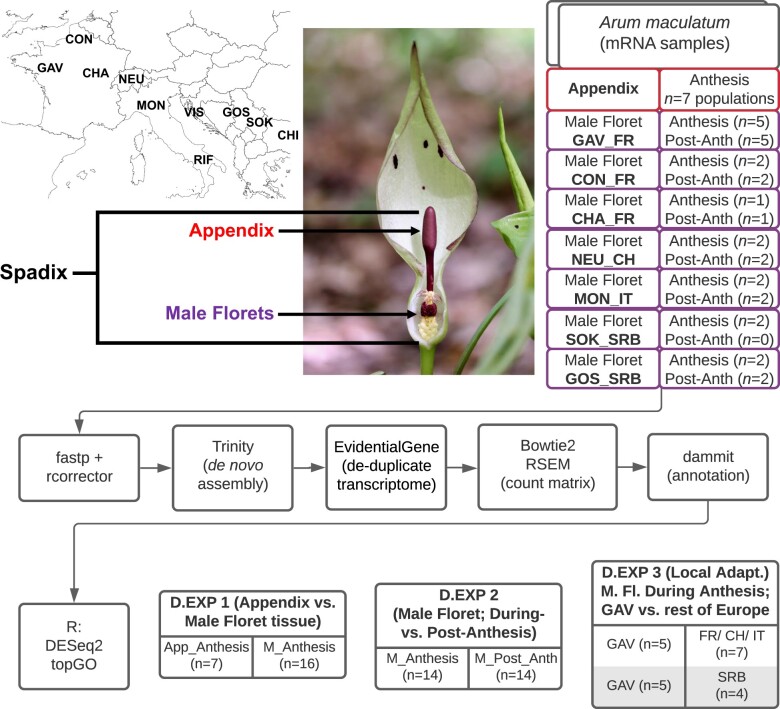
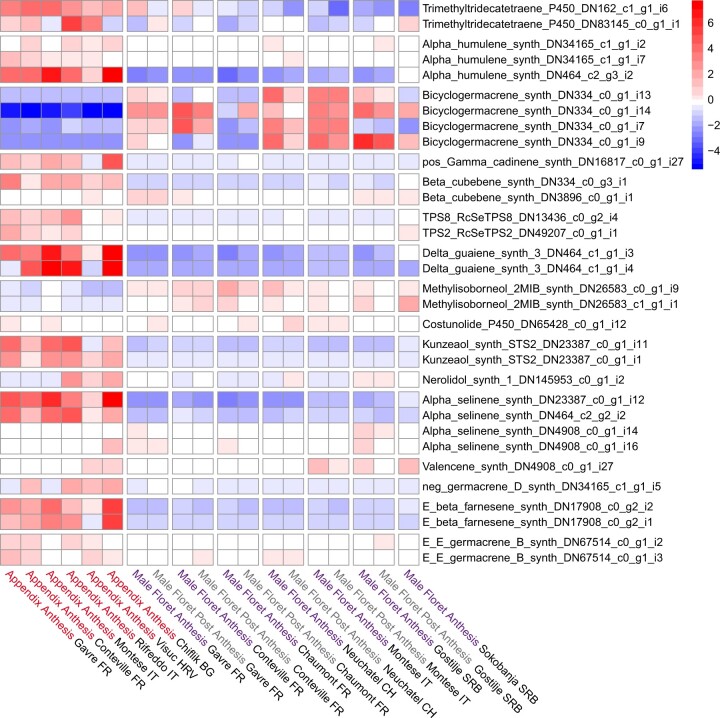
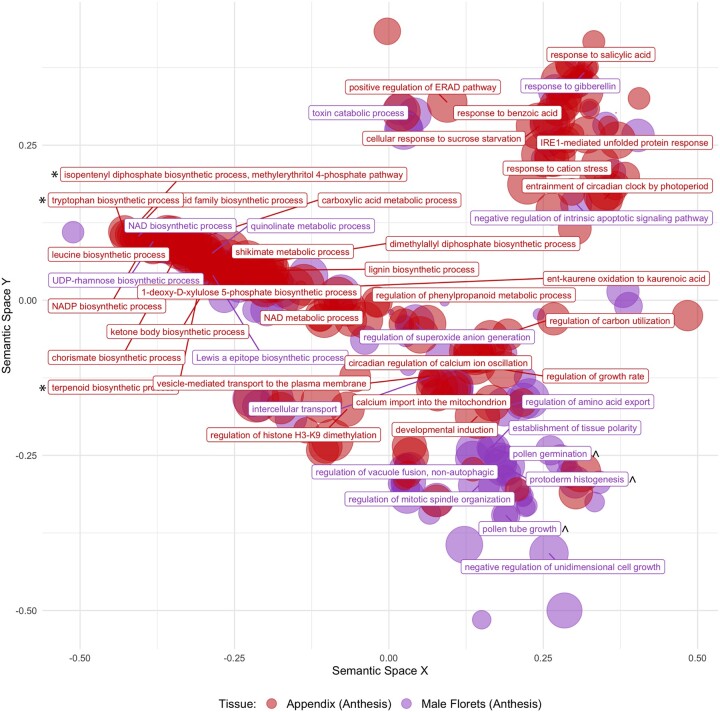
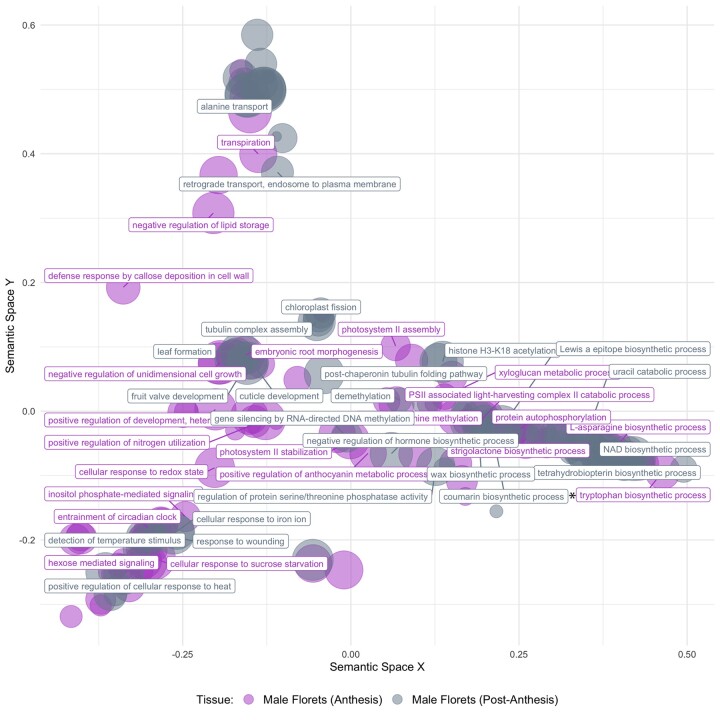
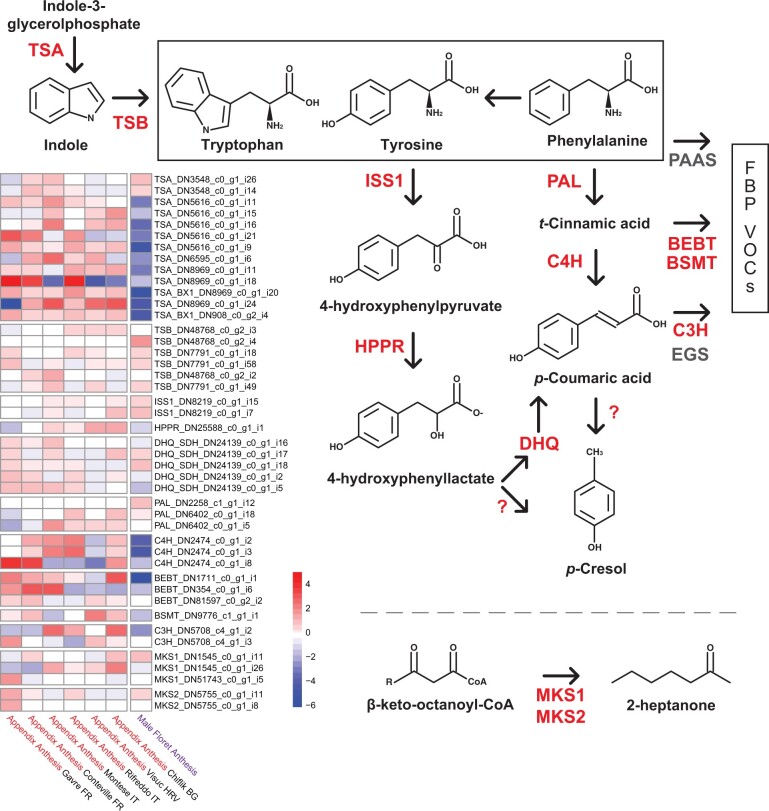
Deceptive pollination often involves volatile organic compound emissions that mislead insects into performing nonrewarding pollination. Among deceptively pollinated plants, Arum maculatum is particularly well-known for its potent dung-like volatile organic compound emissions and specialized floral chamber, which traps pollinators-mainly Psychoda phalaenoides and Psychoda grisescens-overnight. However, little is known about the genes underlying the production of many Arum maculatum volatile organic compounds, and their influence on variation in pollinator attraction rates. Therefore, we performed de novo transcriptome sequencing of Arum maculatum appendix and male floret tissue collected during anthesis and postanthesis, from 10 natural populations across Europe. These RNA-seq data were paired with gas chromatography-mass spectrometry analyses of floral scent composition and pollinator data collected from the same inflorescences. Differential expression analyses revealed candidate transcripts in appendix tissue linked to malodourous volatile organic compounds including indole, p-cresol, and 2-heptanone. In addition, we found that terpene synthase expression in male floret tissue during anthesis significantly covaried with sex- and species-specific attraction of Psychoda phalaenoides and Psychoda grisescens. Taken together, our results provide the first insights into molecular mechanisms underlying pollinator attraction patterns in Arum maculatum and highlight floral chamber sesquiterpene (e.g. bicyclogermacrene) synthases as interesting candidate genes for further study.
欺骗性传粉常常涉及挥发性有机化合物的排放,这些化合物会误导昆虫进行无回报的传粉。在欺骗性传粉的植物中,阿利坎特猪笼草因其强烈的类似粪便的挥发性有机化合物排放和专门的花室而尤为著名,花室会困住传粉者——主要是黄粉蝇和灰蝇——一整夜。然而,对于阿利坎特猪笼草许多挥发性有机化合物产生的基因及其对传粉者吸引力变化的影响,我们知之甚少。因此,我们对来自欧洲 10 个自然种群的开花前期和开花后期阿利坎特猪笼草附属物和雄性小花组织进行了从头转录组测序。这些 RNA-seq 数据与来自同一花序的花香成分的气相色谱-质谱分析和传粉者数据进行了配对。差异表达分析揭示了附属物组织中与恶臭挥发性有机化合物(包括吲哚、对甲酚和 2-庚酮)相关的候选转录本。此外,我们发现开花前期雄性小花组织中的萜烯合酶表达与黄粉蝇和灰蝇的性别和物种特异性吸引力显著相关。总之,我们的研究结果首次揭示了阿利坎特猪笼草传粉者吸引模式的分子机制,并强调了花室倍半萜(如双环金合欢烯)合酶作为进一步研究的有趣候选基因。