Division of Neonatology, Department of Paediatrics, Erasmus MC University Medical Center, Rotterdam, The Netherlands.
Division of Pharmacology and Vascular Medicine, Department of Internal Medicine, Erasmus MC University Medical Center, Rotterdam, The Netherlands.
Br J Pharmacol. 2022 Nov;179(22):5074-5088. doi: 10.1111/bph.15931. Epub 2022 Aug 5.
Recently pentoxifylline, a non-selective phosphodiesterase inhibitor and adenosine receptor antagonist, has attracted much interest for the treatment of the increased vascular resistance and endothelial dysfunction in pre-eclampsia. We therefore investigated the placental transfer, vascular effects and anti-inflammatory actions of pentoxifylline in healthy and pre-eclamptic human placentas.
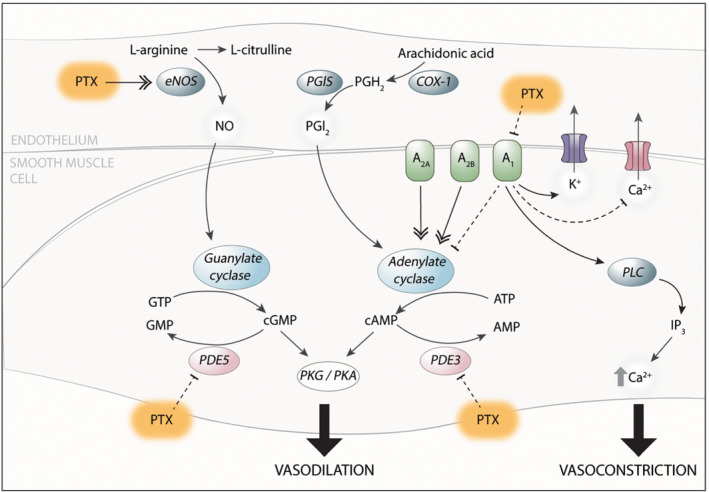
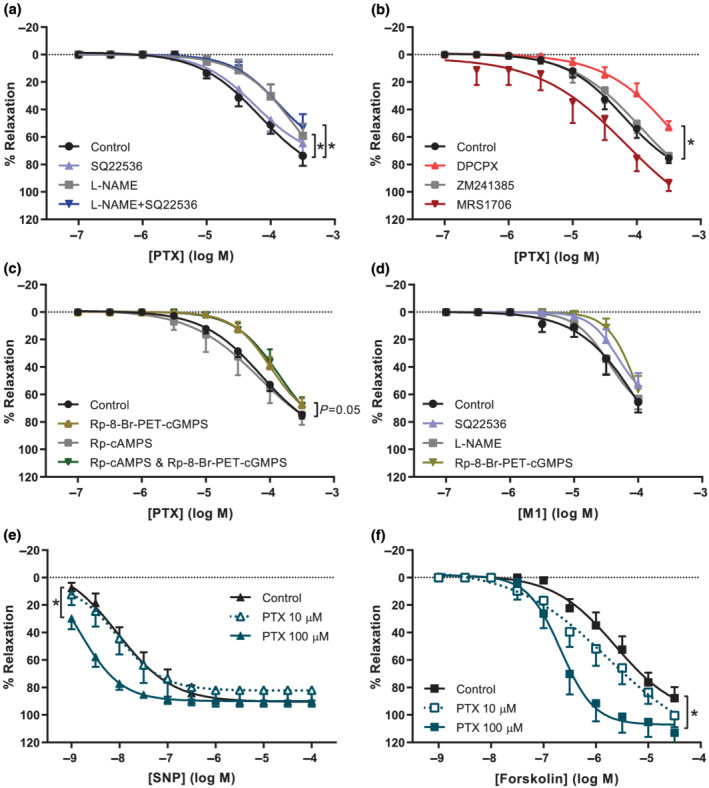
The placental transfer and metabolism of pentoxifylline were studied using ex vivo placenta perfusion experiments. In wire myography experiments with chorionic plate arteries, pentoxifyllines vasodilator properties were investigated, focusing on the cGMP and cAMP pathways and adenosine receptors. Its effects on inflammatory factors were also studied in placental explants.
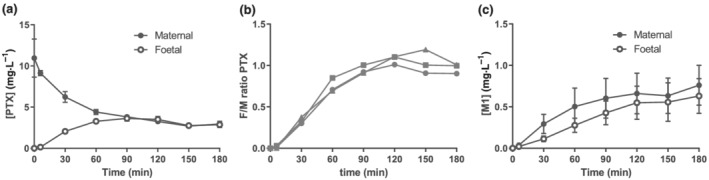
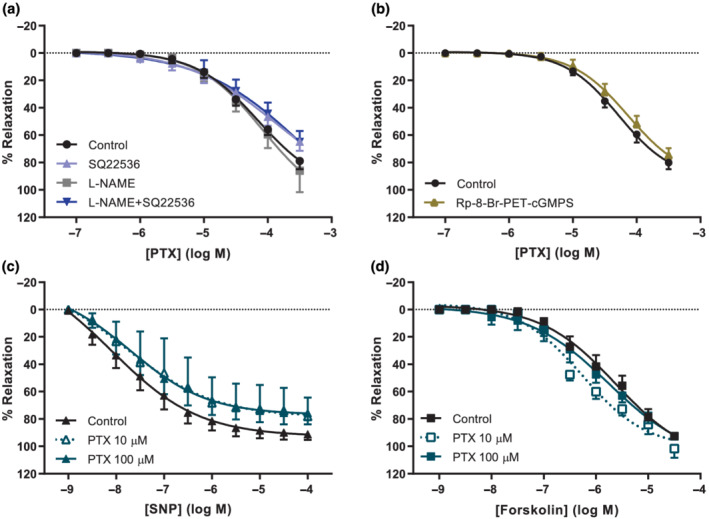
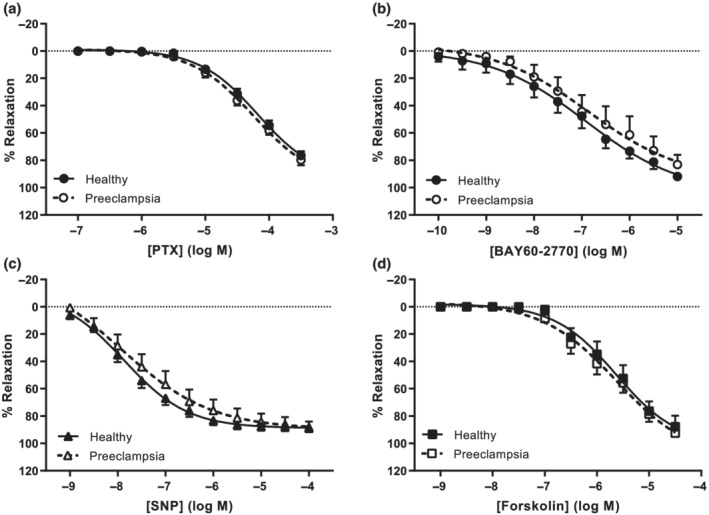
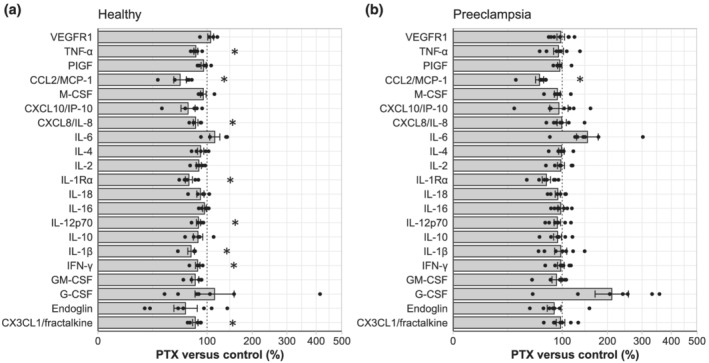
Pentoxifylline transferred from the maternal to foetal circulation, reaching identical concentrations. The placenta metabolized pentoxifylline into its active metabolite lisofylline (M1), which was released into both circulations. In healthy placentas, pentoxifylline potentiated cAMP- and cGMP-induced vasodilation, as well as causing vasodilation by adenosine A antagonism and via NO synthase and PKG. Pentoxifylline also reduced inflammatory factors secretion. In pre-eclamptic placentas, we observed that its vasodilator capacity was preserved, however not via NO-PKG but likely through adenosine signalling. Pentoxifylline neither potentiated vasodilation through cAMP and cGMP, nor suppressed the release of inflammatory factors from these placentas.
Pentoxifylline is transferred across and metabolized by the placenta. Its beneficial effects on the NO pathway and inflammation are not retained in pre-eclampsia, limiting its application in this disease, although it could be useful for other placenta-related disorders. Future studies might focus on selective A receptor antagonists as a new treatment for pre-eclampsia.
最近,非选择性磷酸二酯酶抑制剂和腺苷受体拮抗剂己酮可可碱因其可治疗子痫前期增加的血管阻力和内皮功能障碍而备受关注。因此,我们研究了己酮可可碱在健康和子痫前期人胎盘的胎盘转运、血管作用和抗炎作用。
我们使用离体胎盘灌注实验研究了己酮可可碱的胎盘转运和代谢。在绒毛板动脉的电生理实验中,我们研究了己酮可可碱的血管舒张特性,重点关注 cGMP 和 cAMP 途径以及腺苷受体。我们还在胎盘组织中研究了其对炎症因子的作用。
己酮可可碱从母体循环转移到胎儿循环,达到相同的浓度。胎盘将己酮可可碱代谢为其活性代谢物茶碱(M1),并将其释放到两个循环中。在健康胎盘,己酮可可碱增强了 cAMP 和 cGMP 诱导的血管舒张,以及通过腺苷 A 拮抗作用、通过一氧化氮合酶和蛋白激酶 G 引起的血管舒张。己酮可可碱还减少了炎症因子的分泌。在子痫前期胎盘,我们观察到其血管舒张能力得到保留,但不是通过 NO-PKG,而是可能通过腺苷信号通路。己酮可可碱既不能通过 cAMP 和 cGMP 增强血管舒张,也不能抑制这些胎盘释放炎症因子。
己酮可可碱可透过胎盘并被其代谢。它对 NO 途径和炎症的有益作用在子痫前期并不保留,限制了它在这种疾病中的应用,尽管它可能对其他与胎盘相关的疾病有用。未来的研究可能集中在选择性 A 受体拮抗剂作为子痫前期的一种新治疗方法。