Division of Cardiology (C.E.K., L.A.A., S.L.D., C.K.M., P.K.), University of Colorado Anschutz Medical Campus, Aurora.
Adult and Child Center for Outcomes Research and Delivery Science (C.E.K., L.A.A., S.L.D.), University of Colorado Anschutz Medical Campus, Aurora.
Circ Heart Fail. 2022 Aug;15(8):e009583. doi: 10.1161/CIRCHEARTFAILURE.122.009583. Epub 2022 Jul 7.
Left ventricular assist device (LVAD) evaluation includes a psychosocial assessment, conducted by social workers (SWs) on the advanced heart failure multidisciplinary team. Postdischarge caregiving plans are central to psychosocial evaluation. Caregiving's relationship with LVAD outcomes is mixed, and testing patients' social resources may disadvantage those from historically undertreated groups. We describe variation in policies defining adequate caregiving plans post-LVAD implant and possible impacts on patients from marginalized groups.
This was a 2-phase sequential mixed-methods study: (1) phase 1, survey of US-based LVAD SWs, describing assessment structure and policies guiding candidacy outcomes; and (2) phase 2, individual interviews with SWs to further describe how caregiving plan adequacy impacts LVAD candidacy.
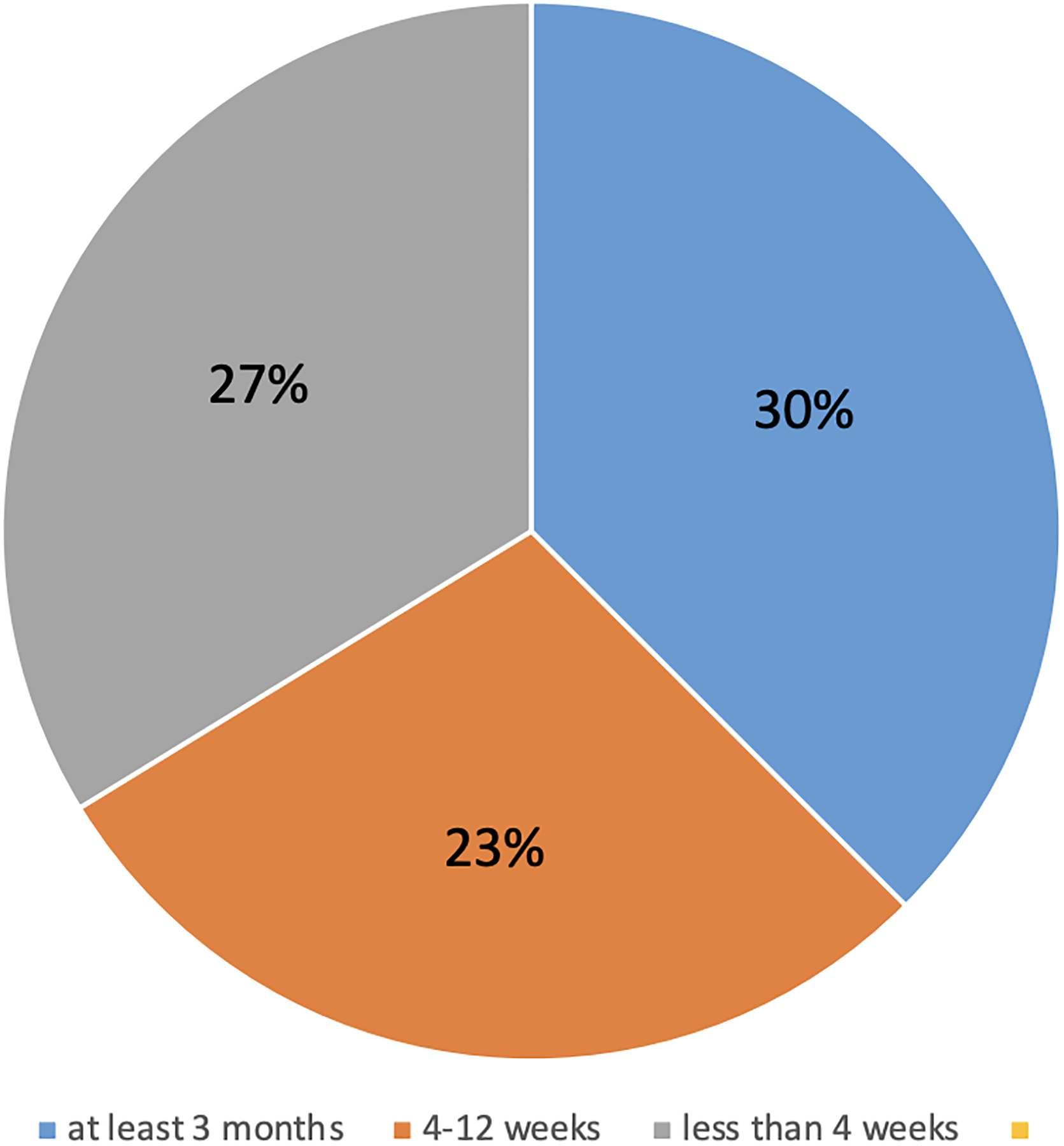
Sixty-seven SWs returned surveys (rr=47%) from unique programs. Caregiving plan inadequacy (n=30) was the most common psychosocial dealbreaker. When asked what duration of caregiving is required, 23% indicated ≥3 months, 27% 4 to 12 weeks, and 30% <4 weeks. Two reported no duration requirement, 6 stated an indefinite 24/7 commitment was necessary. Across 22 interviews, SWs mirrored that caregiving plans were the most common psychosocial contraindication. How caregiving is operationalized varied. Participants voiced a tension between extended caregiving improving outcomes and the sense that some people of color, women, or low socioeconomic status patients struggle to meet stringent requirements.
Policies regarding adequate duration of 24/7 caregiving vary, but inadequate caregiving plans are the most common psychosocial contraindication. Participants worry about patients' ability to meet restrictive requirements, particularly from historically undertreated groups. This highlights a need to operationalize quality caregiving, standardize assessment, and support medically appropriate patients with strained social resources.
左心室辅助装置(LVAD)的评估包括由社会工作者(SW)在心力衰竭多学科团队中进行的社会心理评估。出院后的护理计划是社会心理评估的核心。护理与 LVAD 结果的关系是复杂的,测试患者的社会资源可能会对来自历史上治疗不足群体的患者不利。我们描述了定义 LVAD 植入后充分护理计划的政策差异,以及这些政策对边缘化群体患者的可能影响。
这是一项两阶段顺序混合方法研究:(1)第一阶段,对美国 LVAD SW 进行调查,描述评估结构和指导候选资格结果的政策;(2)第二阶段,对 SW 进行个人访谈,进一步描述护理计划充分性如何影响 LVAD 候选资格。
67 名 SW 从独特的项目中返回了调查(rr=47%)。护理计划不充分(n=30)是最常见的社会心理否决因素。当被问及需要多长时间的护理时,23%的人表示需要≥3 个月,27%的人表示需要 4 到 12 周,30%的人表示需要<4 周。有 2 人表示没有时间要求,6 人表示需要无限期的 24/7 承诺。在 22 次访谈中,SW 反映护理计划是最常见的社会心理禁忌症。护理的运作方式各不相同。参与者表示,延长护理时间可以改善结果,但有些人认为有色人种、女性或社会经济地位较低的患者难以满足严格的要求。
关于 24/7 护理充分时间的政策各不相同,但不充分的护理计划是最常见的社会心理禁忌症。参与者担心患者满足限制性要求的能力,特别是来自历史上治疗不足群体的患者。这突显了需要对高质量护理进行操作、标准化评估,并为社会资源紧张的符合医学要求的患者提供支持。