Duke Neurological Disorders Clinic, Duke University Medical Center, Durham, North Carolina, USA.
Faculty of Medicine and University Clinical Center of Serbia, Neurology Clinic, University of Belgrade, Belgrade, Serbia.
Brain Behav. 2022 Aug;12(8):e2712. doi: 10.1002/brb3.2712. Epub 2022 Jul 21.
Fatigue is a common but poorly understood complaint in patients with immune-mediated polyneuropathies. We sought to evaluate changes in fatigue over 1 year in a cohort of chronic inflammatory demyelinating polyneuropathy (CIDP) patients and to correlate changes in fatigue with changes in disability and quality of life. Investigation into other factors that may contribute to fatigue with a particular interest in the role other chronic disease states may play was also performed.
Fifty patients with CIDP who satisfied the 2010 EFNS/PNS diagnostic criteria were followed over the period of 1 year at three tertiary care centers in Serbia. Assessments of disability, quality of life, and patient perception of change and fatigue were collected at two time points 12 months apart. Comorbidities, treatment regimens, and sedating medication use was collected.
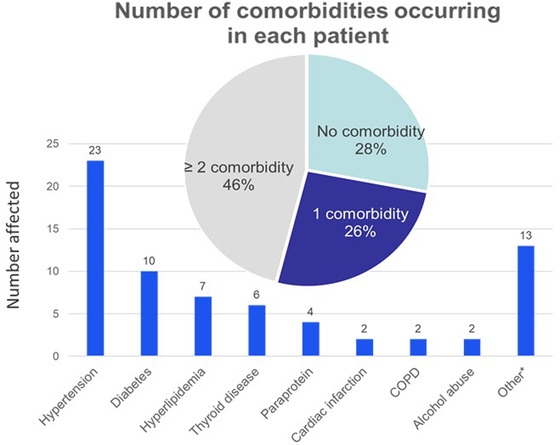
Disability, quality of life, and patient perception of change showed statistically significant correlations with change in fatigue (p < .01). Increased levels of fatigue were noted in patients who used sedating medications (p = .05) and who had a comorbid chronic medical condition (p = .01).
Worsening fatigue correlates over time with increased disability and worse quality of life. Fatigue is not specific to CIDP, but is common in many chronic medical conditions and with the use of sedating medications. Our findings support the importance of identifying and supportively managing fatigue in patients with CIDP, but cautions against considering fatigue as a CIDP diagnostic symptom or using fatigue to justify immunotherapy utilization.
疲劳是免疫介导性多发性神经病患者常见但未被充分认识的主诉。我们旨在评估慢性炎症性脱髓鞘性多发性神经病(CIDP)患者队列中 1 年内疲劳的变化,并将疲劳的变化与残疾和生活质量的变化相关联。我们还研究了可能导致疲劳的其他因素,特别关注其他慢性疾病状态可能发挥的作用。
50 名符合 2010 年 EFNS/PNS 诊断标准的 CIDP 患者在塞尔维亚的三个三级保健中心接受了为期 1 年的随访。在相隔 12 个月的两个时间点收集残疾、生活质量、患者对变化和疲劳的感知评估。收集合并症、治疗方案和镇静药物的使用情况。
残疾、生活质量和患者对变化的感知与疲劳的变化有统计学显著相关性(p<.01)。使用镇静药物(p=.05)和患有合并症慢性疾病(p=.01)的患者,疲劳水平升高。
随着时间的推移,疲劳的恶化与残疾程度的增加和生活质量的恶化相关。疲劳并非 CIDP 所特有,而是许多慢性疾病的常见症状,且与使用镇静药物有关。我们的发现支持在 CIDP 患者中识别和支持性管理疲劳的重要性,但警告不要将疲劳视为 CIDP 的诊断症状,也不要使用疲劳来证明免疫疗法的应用。