Department of Geography and Urban Planning, Faculty of Social Sciences, University of Mohaghegh Ardabili, Ardabil, Iran.
Department of Human Geography, Faculty of Earth Sciences, Shahid Beheshti University, Tehran, Iran.
BMC Pregnancy Childbirth. 2022 Jul 21;22(1):582. doi: 10.1186/s12884-022-04856-z.
The lives of babies and mothers are at risk due to the uneven distribution of healthcare facilities required for emergency cesarean sections (CS). However, CS without medical indications might cause complications for mothers and babies, which is a global health problem. Identifying spatiotemporal variations of CS rates in each geographical area could provide helpful information to understand the status of using CS services.
This cross-sectional study explored spatiotemporal patterns of CS in northeast Iran from 2016 to 2020. Space-time scan statistics and spatial interaction analysis were conducted using geographical information systems to visualize and explore patterns of CS services.
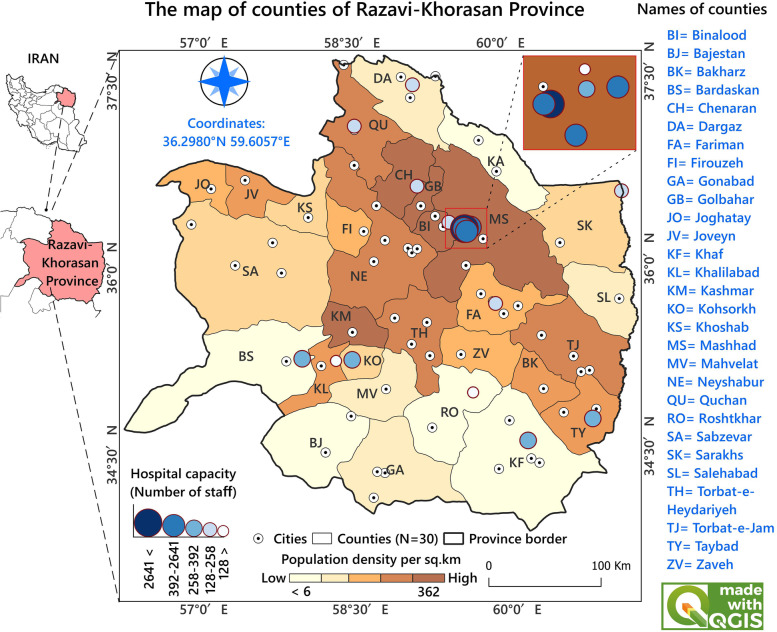
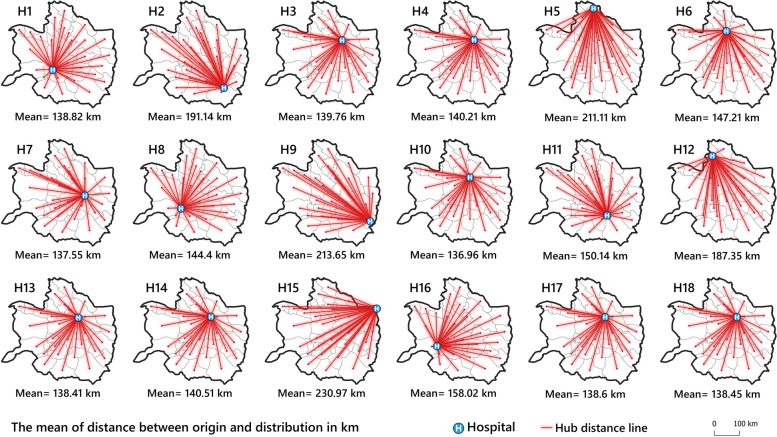
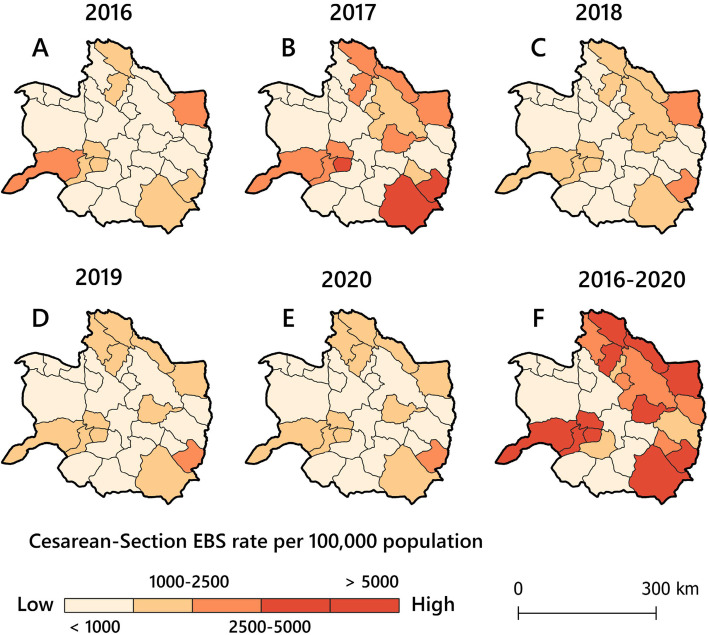
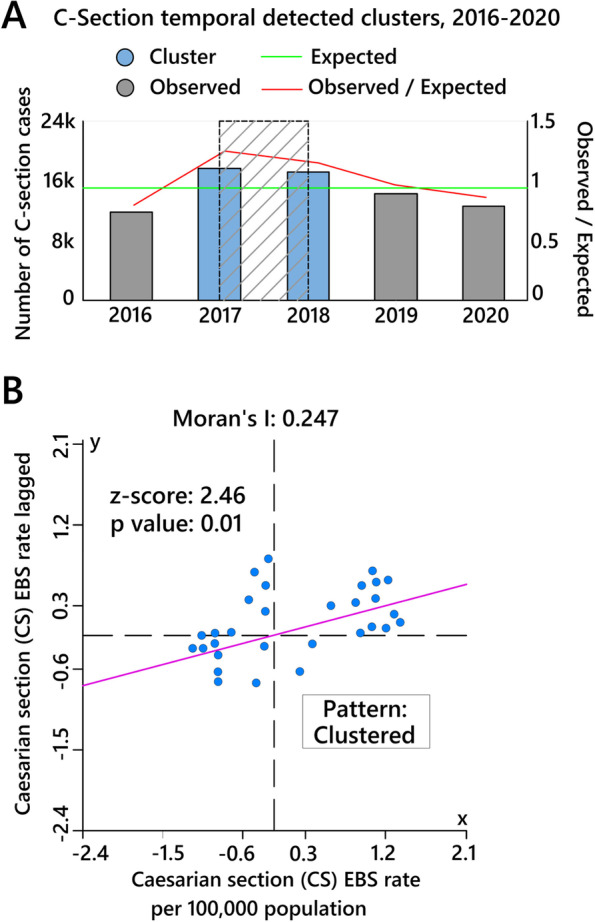
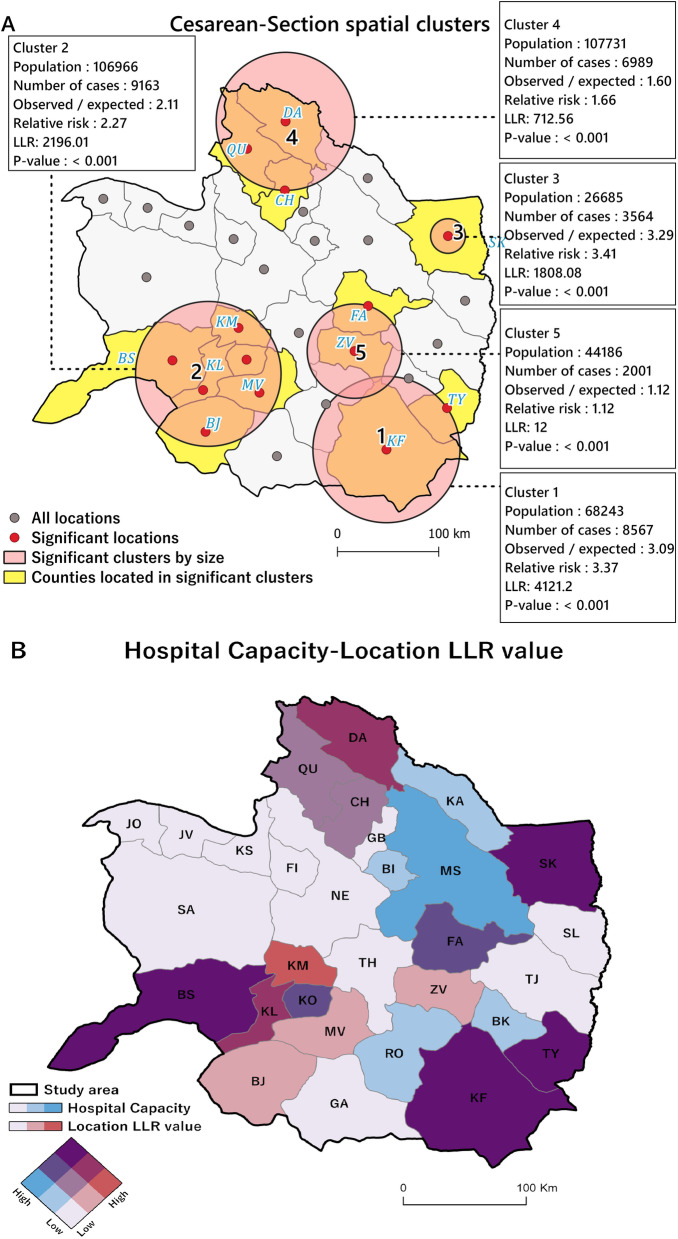
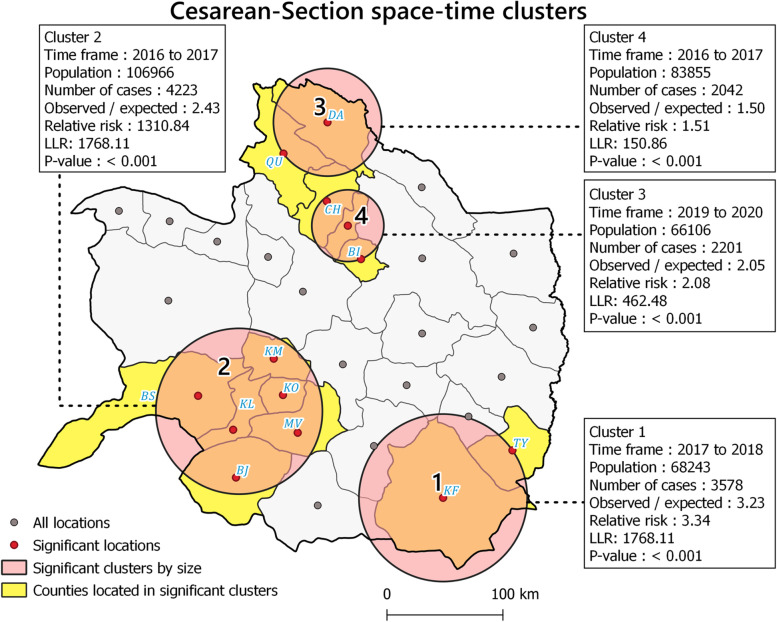
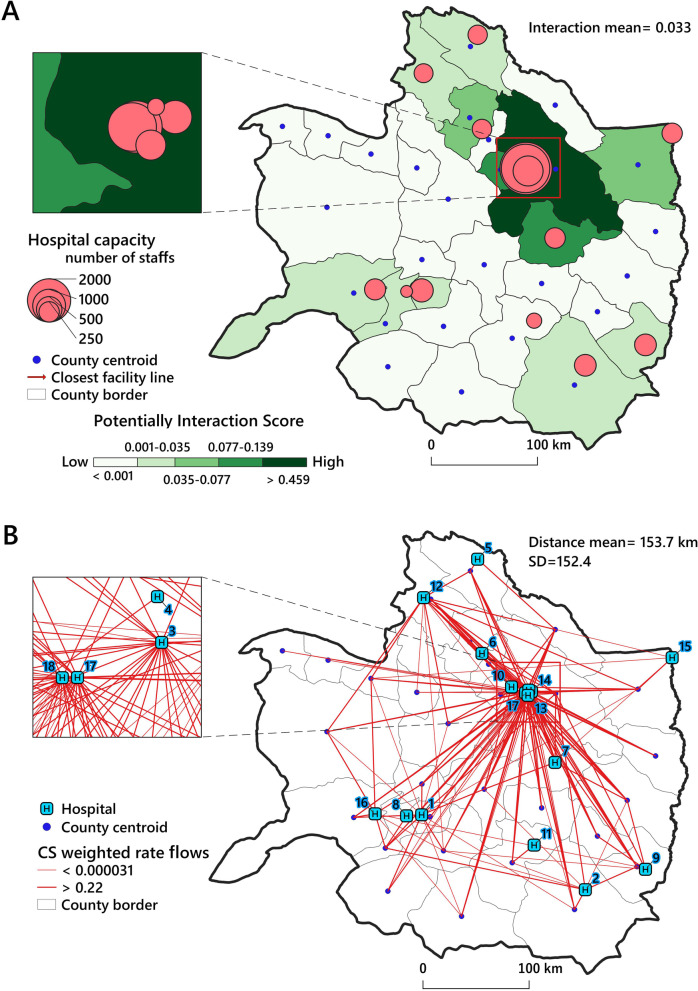
The temporal analysis identified 2017 and 2018 as the statistically significant high clustered times in terms of CS rate. Five purely spatial clusters were identified that were distributed heterogeneously in the study region and included 14 counties. The spatiotemporal analysis identified four clusters that included 13 counties as high-rate areas in different periods. According to spatial interaction analysis, there was a solid spatial concentration of hospital facilities in the political center of the study area. Moreover, a high degree of inequity was observed in spatial accessibility to CS hospitals in the study area.
CS Spatiotemporal clusters in the study area reveal that CS use in different counties among women of childbearing age is significantly different in terms of location and time. This difference might be studied in future research to identify any overutilization of CS or lack of appropriate CS in clustered counties, as both put women at risk. Hospital capacity and distance from population centers to hospitals might play an essential role in CS rate variations and spatial interactions among people and CS facilities. As a result, some healthcare strategies, e.g., building new hospitals and empowering the existing local hospitals to perform CS in areas out of service, might be developed to decline spatial inequity.
由于紧急剖宫产所需医疗设施分布不均,婴儿和母亲的生命处于危险之中。然而,没有医学指征的剖宫产可能会给母亲和婴儿带来并发症,这是一个全球性的健康问题。确定每个地理区域剖宫产率的时空变化,可以提供有助于了解剖宫产服务使用状况的信息。
本研究采用时空扫描统计和空间相互作用分析,利用地理信息系统可视化和探索剖宫产服务模式,对伊朗东北部 2016 年至 2020 年剖宫产的时空模式进行了横断面研究。
时间分析确定了 2017 年和 2018 年是剖宫产率统计学意义上的高聚类时间。确定了 5 个纯空间聚类,它们在研究区域内呈不均匀分布,包括 14 个县。时空分析确定了 4 个包括 13 个县的聚类,这些县在不同时期为高剖宫产率地区。根据空间相互作用分析,研究区域政治中心的医院设施具有坚实的空间集中性。此外,研究区域剖宫产医院的空间可达性存在高度不公平。
研究区域剖宫产的时空聚类表明,不同县育龄妇女的剖宫产使用在地点和时间上存在显著差异。在未来的研究中,可以研究这种差异,以确定聚类县中是否存在剖宫产过度使用或缺乏适当的剖宫产,因为这两种情况都会使妇女面临风险。医院容量和人口中心到医院的距离可能在剖宫产率变化和人群与剖宫产设施之间的空间相互作用中发挥重要作用。因此,可以制定一些医疗保健策略,例如,建立新医院,并赋予现有地方医院在服务范围之外进行剖宫产的能力,以减少空间不公平。