Jin Huawei, Yu Zhenhua, Tian Tian, Shen Guoping, Chen Weian, Fan Miao, He Qun, Dai Dandan, Zhang Xuan, Liu Dawei
Department of Neurosurgery, the First Affiliated Hospital of Sun Yat-sen University, Guangzhou, China.
Department of Nuclear Medicine, the First Affiliated Hospital of Sun Yat-sen University, Guangzhou, China.
Front Mol Biosci. 2022 Jul 5;9:873042. doi: 10.3389/fmolb.2022.873042. eCollection 2022.
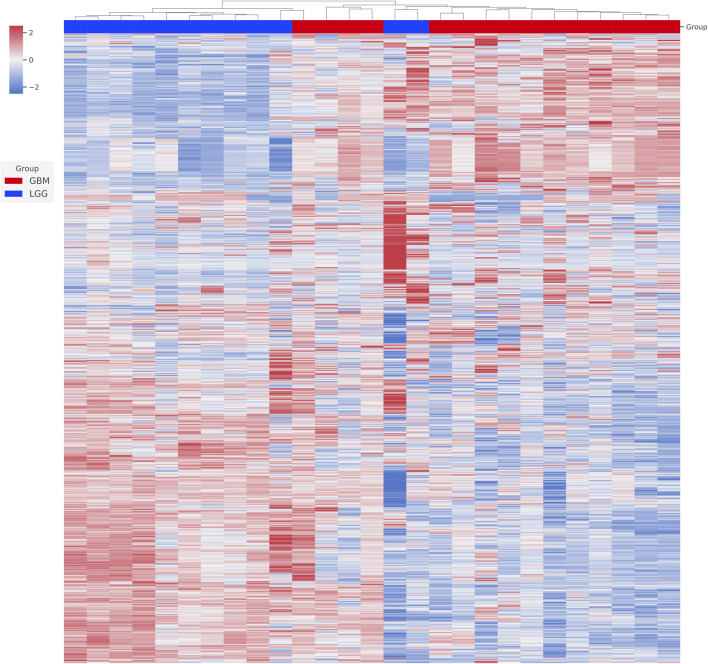
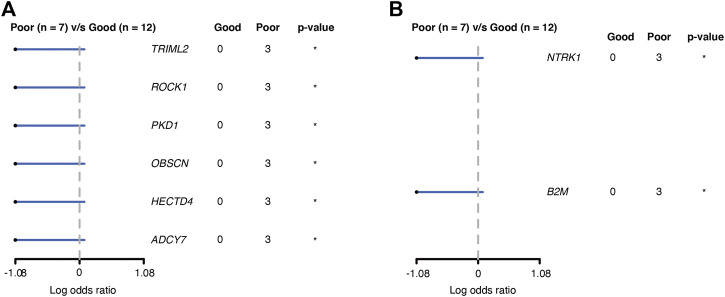
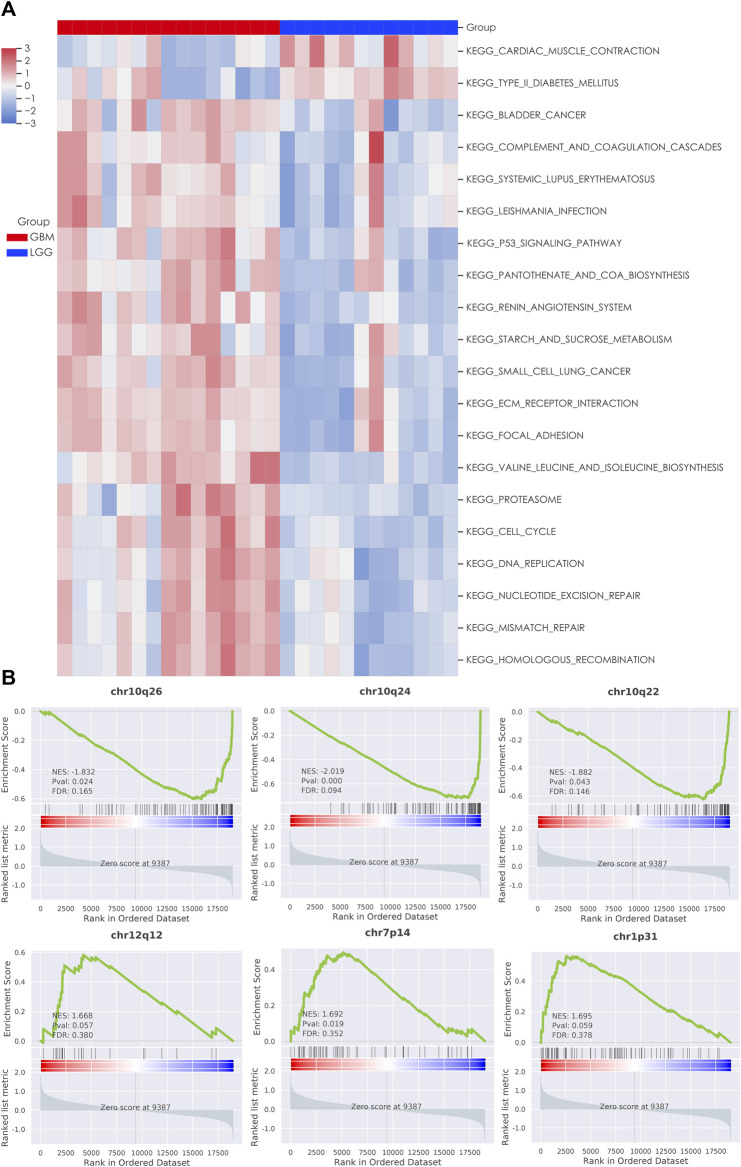
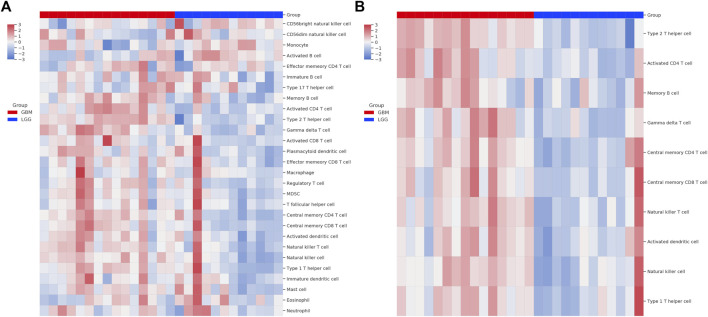
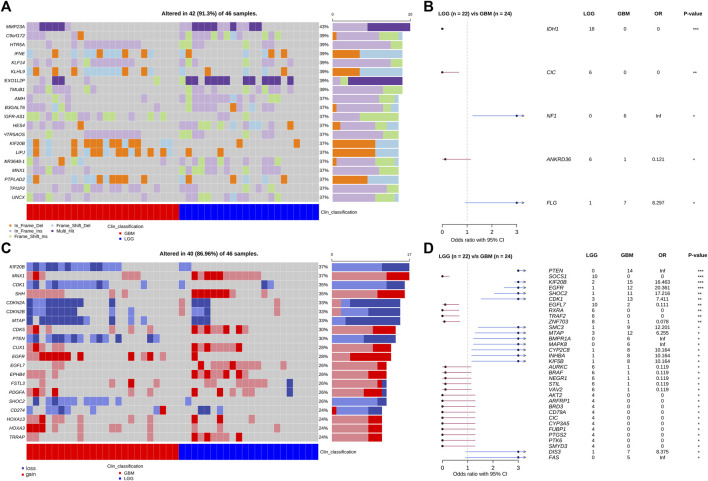
As reflected in the WHO classification of glioma since 2020, genomic information has been an important criterion in addition to histology for glioma classification. There is a significant intergrade difference as well as intragrade difference of survival probability among glioma patients. Except the molecular criteria used in the WHO classification, few studies have explored other genomic factors that may be underlying these survival differences, especially in Chinese populations. Here, we used integrative genomic approaches to characterize a Chinese glioma cohort to search for potential prognostic biomarkers. We recruited 46 Chinese patients with primary malignant glioma. All the patients were analyzed with whole-exome sequencing (WES) and 27 of them were analyzed with RNA-seq. We compared the molecular features between patients in different WHO grades. We classified the glioblastoma (GBM) patients into two groups (good vs poor survival) using six-month progression-free survival (PFS6) status and compared the genomic profiles between the two groups. We found grade II and grade III patients cluster together (LGG) and they are different from GBM in unsupervised clustering analysis with RNA-seq data. Gene set enrichment analysis (GSEA) comparing GBM and the LGG group suggested that GBM had upregulation of multiple pathways related to genome integrity and immune cell infiltration. Further comparison of somatic mutations between the two groups revealed as a novel mutation associated with GBM and prevalence of CNV in multiple genes in GBM. Comparison between PFS6 good and poor GBM patients revealed six genes () were significantly mutated and two genes ( and ) had more CNV alterations in the poor prognosis group. Taken together, our molecular data revealed that GBM patient showed distinct characteristics related to individual gene, chromosome integrity, and infiltrating immune cells compared to LGG (grade II/III) patients. We also identified few novel genes with SNV or CNV, which might be the potential markers for clinical outcome of GBM.
自2020年以来,世界卫生组织(WHO)的胶质瘤分类中已将基因组信息作为除组织学之外的重要分类标准。胶质瘤患者的生存概率在分级之间以及同一分级内均存在显著差异。除了WHO分类中使用的分子标准外,很少有研究探索可能导致这些生存差异的其他基因组因素,尤其是在中国人群中。在此,我们采用综合基因组方法对一个中国胶质瘤队列进行特征分析,以寻找潜在的预后生物标志物。我们招募了46例中国原发性恶性胶质瘤患者。所有患者均进行了全外显子测序(WES)分析,其中27例进行了RNA测序分析。我们比较了不同WHO分级患者之间的分子特征。我们使用无进展生存期6个月(PFS6)状态将胶质母细胞瘤(GBM)患者分为两组(生存良好组与生存不良组),并比较了两组之间的基因组图谱。我们发现II级和III级患者聚为一组(低级别胶质瘤,LGG),在基于RNA测序数据的无监督聚类分析中,他们与GBM不同。基因集富集分析(GSEA)比较GBM组和LGG组,结果表明GBM中多个与基因组完整性和免疫细胞浸润相关的通路上调。两组之间体细胞突变的进一步比较显示,一种新的突变与GBM相关,且GBM中多个基因存在拷贝数变异(CNV)。PFS6良好和不良的GBM患者之间的比较显示,有6个基因()发生了显著突变,2个基因(和)在预后不良组中有更多的CNV改变。综上所述,我们的分子数据显示,与LGG(II/III级)患者相比,GBM患者在个体基因、染色体完整性和浸润免疫细胞方面表现出明显不同的特征。我们还鉴定出了一些具有单核苷酸变异(SNV)或CNV的新基因,它们可能是GBM临床预后的潜在标志物。