Zaid Abbu, Mohammad Firoz, Siddique Kadambot H M
Plant Physiology and Biochemistry Section, Department of Botany, Aligarh Muslim University, Aligarh, India.
Department of Botany, Government Degree College Doda, Doda, India.
Front Plant Sci. 2022 Jul 5;13:895427. doi: 10.3389/fpls.2022.895427. eCollection 2022.
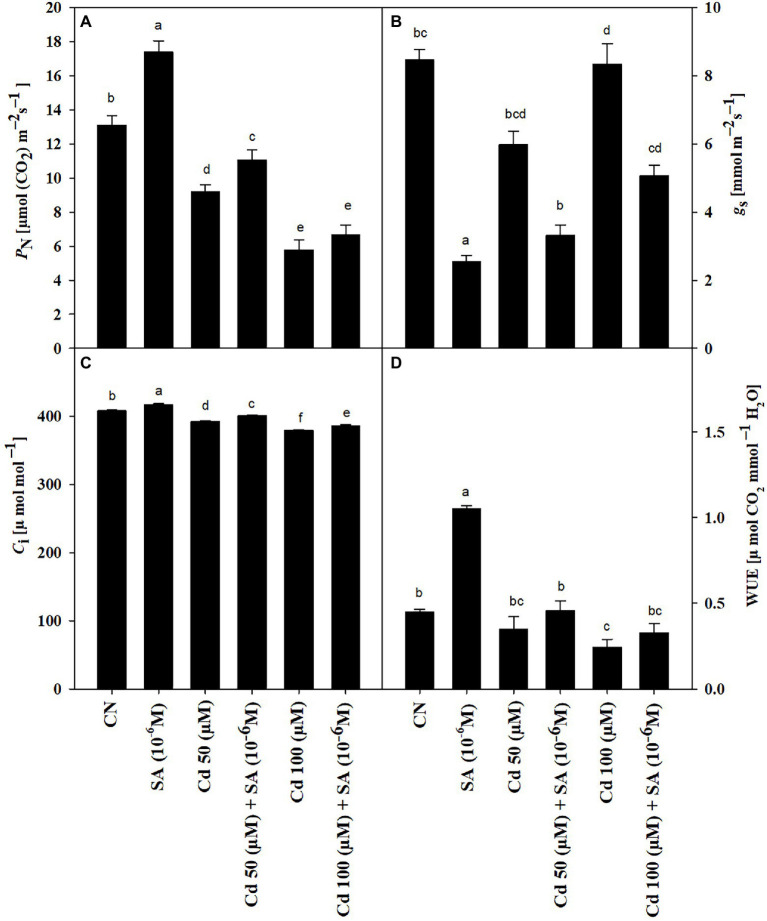
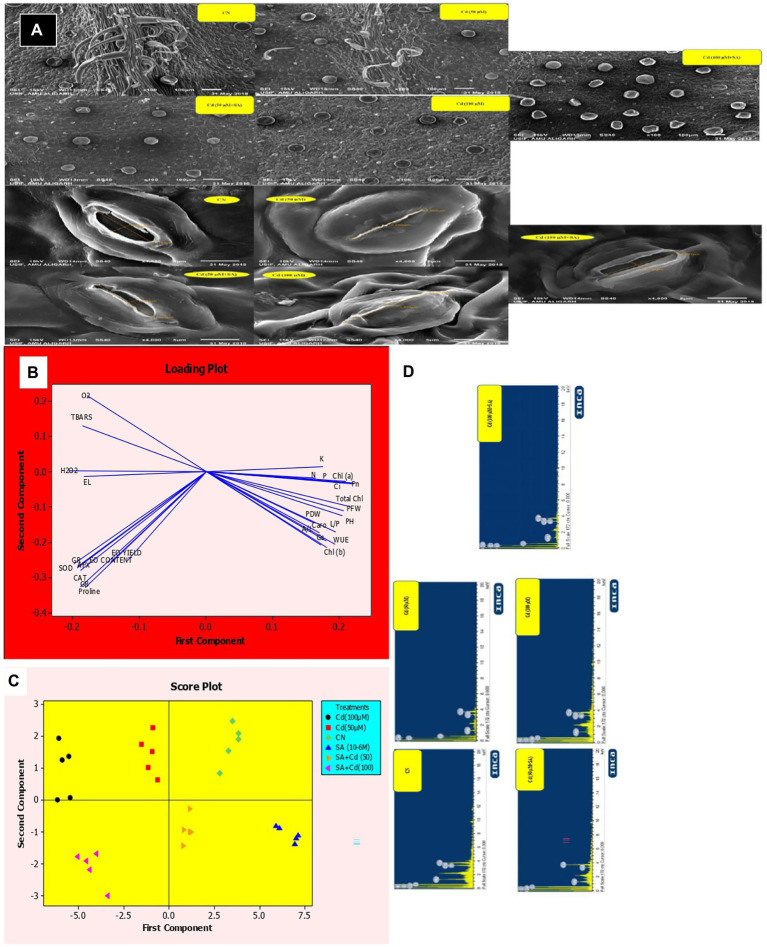
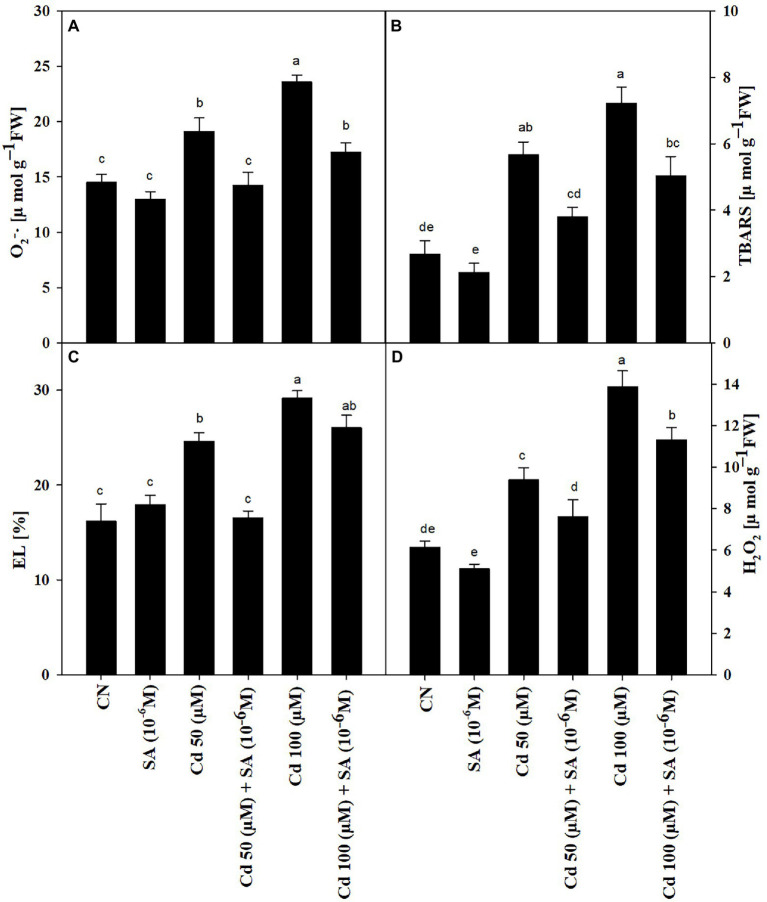
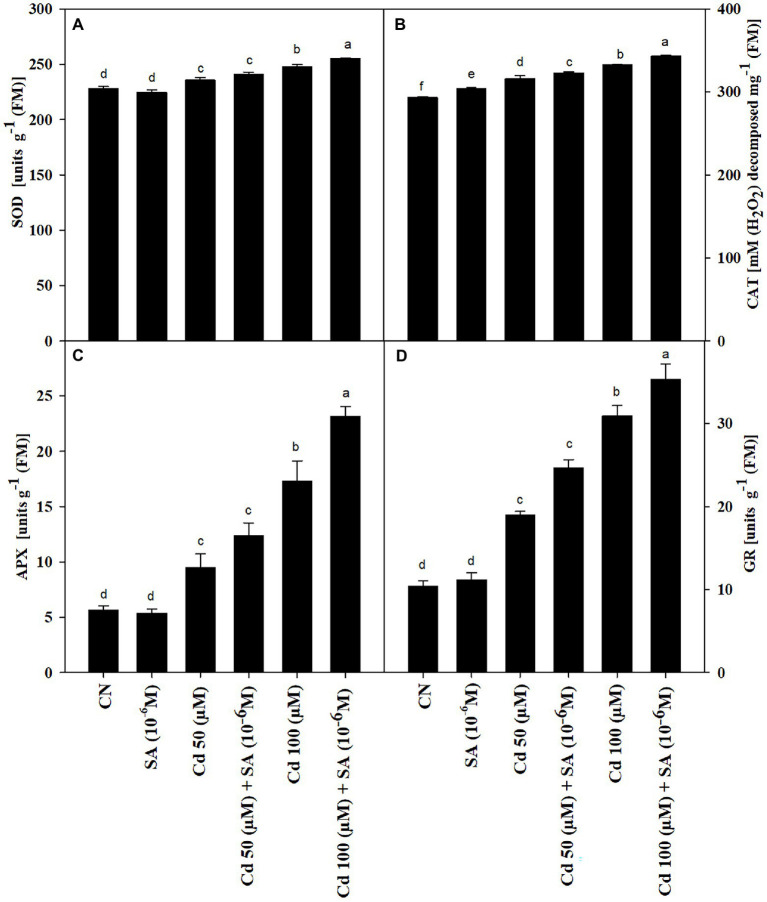
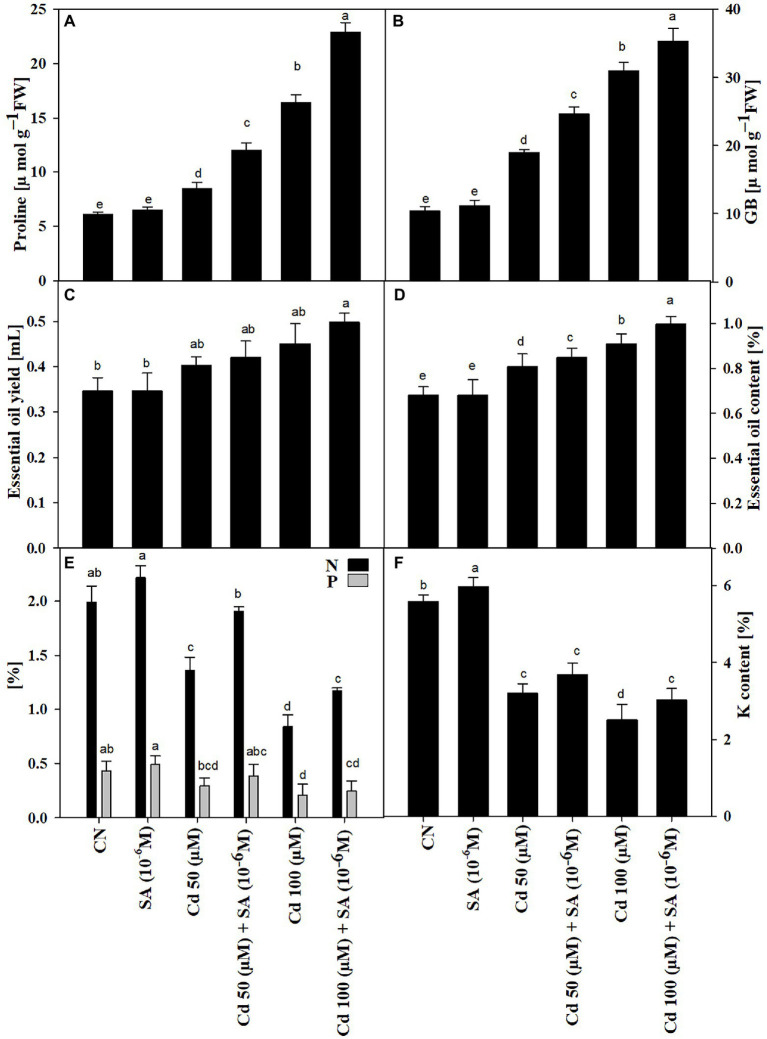
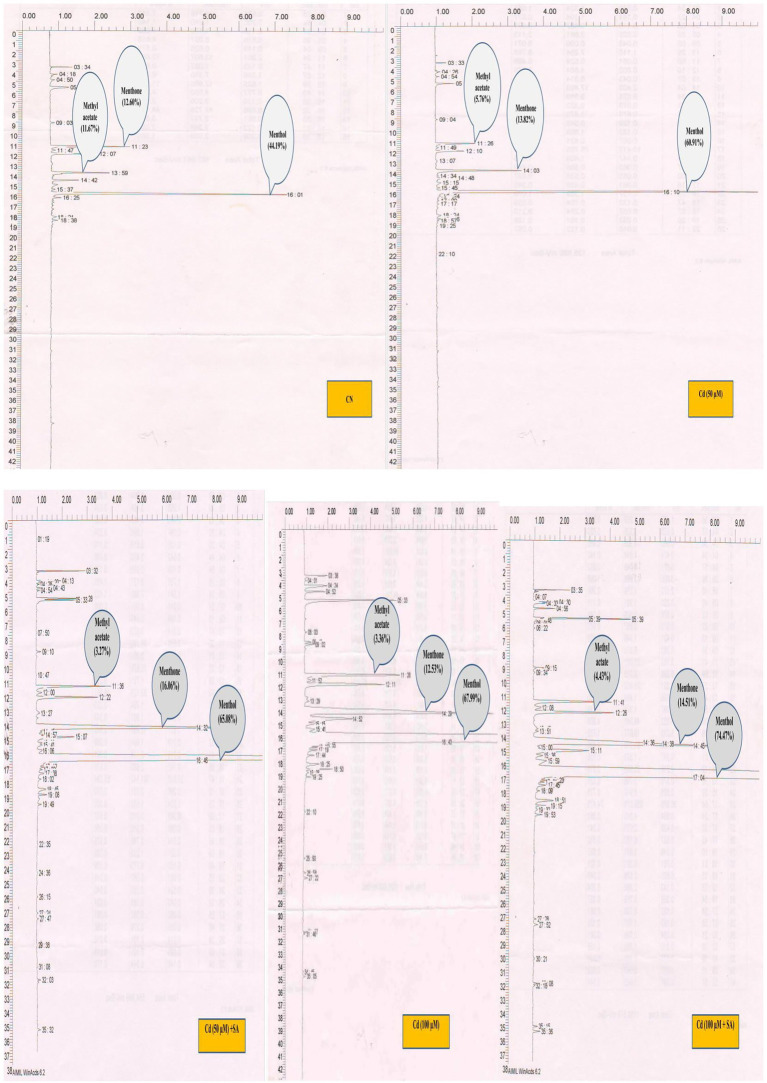
The application of phytohormones through seed priming could enhance quality of important medicinal and aromatic plants (MAPs) under heavy metal stress. We evaluated the potential of salicylic acid (SA) priming for overcoming the adverse effects of cadmium stress in L. plants. Suckers of plants were primed with SA before transplanting them into soil. At 30 days after transplanting, two doses (50 and 100 μm) of CdCl were applied to the soil. Both Cd treatments altered plant growth, photosynthetic pigments, leaf gas exchange attributes, and mineral nutrient contents. The 50 and 100 μm Cd treatments increased endogenous Cd content by 97.95 and 98.03%, electrolyte leakage (EL) by 34.21 and 44.38%, hydrogen peroxide (HO) by 34.71 and 55.80%, malondialdehyde (MDA) by 53.08 and 63.15%, and superoxide content (O ) by 24.07 and 38.43%, respectively. Cd triggered the up-regulation of antioxidant enzyme activities (superoxide dismutase, SOD; catalase, CAT; ascorbate peroxidase, APX; and glutathione reductase GR) and increased osmolyte biosynthesis and, interestingly, secondary metabolite (SM) accumulation. The presence of SA and Cd had an additive effect on these parameters. Nevertheless, plants primed with SA regulated stomatal conductance under Cd stress. SA priming to menthol mint plants under Cd stress overcome the effects of Cd stress while increasing SMs.
通过种子引发施用植物激素可以提高重要药用和芳香植物在重金属胁迫下的品质。我们评估了水杨酸(SA)引发对克服镉胁迫对罗勒属植物不利影响的潜力。在将植物吸根移栽到土壤之前,先用SA进行引发处理。移栽后30天,向土壤中施加两剂(50和100μm)CdCl₂。两种镉处理均改变了植物生长、光合色素、叶片气体交换特性和矿质营养含量。50和100μm镉处理使内源镉含量分别增加了97.95%和98.03%,电解质渗漏(EL)分别增加了34.21%和44.38%,过氧化氢(H₂O₂)分别增加了34.71%和55.80%,丙二醛(MDA)分别增加了53.08%和63.15%,超氧化物含量(O₂⁻)分别增加了24.07%和38.43%。镉引发了抗氧化酶活性(超氧化物歧化酶、SOD;过氧化氢酶、CAT;抗坏血酸过氧化物酶、APX;和谷胱甘肽还原酶、GR)的上调,并增加了渗透调节物质的生物合成,有趣的是,还增加了次生代谢产物(SM)的积累。SA和镉的存在对这些参数具有累加效应。然而,用SA引发的植物在镉胁迫下调节了气孔导度。在镉胁迫下对薄荷醇薄荷植物进行SA引发处理,在增加次生代谢产物的同时克服了镉胁迫的影响。