Primessnig Uwe, Deißler Peter M, Wakula Paulina, Tran Khai Liem, Hohendanner Felix, von Lewinski Dirk, Blaschke Florian, Knosalla Christoph, Falk Volkmar, Pieske Burkert, Grubitzsch Herko, Heinzel Frank R
Department of Internal Medicine and Cardiology, Charité-Universitätsmedizin Berlin, Campus Virchow-Klinikum, Berlin, Germany.
DZHK (German Centre for Cardiovascular Research), Berlin, Germany.
Front Cardiovasc Med. 2022 Jul 5;9:859014. doi: 10.3389/fcvm.2022.859014. eCollection 2022.
Although the angiotensin receptor-neprilysin inhibitor (ARNI) sacubitril/valsartan started a new era in heart failure (HF) treatment, less is known about the tissue-level effects of the drug on the atrial myocardial functional reserve and arrhythmogenesis.
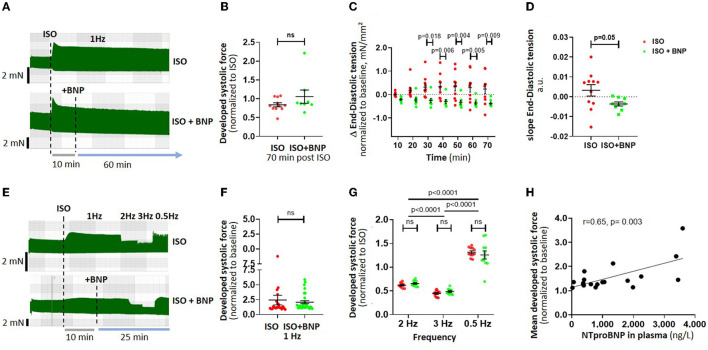
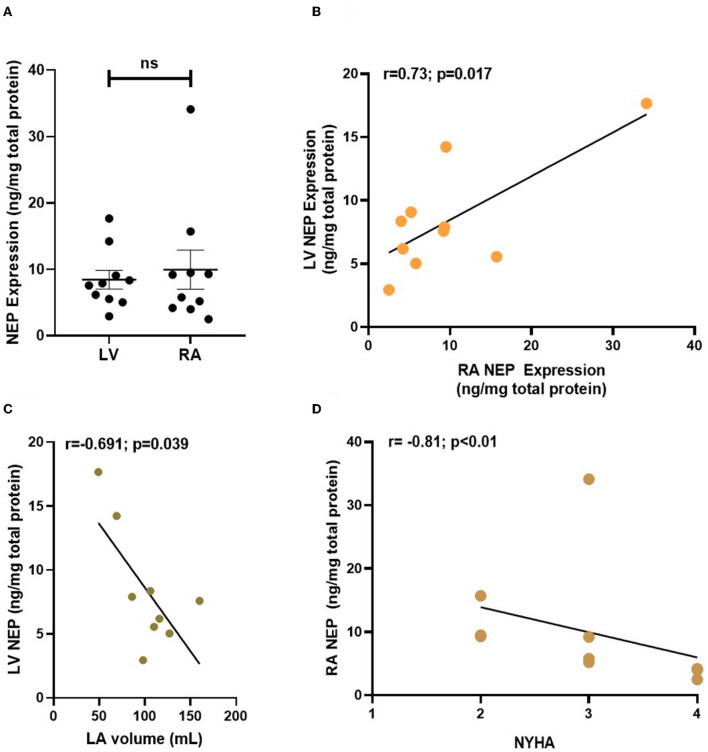
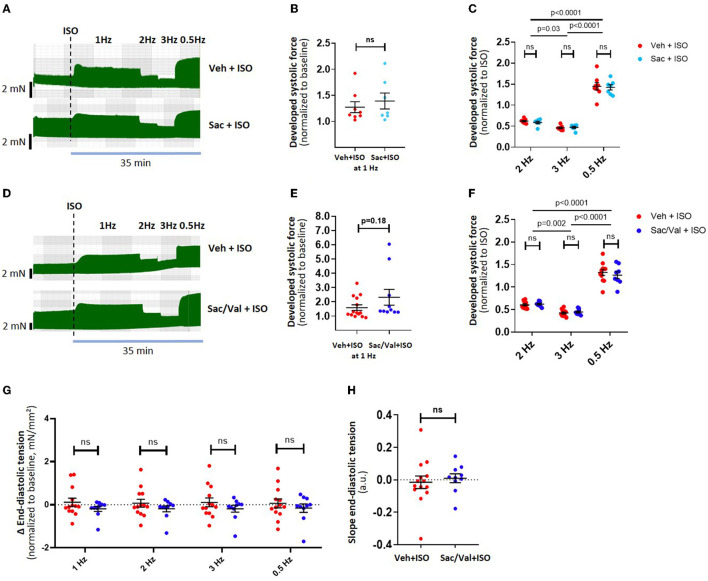
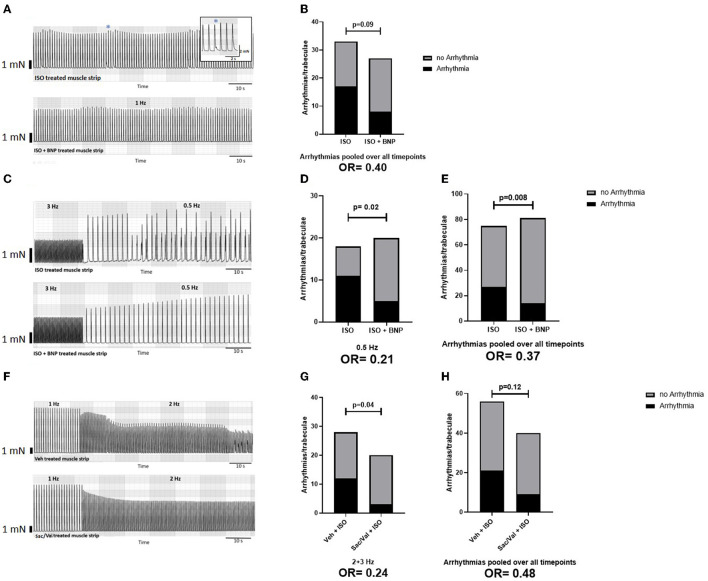
Right atrial (RA) biopsies were retrieved from patients ( = 42) undergoing open-heart surgery, and functional experiments were conducted in muscle strips ( = 101). B-type natriuretic peptide (BNP) did not modulate systolic developed force in human myocardium during β-adrenergic stimulation, but it significantly reduced diastolic tension ( < 0.01) and the probability of arrhythmias ( < 0.01). In addition, patient's plasma NTproBNP positively correlated with isoproterenol-induced contractile reserve in atrial tissue ( = 0.65; < 0.01). Sacubitrilat+valsartan (Sac/Val) did not show positive inotropic effects on atrial trabeculae function but reduced arrhythmogeneity. Atrial and ventricular biopsies from patients with end-stage HF ( = 10) confirmed that neprilysin (NEP) is equally expressed in human atrial and ventricular myocardium. RA NEP expression correlates positively with RA ejection fraction (EF) ( = 0.806; < 0.05) and left ventricle (LV) NEP correlates inversely with left atrial (LA) volume ( = -0.691; < 0.05).
BNP ameliorates diastolic tension during adrenergic stress in human atrial myocardium and may have positive long-term effects on the inotropic reserve. BNP and Sac/Val reduce atrial arrhythmogeneity during adrenergic stress . Myocardial NEP expression is downregulated with declining myocardial function, suggesting a compensatory mechanism in HF.
尽管血管紧张素受体脑啡肽酶抑制剂(ARNI)沙库巴曲/缬沙坦开启了心力衰竭(HF)治疗的新时代,但关于该药物对心房心肌功能储备和心律失常发生的组织水平影响,人们了解较少。
从接受心脏直视手术的患者(n = 42)中获取右心房(RA)活检组织,并在肌条(n = 101)上进行功能实验。B型利钠肽(BNP)在β肾上腺素能刺激期间并未调节人心肌的收缩力,但它显著降低了舒张张力(P < 0.01)和心律失常的发生率(P < 0.01)。此外,患者血浆NTproBNP与异丙肾上腺素诱导的心房组织收缩储备呈正相关(r = 0.65;P < 0.01)。沙库巴曲+缬沙坦(Sac/Val)对心房小梁功能未显示正性肌力作用,但降低了心律失常性。来自终末期HF患者(n = 10)的心房和心室活检证实,脑啡肽酶(NEP)在人心房和心室心肌中表达相当。RA NEP表达与RA射血分数(EF)呈正相关(r = 0.806;P < 0.05),而左心室(LV)NEP与左心房(LA)容积呈负相关(r = -0.691;P < 0.05)。
BNP可改善人心房心肌在肾上腺素能应激期间的舒张张力,并可能对肌力储备产生长期积极影响。BNP和Sac/Val可降低肾上腺素能应激期间的心房心律失常性。心肌功能下降时心肌NEP表达下调,提示HF存在一种代偿机制。