El-Hawary Seham S, Ali Taha F S, Abo El-Ela Sara O, Elwekeel Ahlam, Abdelmohsen Usama Ramadan, Owis Asmaa I
Department of Pharmacognosy, Faculty of Pharmacy, Cairo University Cairo Egypt.
Department of Medicinal Chemistry, Faculty of Pharmacy, Minia University Minia Egypt.
RSC Adv. 2022 Jul 6;12(30):19505-19511. doi: 10.1039/d2ra01306a. eCollection 2022 Jun 29.
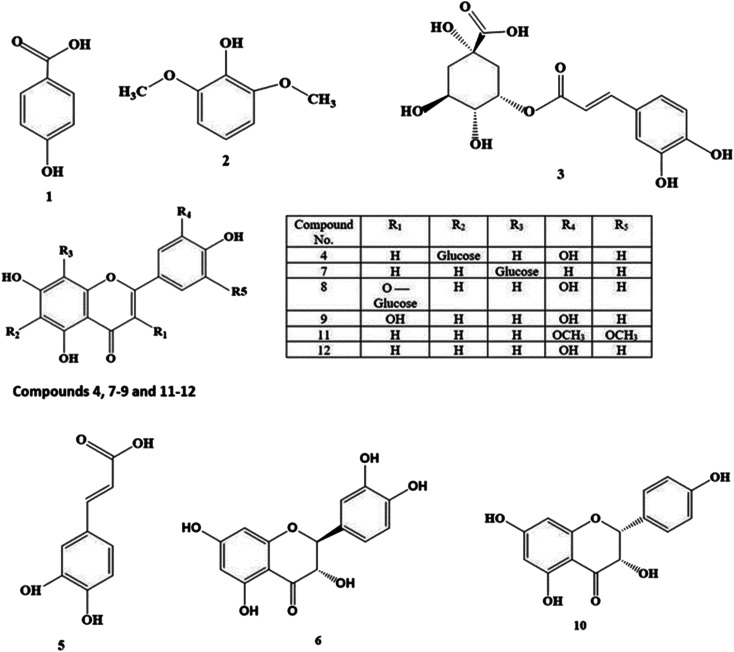
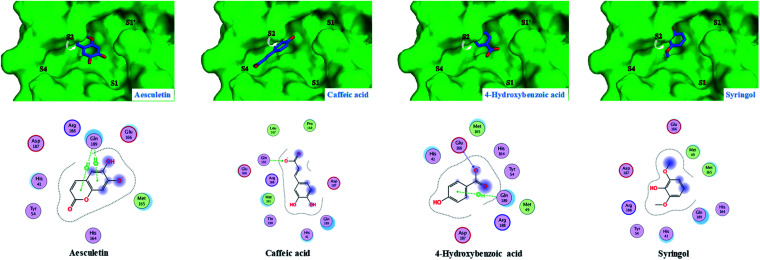
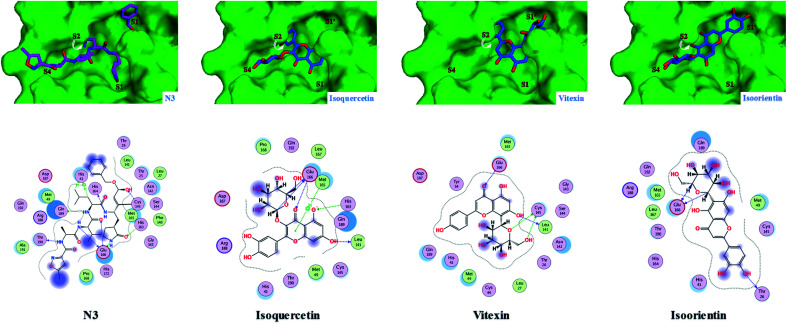
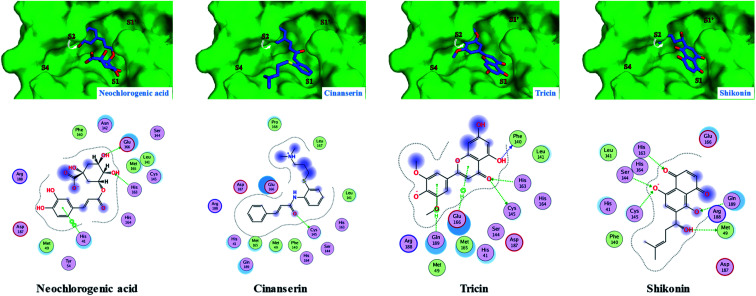
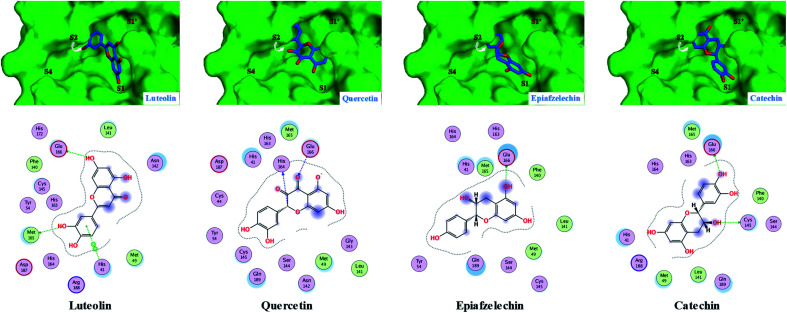
In late December 2019, a pandemic coronavirus disease 2019 (COVID-19) emerged in Wuhan, China and spread all over the globe. One of the promising therapeutic techniques of viral infection is to search for enzyme inhibitors among natural phytochemicals using molecular docking to obtain leads with the least side effects. The COVID-19 virus main protease (M) is considered as an attractive target due to its pivotal role in controlling viral transcription and replication. Metabolic profiling of the crude extract of Becc. (Arecaceae) leaves and fruit dereplicated twelve metabolites using LC-HRESIMS. Molecular docking simulation and ADME profiling of these annotated compounds proposed that tricin is a promising lead against COVID-19 virus M. The alcoholic extract was shown to inhibit SARS-CoV-2 through culture and RT-PCR testing with EC = 0.122 and 1.53 μg mL for leaves and fruit extracts, respectively, when compared with that of the FDA-approved anti-COVID-19 remdesivir (0.002 μg mL). Preliminary steps were also performed including the 3CL-protease inhibition assay and cytotoxicity study. It is worthwhile to find a cheap, safe, natural source for promising anti-SARS-CoV-2 agents that can be further tested against the COVID-19 virus M. This study provides scientific basis for demonstrating beneficial effects of application on human health during the corona pandemic.
2019年12月下旬,一种新型冠状病毒疾病2019(COVID-19)在中国武汉出现并蔓延至全球。病毒感染的一种有前景的治疗技术是利用分子对接在天然植物化学物质中寻找酶抑制剂,以获得副作用最小的先导化合物。由于COVID-19病毒主要蛋白酶(M)在控制病毒转录和复制中起关键作用,因此被视为一个有吸引力的靶点。利用液相色谱-高分辨电喷雾电离质谱(LC-HRESIMS)对贝叶棕(棕榈科)叶和果实粗提物进行代谢谱分析,鉴定出12种代谢物。对这些注释化合物的分子对接模拟和药物代谢动力学(ADME)分析表明,小麦黄素是一种有前景的抗COVID-19病毒M的先导化合物。与美国食品药品监督管理局(FDA)批准的抗COVID-19药物瑞德西韦(0.002 μg/mL)相比,乙醇提取物通过培养和逆转录聚合酶链反应(RT-PCR)测试显示出对严重急性呼吸综合征冠状病毒2(SARS-CoV-2)的抑制作用,叶提取物和果实提取物的半数有效浓度(EC)分别为0.122 μg/mL和1.53 μg/mL。还进行了初步实验,包括3CL蛋白酶抑制试验和细胞毒性研究。寻找一种廉价、安全的天然来源以获得有前景的抗SARS-CoV-2药物,并进一步针对COVID-19病毒M进行测试是值得的。本研究为证明在新冠疫情期间该应用对人类健康的有益作用提供了科学依据。