School of Public Health, Southern Medical University, Guangzhou, China.
Guangdong Provincial Institution of Public Health, Guangdong Provincial Center for Disease Control and Prevention, Guangzhou, China.
Front Cell Infect Microbiol. 2022 Jul 5;12:911563. doi: 10.3389/fcimb.2022.911563. eCollection 2022.
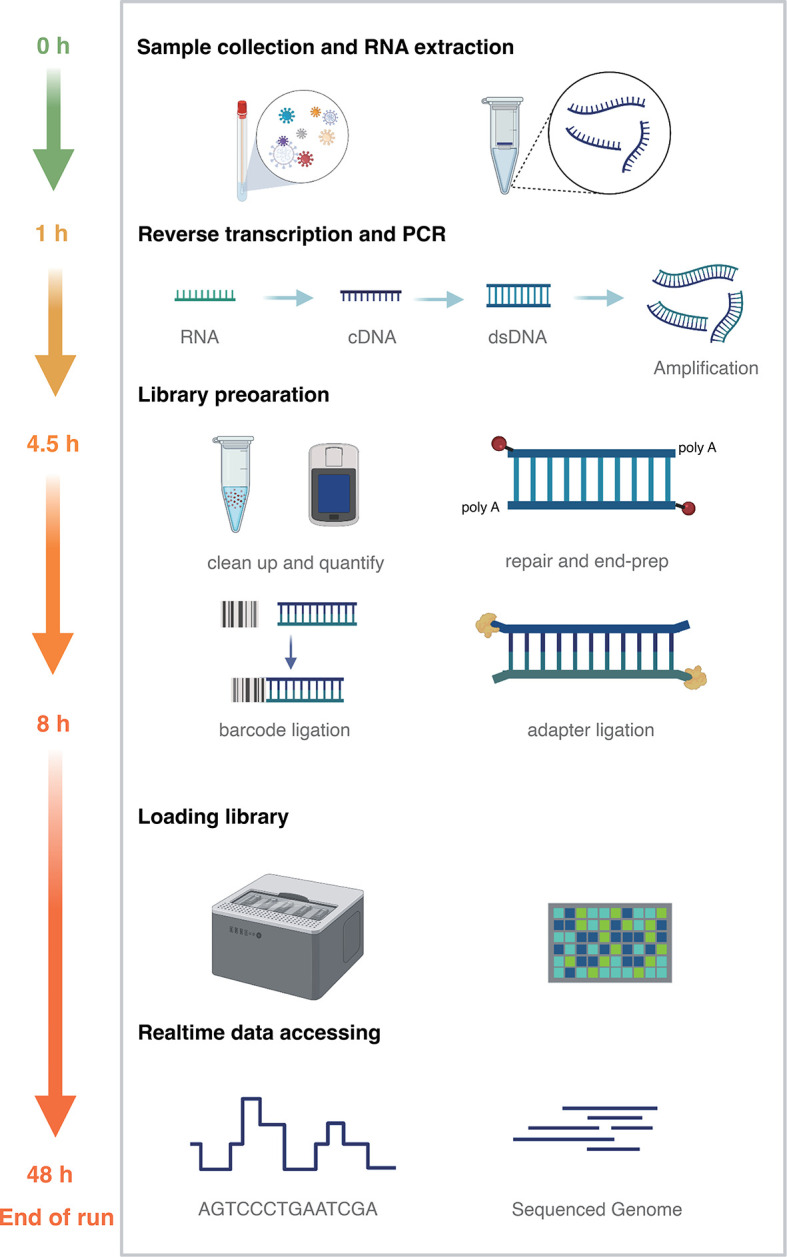
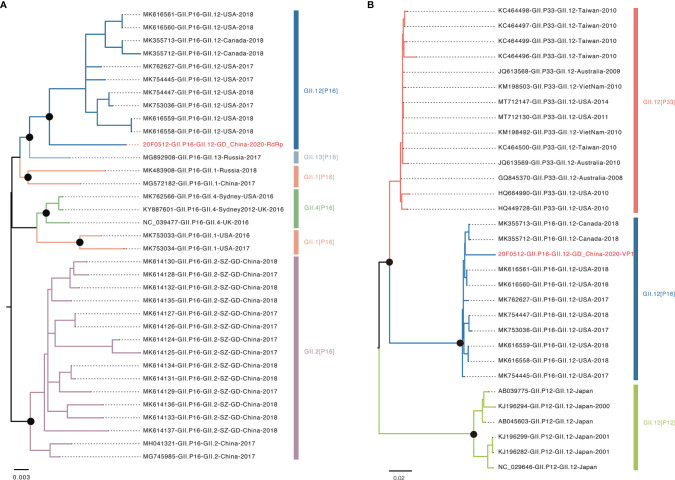
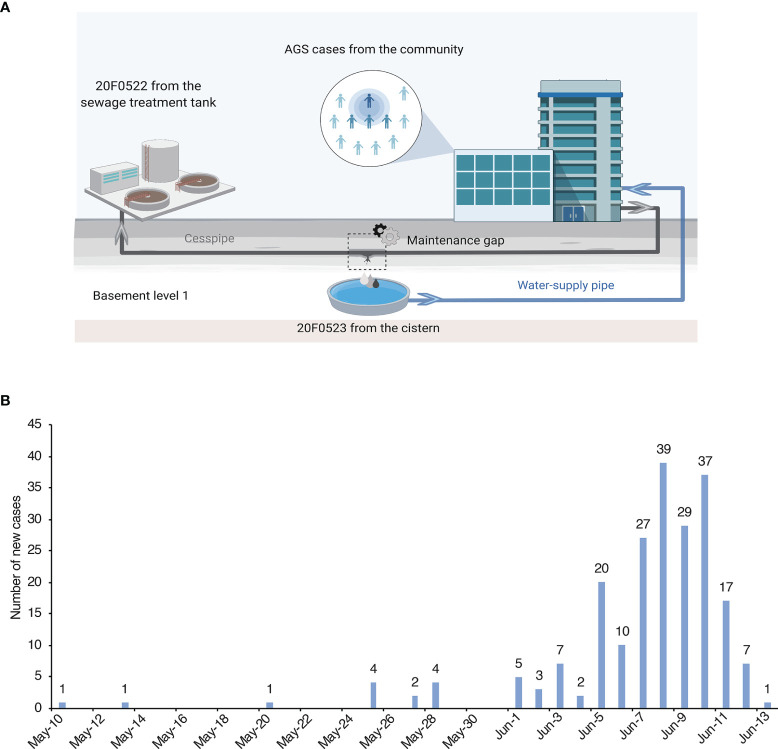
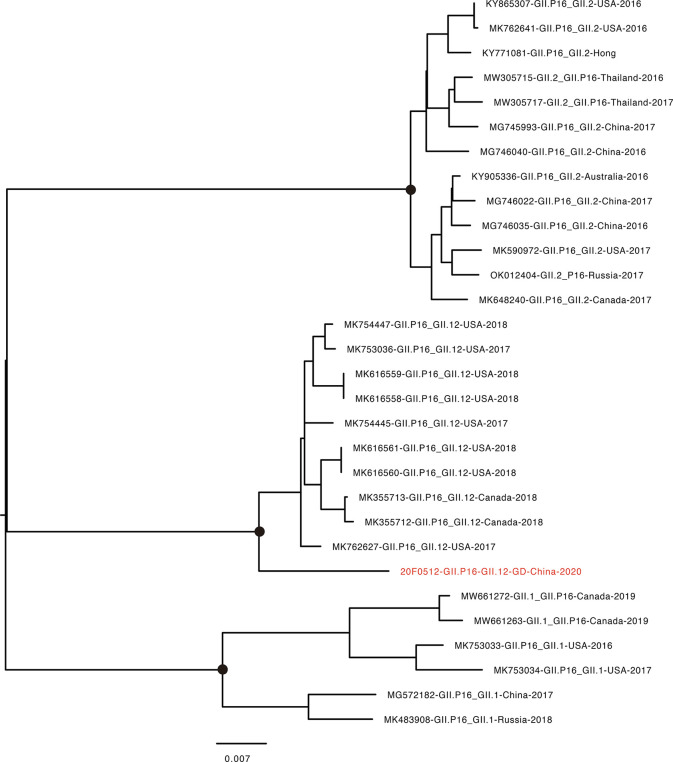
For a rapidly spreading virus such as NoV (norovirus), pathogen identification, genotype classification, and transmission tracing are urgent for epidemic control. Here, we applied the Nanopore metatranscriptomic sequencing to determine the causative pathogen of a community AGS (Acute gastroenteritis) outbreak. The results were also confirmed by RT-PCR. The NGS (Next Generation Sequencing) library was constructed within 8 hours and sequence analyses were carried out in real-time. NoV positive reads were detected in 13 of 17 collected samples, including two water samples from sewage treatment tank and cistern. A nearly complete viral genome and other genome fragments could be generated from metatranscriptomic sequencing of 13 samples. The NoV sequences from water samples and cases are identical suggesting the potential source of the outbreak. The sequencing results also indicated the outbreak was likely caused by an emerging recombinant GII.12[P16] virus, which was only identified in the United States and Canada in 2017-2018. This is the first report of this emerging variant in mainland China, following the large outbreaks caused by the recombinant GII.17[P17] and GII.2[P16] in 2014 and 2016, respectively. Closely monitoring of the prevalence of this recombinant strain is required. Our data also highlighted the importance of real-time sequencing in emerging pathogens' surveillance.
对于诺如病毒(NoV,norovirus)等传播迅速的病毒,病原体鉴定、基因型分类和传播溯源对于疫情控制至关重要。在这里,我们应用纳米孔宏转录组测序来确定社区急性肠胃炎(AGS)暴发的病原体。结果也通过 RT-PCR 进行了验证。NGS(下一代测序)文库在 8 小时内构建完成,并实时进行序列分析。在 17 个采集样本中,有 13 个样本的 NoV 阳性检出率,包括来自污水处理罐和蓄水池的两个水样。通过对 13 个样本的宏转录组测序,可以生成近乎完整的病毒基因组和其他基因组片段。水样和病例中的 NoV 序列相同,提示暴发可能源自水源。测序结果还表明,此次暴发很可能是由一种新兴的重组 GII.12[P16]病毒引起的,该病毒于 2017-2018 年仅在美国和加拿大被发现。这是中国大陆首例报告该新兴变异株的病例,紧随 2014 年和 2016 年由重组 GII.17[P17]和 GII.2[P16]引起的大规模暴发之后。需要密切监测该重组株的流行情况。我们的数据还突出了实时测序在新兴病原体监测中的重要性。