Emadzadeh Maryam, Mehdizadeh Atieh, Sharifan Payam, Khoshakhlagh Mahdieh, Sahebi Reza, Sadeghi Ramin, A Ferns Gordon, Ghayour-Mobarhan Majid
Clinical Research Development Unit, Ghaem Hospital, Mashhad University of Medical Sciences, Mashhad, Iran.
Department of Clinical Nutrition, Qaem Educational, Research and Treatment Center, Mashhad University of Medical Sciences, Mash-had, Iran.
Iran J Public Health. 2022 Feb;51(2):278-291. doi: 10.18502/ijph.v51i2.8681.
Vitamin D plays an essential role in the regulation of bone metabolism. The current meta-analysis aimed to assess the effectiveness of vitamin D fortification on special bone biomarkers.
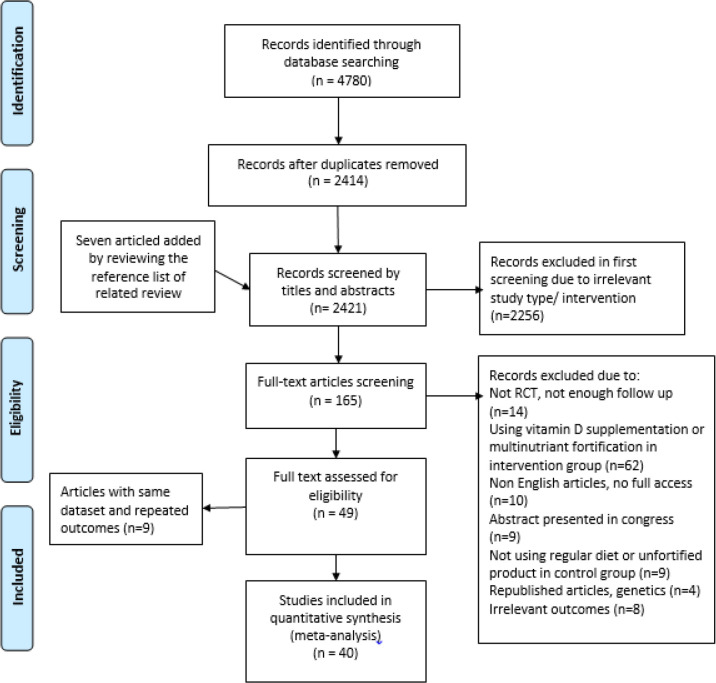
Five main databases (PubMed/Medline, ISI Web of Knowledge, Science Direct, Scopus, Cochrane Library as well as Science Direct, and Scopus) were considered for this systematic review, until Jan 2020. All randomized controlled trials were included to evaluate the probable relationship between consumption of vitamin D fortification products and bone biomarkers profile in this review.
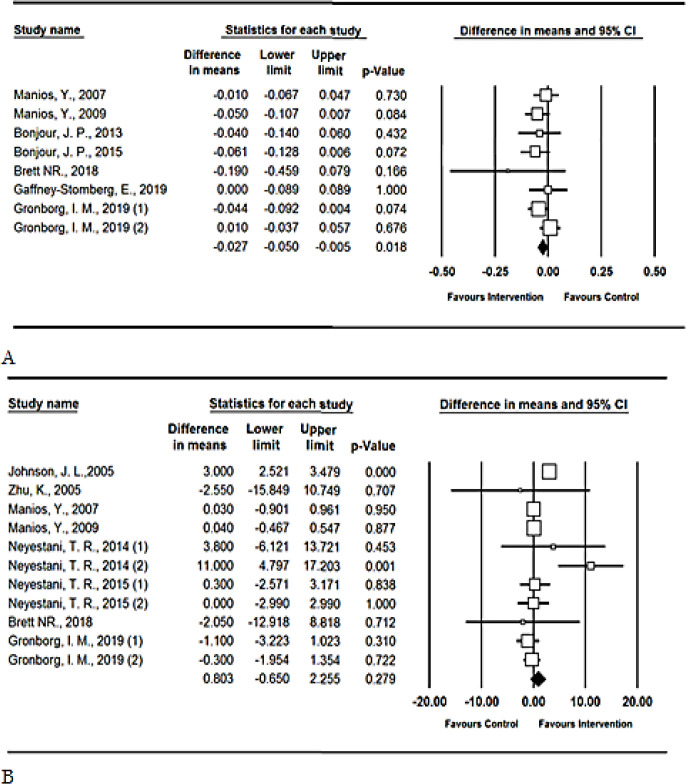
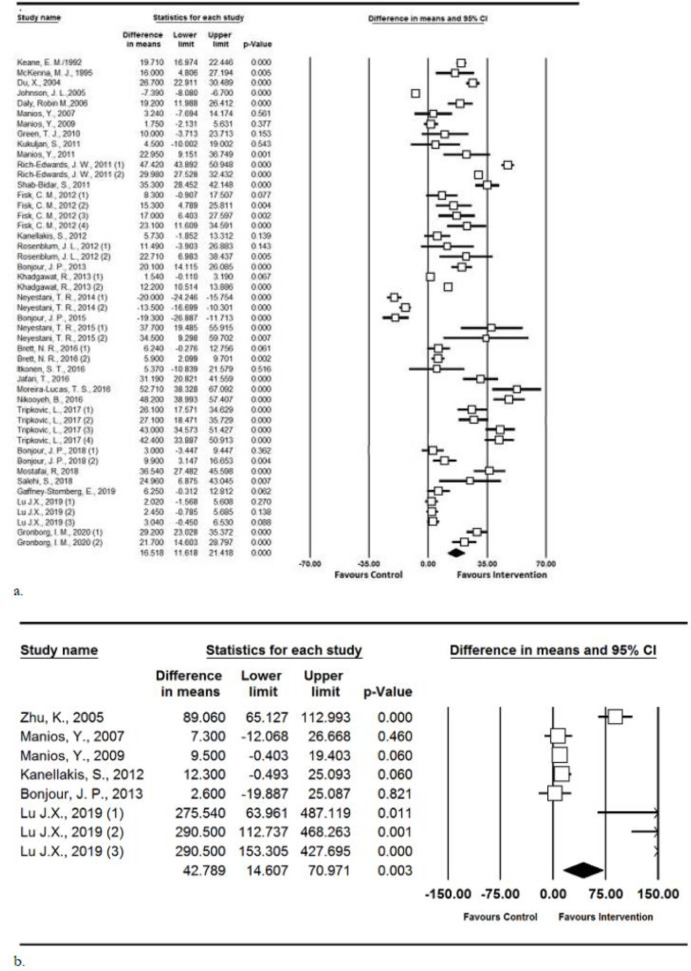
Among serum bone biomarkers (osteocalcin and telopeptides of type-1 collagen) investigated, only the level of telopeptides of type-1 collagen significantly decreased after fortification of vitamin D in the intervention group. A significant increase in vitamin D was seen in those older than 18 yr old, while the increase in younger children was not statistically significant between intervention and control groups.
Vitamin D fortification was not associated with a significant improvement in bone mass density (BMD), while it resulted in decreased PTH levels. Vitamin D fortified foods have some benefits on bone health due to increase in the level of vitamin D and IGF-1; and decreasing PTH and CTx levels.
维生素D在骨代谢调节中起重要作用。当前的荟萃分析旨在评估维生素D强化对特殊骨生物标志物的有效性。
本次系统评价纳入了五个主要数据库(PubMed/Medline、ISI Web of Knowledge、Science Direct、Scopus、Cochrane图书馆以及Science Direct和Scopus),截至2020年1月。本评价纳入了所有随机对照试验,以评估食用维生素D强化产品与骨生物标志物谱之间的可能关系。
在研究的血清骨生物标志物(骨钙素和I型胶原末端肽)中,干预组维生素D强化后仅I型胶原末端肽水平显著降低。18岁以上人群维生素D水平显著升高,而幼儿在干预组和对照组之间的升高无统计学意义。
维生素D强化与骨密度(BMD)的显著改善无关,但会导致甲状旁腺激素(PTH)水平降低。维生素D强化食品由于维生素D和胰岛素样生长因子-1(IGF-1)水平升高、PTH和I型胶原交联C末端肽(CTx)水平降低,对骨骼健康有一定益处。