Department of Neurology, University of Pennsylvania, Room 280C Clinical Research Building, 415 Curie Boulevard, Philadelphia, PA, 19104, USA.
Curr HIV/AIDS Rep. 2022 Oct;19(5):344-357. doi: 10.1007/s11904-022-00612-2. Epub 2022 Jul 22.
Reducing the risk of HIV-associated neurocognitive disorders (HAND) is an elusive treatment goal for people living with HIV. Combination antiretroviral therapy (cART) has reduced the prevalence of HIV-associated dementia, but milder, disabling HAND is an unmet challenge. As newer cART regimens that more consistently suppress central nervous system (CNS) HIV replication are developed, the testing of adjunctive neuroprotective therapies must accelerate.
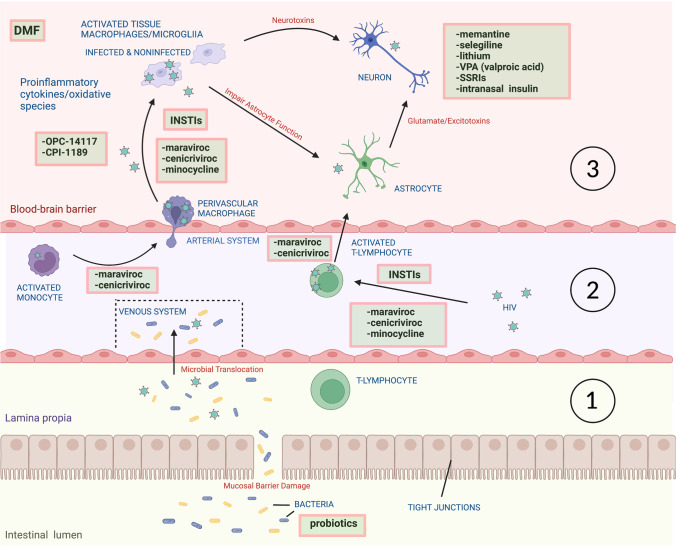
Successes in modifying cART regimens for CNS efficacy (penetrance, chemokine receptor targeting) and delivery (nanoformulations) in pilot studies suggest that improving cART neuroprotection and reducing HAND risk is achievable. Additionally, drugs currently used in neuroinflammatory, neuropsychiatric, and metabolic disorders show promise as adjuncts to cART, likely by broadly targeting neuroinflammation, oxidative stress, aerobic metabolism, and/or neurotransmitter metabolism. Adjunctive cognitive brain therapy and aerobic exercise may provide additional efficacy. Adjunctive neuroprotective therapies, including available FDA-approved drugs, cognitive therapy, and aerobic exercise combined with improved cART offer plausible strategies for optimizing the prevention and treatment of HAND.
降低 HIV 相关神经认知障碍(HAND)的风险是 HIV 感染者治疗的一个难以实现的目标。联合抗逆转录病毒疗法(cART)降低了 HIV 相关痴呆的患病率,但更轻微、更具致残性的 HAND 仍是一个未满足的挑战。随着更能持续抑制中枢神经系统(CNS)HIV 复制的新型 cART 方案的开发,辅助神经保护疗法的测试必须加速进行。
在探索性研究中对 CNS 疗效(穿透性、趋化因子受体靶向)和递药(纳米制剂)改良 cART 方案的成功,表明改善 cART 的神经保护和降低 HAND 风险是可行的。此外,目前用于神经炎症、神经精神和代谢疾病的药物作为 cART 的辅助药物显示出前景,可能通过广泛靶向神经炎症、氧化应激、需氧代谢和/或神经递质代谢。辅助认知脑治疗和有氧运动可能提供额外的疗效。辅助神经保护疗法,包括已批准的 FDA 药物、认知疗法和有氧运动与改良 cART 相结合,为优化 HAND 的预防和治疗提供了合理的策略。