Ji Qian, Fu Shengqiao, Zuo Hao, Huang Yumeng, Chu Liangmei, Zhu Yanyan, Hu Jing, Wu Yuting, Chen Shuangwei, Wang Yue, Ren Yongfei, Pu Xi, Liu Na, Li Rongkun, Wang Xu, Dai Chunhua
Department of Radiation Oncology, Institute of Oncology, Affiliated Hospital, Jiangsu University, Zhenjiang, Jiangsu Province, China.
Jiangsu Key Laboratory of Medical Science and Laboratory Medicine, School of Medicine, Jiangsu University, Zhenjiang, Jiangsu Province, China.
Cell Death Discov. 2022 Jul 22;8(1):332. doi: 10.1038/s41420-022-01127-w.
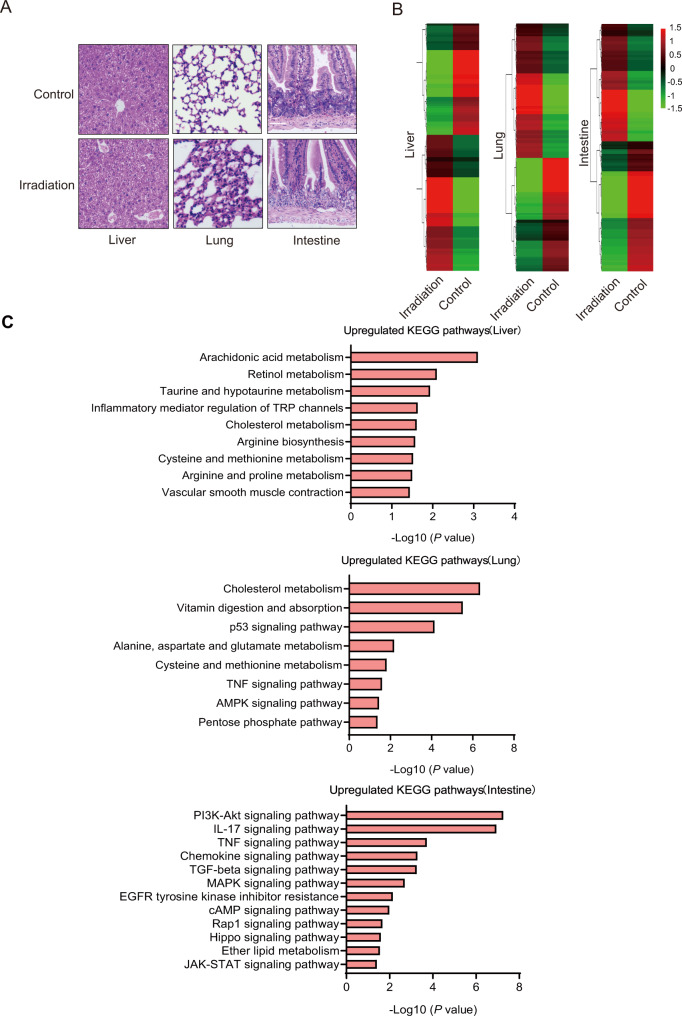
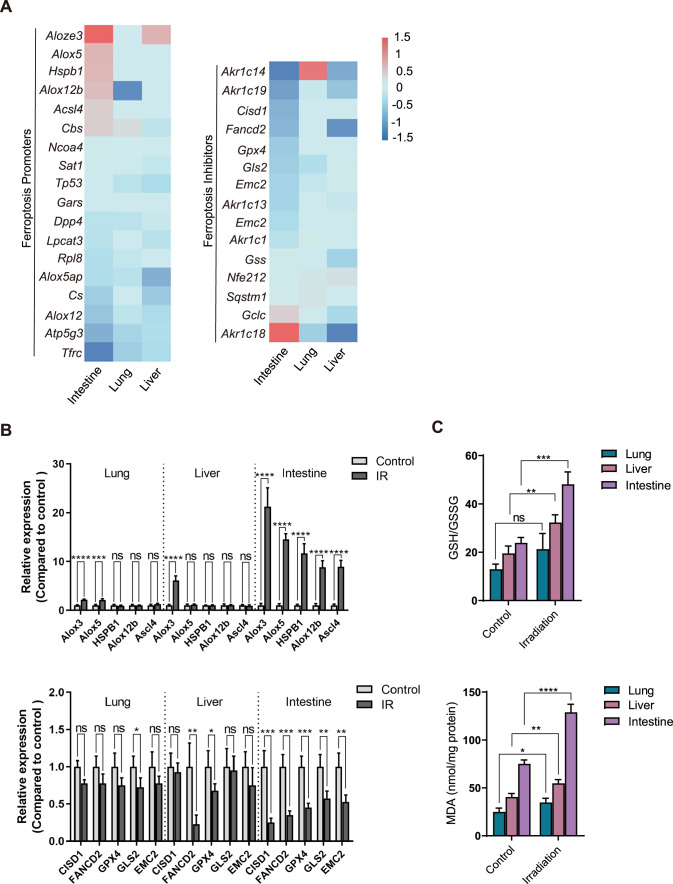
Lipid peroxidation-induced ferroptosis is a newly recognized type of programmed cell death. With the method of RNA sequencing, we found that irradiation (IR) markedly increased the expression of ferroptosis promotive genes, whereas reduced the expression of ferroptosis suppressive genes in murine intestine tissues, when compared with those of liver and lung tissues. By using ferroptosis inducer RSL-3 and inhibitor liproxstatin-1, we found that ferroptosis is essential for IR-induced intestinal injury. Acyl-CoA Synthetase Long-Chain Family Member 4 (ACSL4) is an important component for ferroptosis execution, and we found that ACSL4 expression was significantly upregulated in irradiated intestine tissues, but not in liver or lung tissues. Antibacterial and antifungal regents reduced the expression of ASCL4 and protected against tissue injury in irradiated intestine tissues. Further studies showed that troglitazone, a ACSL4 inhibitor, succeeded to suppresses intestine lipid peroxidation and tissue damage after IR.
脂质过氧化诱导的铁死亡是一种新发现的程序性细胞死亡类型。通过RNA测序方法,我们发现与肝脏和肺组织相比,辐射(IR)显著增加了小鼠肠道组织中铁死亡促进基因的表达,同时降低了铁死亡抑制基因的表达。通过使用铁死亡诱导剂RSL-3和抑制剂liproxstatin-1,我们发现铁死亡对于IR诱导的肠道损伤至关重要。酰基辅酶A合成酶长链家族成员4(ACSL4)是铁死亡执行的重要组成部分,我们发现ACSL4在受辐射的肠道组织中表达显著上调,但在肝脏或肺组织中未上调。抗菌和抗真菌试剂降低了ASCL4的表达,并保护受辐射的肠道组织免受组织损伤。进一步研究表明,ACSL4抑制剂曲格列酮成功抑制了IR后肠道脂质过氧化和组织损伤。