Department of Biostatistics, Epidemiology and Informatics, University of Pennsylvania, 402 Blockley Hall, 423 Guardian Drive, Philadelphia, PA, 19104, USA.
Department of Medicine, University of California, San Francisco, UCSF, 1550 4th Street, Bldg 19B, San Francisco, CA, 94158, USA.
Sci Rep. 2022 Jul 22;12(1):12514. doi: 10.1038/s41598-022-16488-6.
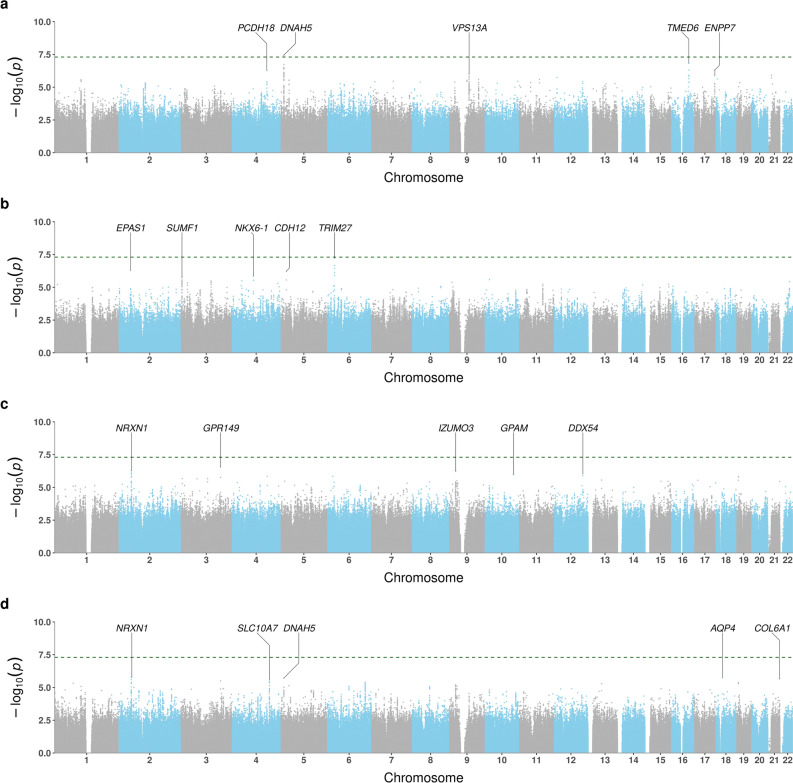
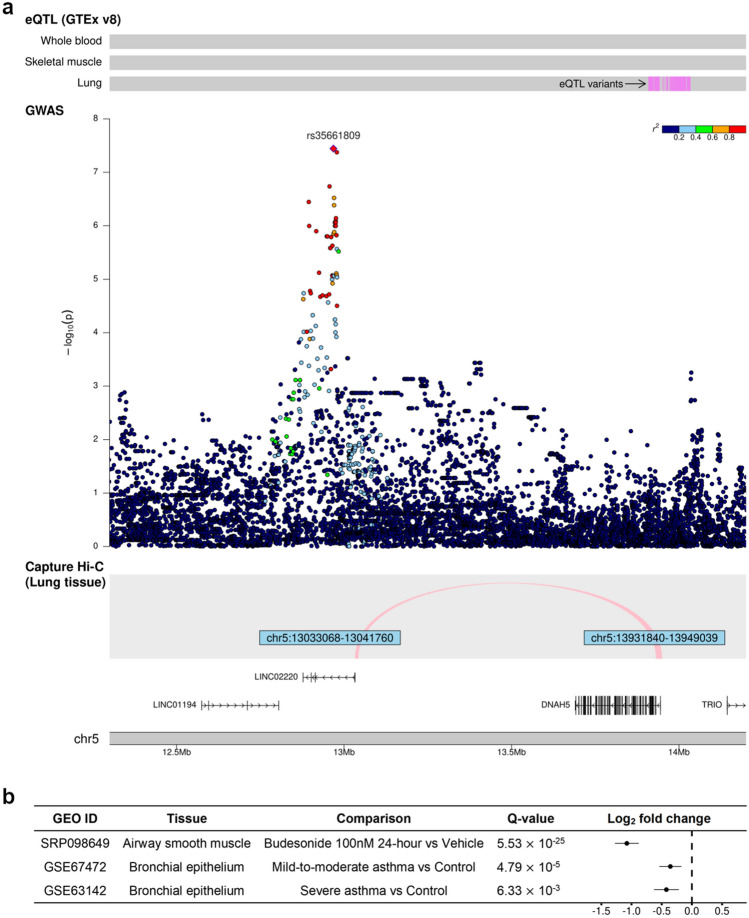
Variability in response to short-acting β-agonists (e.g., albuterol) among patients with asthma from diverse racial/ethnic groups may contribute to asthma disparities. We sought to identify genetic variants associated with bronchodilator response (BDR) to identify potential mechanisms of drug response and risk factors for worse asthma outcomes. Genome-wide association studies of bronchodilator response (BDR) were performed using TOPMed Whole Genome Sequencing data of the Asthma Translational Genomic Collaboration (ATGC), which corresponded to 1136 Puerto Rican, 656 Mexican and 4337 African American patients with asthma. With the population-specific GWAS results, a trans-ethnic meta-analysis was performed to identify BDR-associated variants shared across the three populations. Replication analysis was carried out in three pediatric asthma cohorts, including CAMP (Childhood Asthma Management Program; n = 560), GACRS (Genetics of Asthma in Costa Rica Study; n = 967) and HPR (Hartford-Puerto Rico; n = 417). A genome-wide significant locus (rs35661809; P = 3.61 × 10) in LINC02220, a non-coding RNA gene, was identified in Puerto Ricans. While this region was devoid of protein-coding genes, capture Hi-C data showed a distal interaction with the promoter of the DNAH5 gene in lung tissue. In replication analysis, the GACRS cohort yielded a nominal association (1-tailed P < 0.05). No genetic variant was associated with BDR at the genome-wide significant threshold in Mexicans and African Americans. Our findings help inform genetic underpinnings of BDR for understudied minority patients with asthma, but the limited availability of genetic data for racial/ethnic minority children with asthma remains a paramount challenge.
不同种族/族裔的哮喘患者对短效β-激动剂(如沙丁胺醇)的反应存在差异,这可能是哮喘差异的原因之一。我们试图确定与支气管扩张剂反应(BDR)相关的遗传变异,以确定药物反应的潜在机制和哮喘不良结局的危险因素。使用哮喘转化基因组学合作组织(ATGC)的 TOPMed 全基因组测序数据,对支气管扩张剂反应(BDR)进行了全基因组关联研究,这些数据对应于 1136 名波多黎各人、656 名墨西哥人和 4337 名非裔美国人哮喘患者。利用人群特异性 GWAS 结果,对这三个人群进行了跨种族荟萃分析,以确定与 BDR 相关的变异。在三个儿科哮喘队列中进行了复制分析,包括 CAMP(儿童哮喘管理计划;n=560)、GACRS(哥斯达黎加哮喘遗传学研究;n=967)和 HPR(哈特福德-波多黎各;n=417)。在波多黎各人中,发现了 LINC02220 中非编码 RNA 基因中的一个全基因组显著位点(rs35661809;P=3.61×10)。虽然该区域没有编码蛋白的基因,但捕获 Hi-C 数据显示,在肺组织中,它与 DNAH5 基因的启动子存在远端相互作用。在复制分析中,GACRS 队列的结果具有名义关联(1 尾 P<0.05)。在墨西哥人和非裔美国人中,没有遗传变异与 BDR 达到全基因组显著水平相关。我们的研究结果有助于了解对研究较少的少数族裔哮喘患者 BDR 的遗传基础,但种族/族裔少数族裔哮喘儿童的遗传数据有限仍然是一个主要挑战。