Department of Bioengineering, UC San Diego, San Diego, CA, USA.
Halicioğlu Data Science Institute, UC San Diego, San Diego, CA, USA.
Biol Sex Differ. 2022 Jul 23;13(1):41. doi: 10.1186/s13293-022-00451-1.
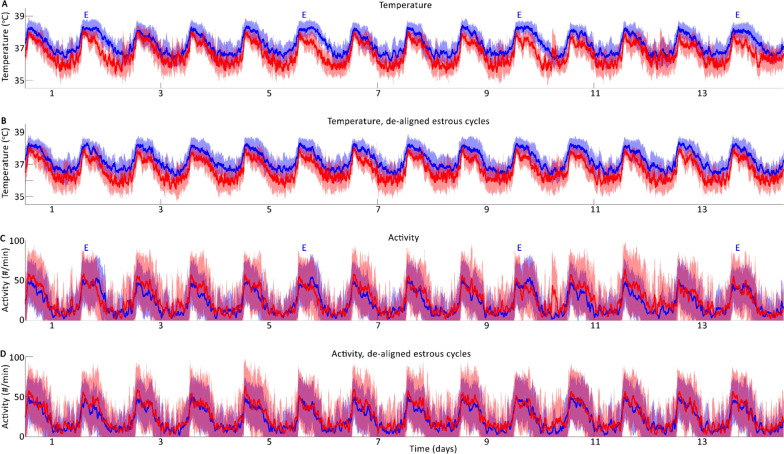
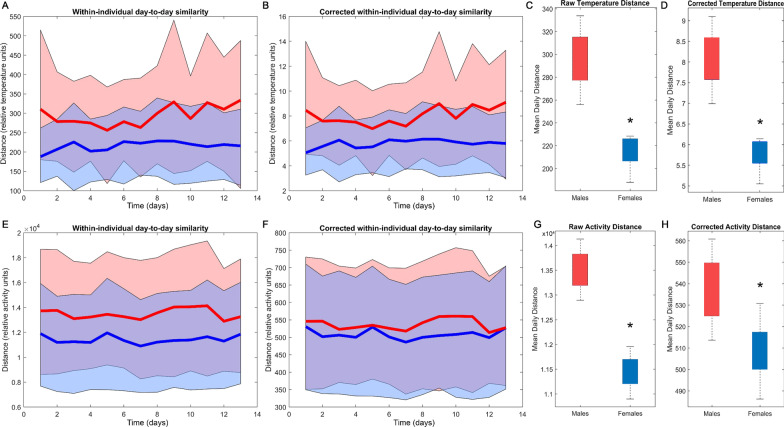
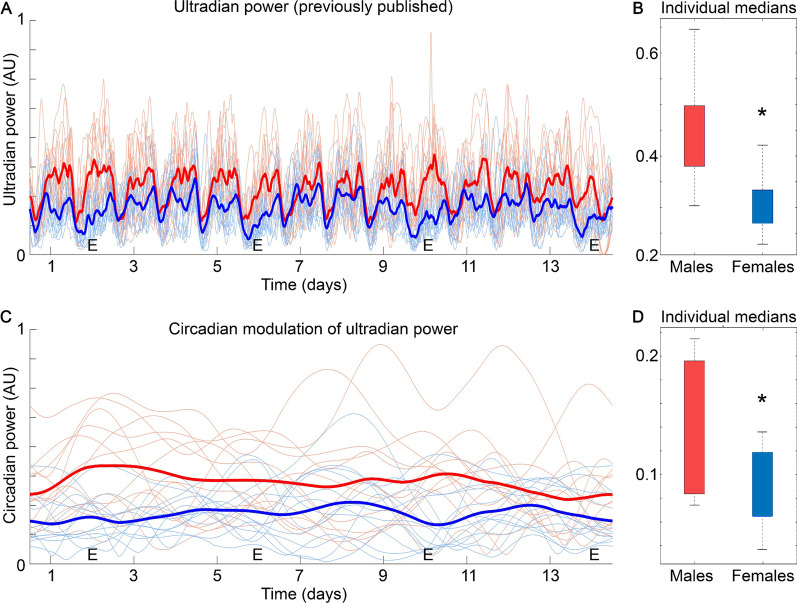
Despite recent work demonstrating that female rodents and humans do not show greater variance in behavior and physiology than males due to ovulatory cycles, many researchers still default to using males in their investigations. Although government funding agencies now require inclusion of female subjects where applicable, the erroneous belief that the study of males reduces overall data variance continues to result in male subject bias. Recently, we reported the first direct experimental refutation of this belief by examining continuous body temperature and locomotor activity in male and female mice. These findings revealed that males exceeded female variance within and across individuals over time, showing greater variance within a day than females do across an entire estrous cycle. However, the possibility remains that male variance within a day is impacted by ultradian rhythms, analogous to the influence of infradian estrous cycles on female variance, and both sexes show predictable, structured variance across the day. If structures underlying variance can be predicted, then the variance can be statistically accounted for, reducing experimental error and increasing precision of measurements. Here we assess these continuous body temperature and activity data for the contributions of structured and unstructured variance to overall variance within and across individuals at ultradian, circadian, and infradian timescales. In no instance do females exceed male variance, and in most instances male variance exceeds female variance. Additionally, more female variance is accounted for by temporal structure. In conclusion, even when estrous cycles are not controlled for, females show less variability than males, and this advantage can be further capitalized upon by inclusion of known temporal patterns to control for previously unknown but structured sources of variance.
尽管最近的研究工作表明,由于排卵周期的影响,雌性啮齿动物和人类的行为和生理变化并不比雄性更大,但许多研究人员仍然倾向于在研究中使用雄性。尽管政府资助机构现在要求在适用的情况下纳入女性受试者,但认为研究雄性可以减少总体数据变异性的错误信念仍然导致了雄性受试者的偏见。最近,我们通过检查雄性和雌性小鼠的连续体温和运动活动,首次直接实验反驳了这一观点。这些发现表明,雄性在个体内部和个体之间的变异性超过了雌性,在一天内的变异性大于雌性在整个发情周期内的变异性。然而,雄性在一天内的变异性仍有可能受到超日节律的影响,类似于发情周期对雌性变异性的影响,而且两性在一天内都表现出可预测的、有结构的变异性。如果可以预测变异性的结构,那么可以对其进行统计学解释,从而减少实验误差并提高测量的精度。在这里,我们评估了这些连续的体温和活动数据,以了解在超日、日和 infradian 时间尺度上个体内部和个体之间的结构和非结构变异性对整体变异性的贡献。在任何情况下,女性都不会超过男性的变异性,而且在大多数情况下,男性的变异性都超过了女性的变异性。此外,更多的女性变异性可以通过时间结构来解释。总之,即使不控制发情周期,女性的变异性也比男性小,而且通过纳入已知的时间模式来控制以前未知但有结构的变异性来源,可以进一步利用这一优势。