Wei Xiaohong, Wu Yuzhuo, Pan Haie, Zhang Qian, He Ke, Xia Guiyang, Xia Huan, Lin Sheng, Shang Hong-Cai
Key Laboratory of Chinese Internal Medicine of Ministry of Education and Beijing, Dongzhimen Hospital, Beijing University of Chinese Medicine, Beijing, China.
Guangdong Provincial Key Laboratory of Chinese Medicine for Prevention and Treatment of Refractory Chronic Disease, Guangzhou, China.
Front Cardiovasc Med. 2022 Jul 6;9:895797. doi: 10.3389/fcvm.2022.895797. eCollection 2022.
Myocardial ischemia/reperfusion (I/R) injury is the main obstacle to percutaneous coronary intervention, lacking effective therapeutic measures in a clinical setting. Herba Siegesbeckiae (HS) is a traditional herb with multiple pharmacological activities and evidence of cardiovascular protection. However, few data are available regarding the role of HS in cardiac I/R. This study aimed to explore the effect and underlying mechanism of HS aqueous extract on cardiac I/R injury.
Herba Siegesbeckiae aqueous extract was prepared and analyzed by UHPLC-MS/MS. After intragastric administration of HS once daily for 7 days, male Sprague-Dawley rats were subjected to 30 min occlusion of the left anterior descending coronary artery followed by 120 min reperfusion to elicit I/R. Various parameters like myocardial infarction and apoptosis, 12-lead ECG and hemodynamics, cardiac morphology and myocardial enzymes, quantitative proteomics, mitochondrial ultrastructure and electron transport chain (ETC) function, oxidative stress and antioxidation, and NLRP3 inflammasome and inflammation were evaluated.
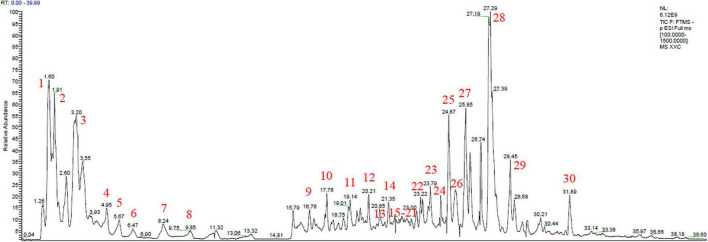
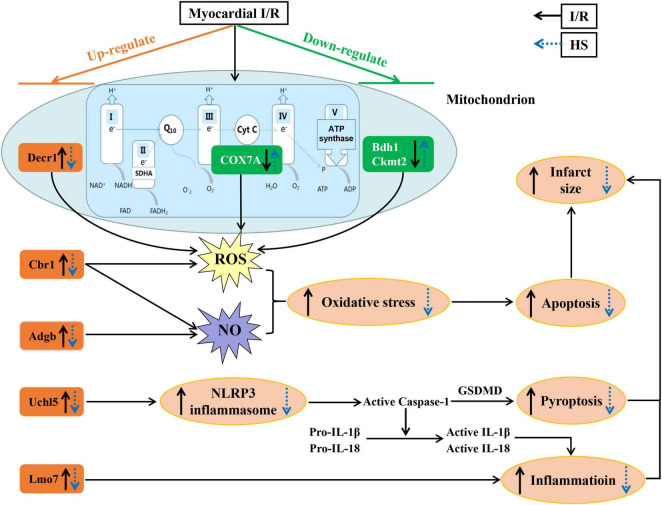
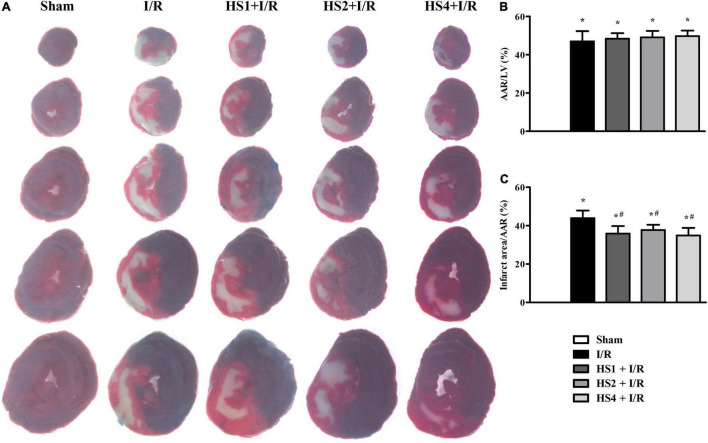
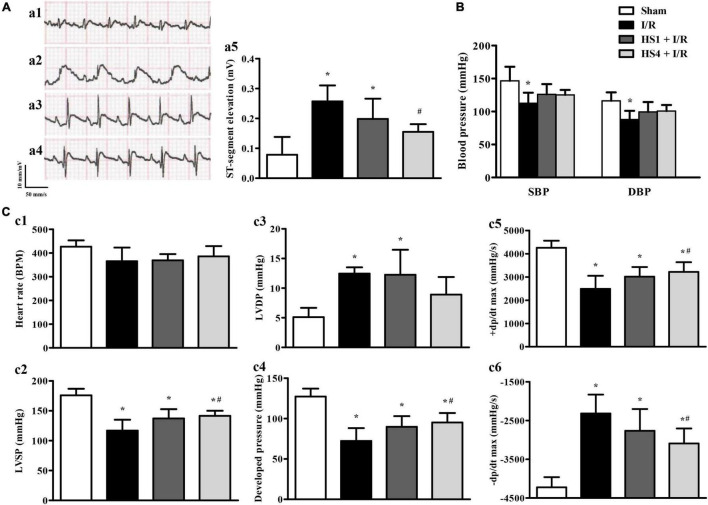
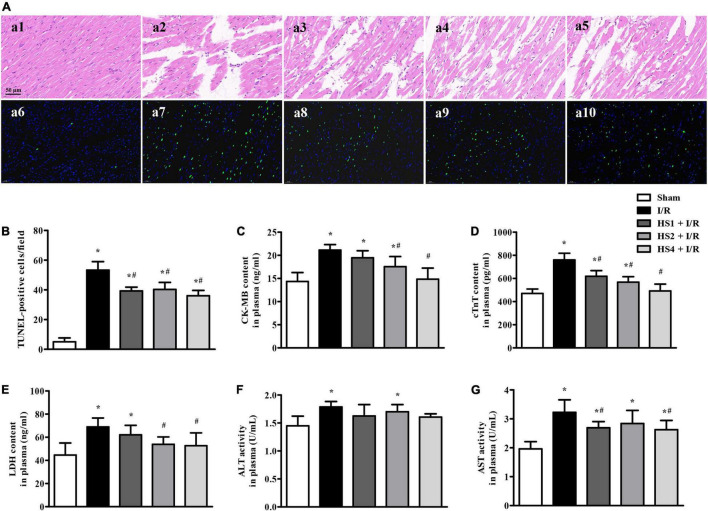
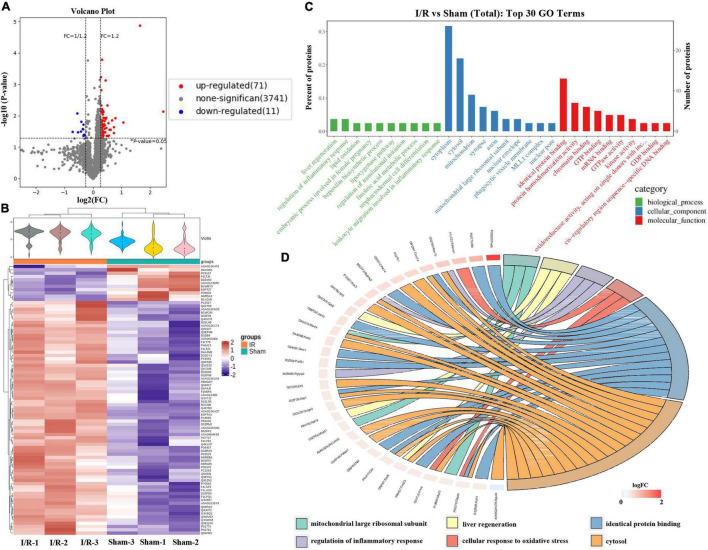
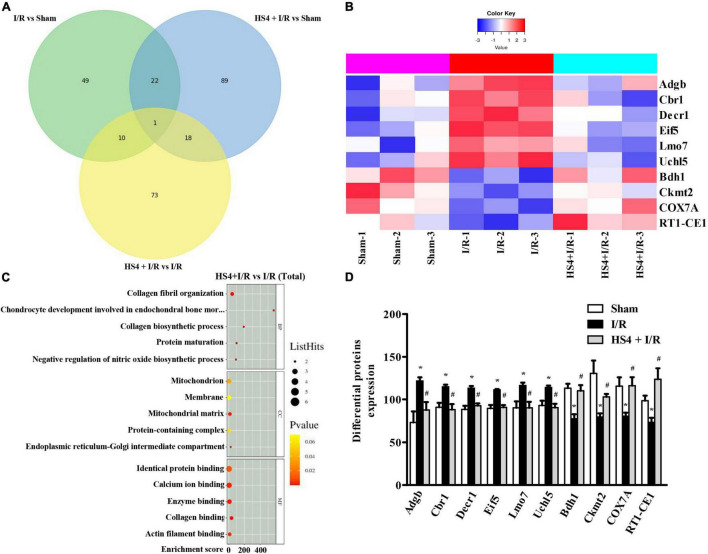
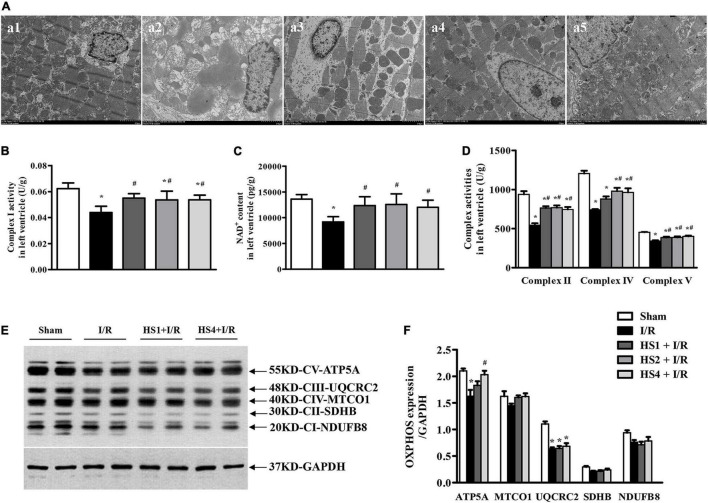
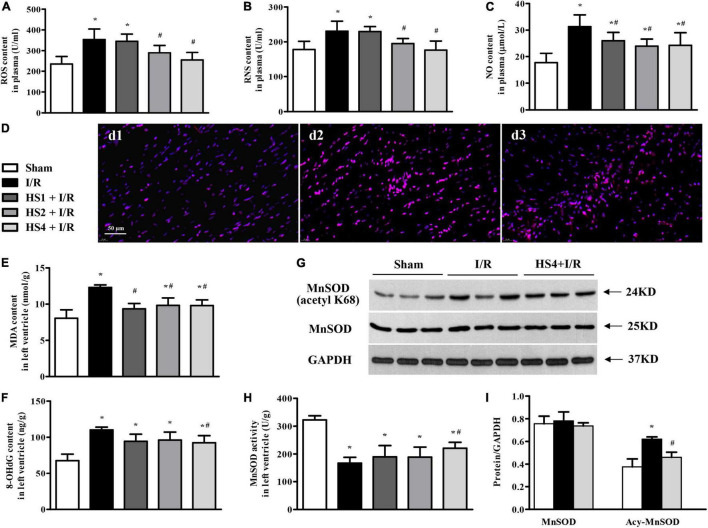
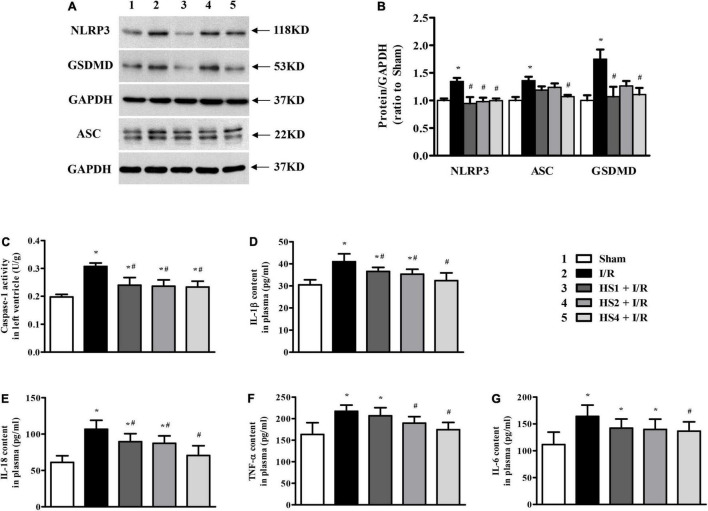
The chemical constituents of HS aqueous extract were mainly divided into flavonoids, diterpenoids, and organic acids. , HS aqueous extract notably alleviated myocardial I/R injury, as evidenced by a reduction in infarct size, apoptotic cells, and cardiac lesion enzymes; decline of ST-segment elevation; improvement of cardiac function; and preservation of morphology. Quantitative proteomics demonstrated that HS reversed the alteration in the expression of Adgb, Cbr1, Decr1, Eif5, Uchl5, Lmo7, Bdh1, Ckmt2, COX7A, and RT1-CE1 after I/R. In addition, HS preserved myocardial ultrastructure and restored the function of mitochondrial ETC complexes following exposure to I/R; HS significantly suppressed I/R-elicited increase of ROS, RNS, MDA, and 8-OHdG, restrained the acetylation of MnSOD, and recovered the activity of MnSOD; and HS reversed I/R-induced elevation of NLRP3 inflammasome and inhibited the release of inflammatory factors and pyroptosis.
Herba Siegesbeckiae aqueous extract ameliorated cardiac I/R injury, which is associated with mitigating oxidative stress, suppressing NLRP3 inflammasome, and restoring mitochondrial function by regulating the expression of Adgb, Cbr1, Decr1, Eif5, Uchl5, Lmo7, Bdh1, Ckmt2, COX7A, and RT1-CE1.
心肌缺血/再灌注(I/R)损伤是经皮冠状动脉介入治疗的主要障碍,临床上缺乏有效的治疗措施。豨莶草是一种具有多种药理活性且有心血管保护作用证据的传统草药。然而,关于豨莶草在心脏I/R中的作用的数据很少。本研究旨在探讨豨莶草水提取物对心脏I/R损伤的作用及其潜在机制。
制备豨莶草水提取物并通过超高效液相色谱-串联质谱(UHPLC-MS/MS)进行分析。雄性Sprague-Dawley大鼠每天灌胃给予豨莶草一次,连续7天,然后结扎左冠状动脉前降支30分钟,再灌注120分钟以诱导I/R。评估各种参数,如心肌梗死和凋亡、12导联心电图和血流动力学、心脏形态和心肌酶、定量蛋白质组学、线粒体超微结构和电子传递链(ETC)功能、氧化应激和抗氧化作用,以及NLRP3炎性小体和炎症。
豨莶草水提取物的化学成分主要分为黄酮类、二萜类和有机酸类。豨莶草水提取物显著减轻心肌I/R损伤,表现为梗死面积、凋亡细胞和心脏损伤酶减少;ST段抬高降低;心脏功能改善;以及形态学保存。定量蛋白质组学表明,豨莶草逆转了I/R后Adgb、Cbr1、Decr1、Eif5、Uchl5、Lmo7、Bdh1、Ckmt2、COX7A和RT1-CE1表达的改变。此外,豨莶草在I/R后保存了心肌超微结构并恢复了线粒体ETC复合物的功能;豨莶草显著抑制I/R引起的活性氧(ROS)、活性氮(RNS)、丙二醛(MDA)和8-羟基脱氧鸟苷(8-OHdG)的增加,抑制锰超氧化物歧化酶(MnSOD)的乙酰化,并恢复MnSOD的活性;豨莶草逆转I/R诱导的NLRP3炎性小体升高,并抑制炎性因子的释放和细胞焦亡。
豨莶草水提取物改善了心脏I/R损伤,这与减轻氧化应激、抑制NLRP3炎性小体以及通过调节Adgb、Cbr1、Decr1、Eif5、Uchl5、Lmo7、Bdh1、Ckmt2、COX7A和RT1-CE1的表达恢复线粒体功能有关。