Wang Yuye, Lv Shuang, Zhou Xiao, Niu Xiaoqian, Chen Leian, Yang Ziyuan, Peng Dantao
Department of Neurology, China-Japan Friendship Hospital, Beijing, China.
Graduate School of Peking Union Medical College and Chinese Academy of Medical Sciences, Beijing, China.
Front Genet. 2022 Jul 6;13:860122. doi: 10.3389/fgene.2022.860122. eCollection 2022.
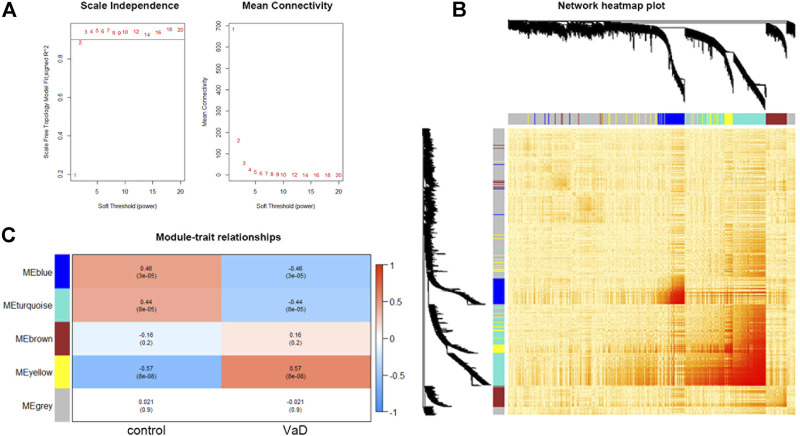
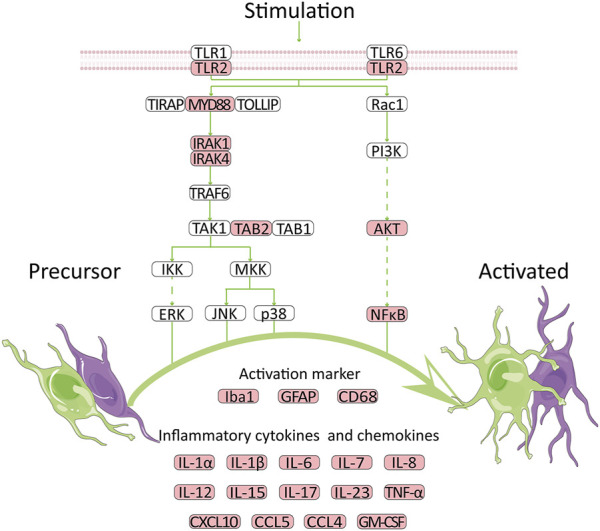
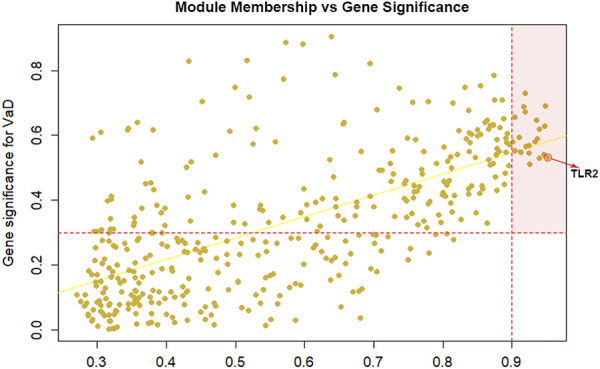
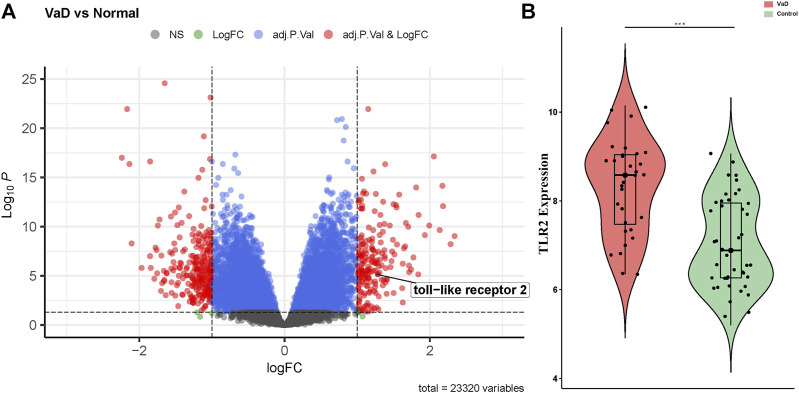
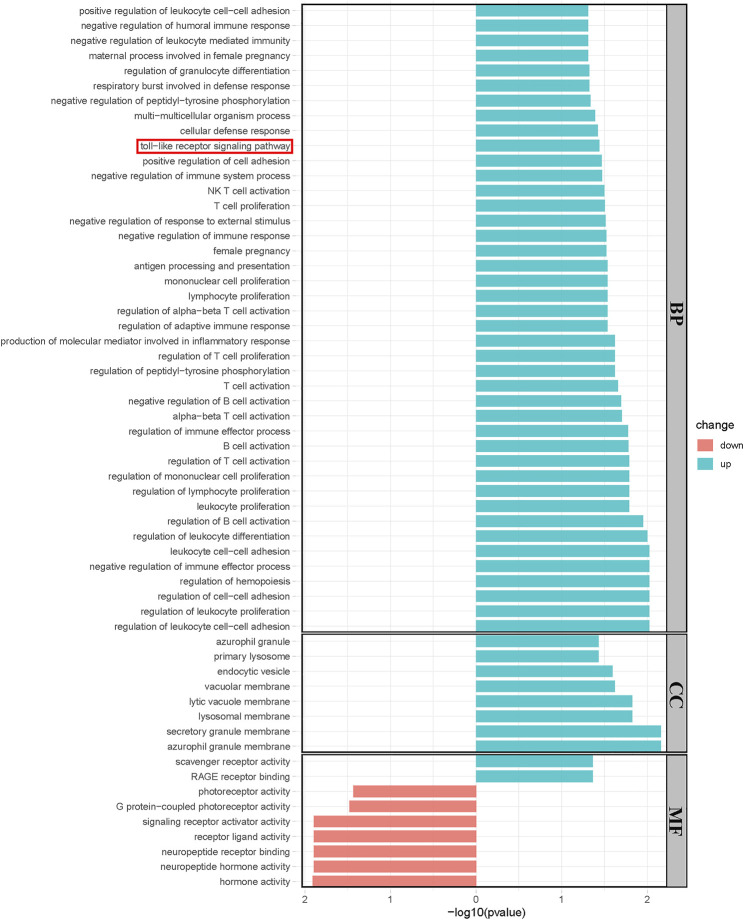
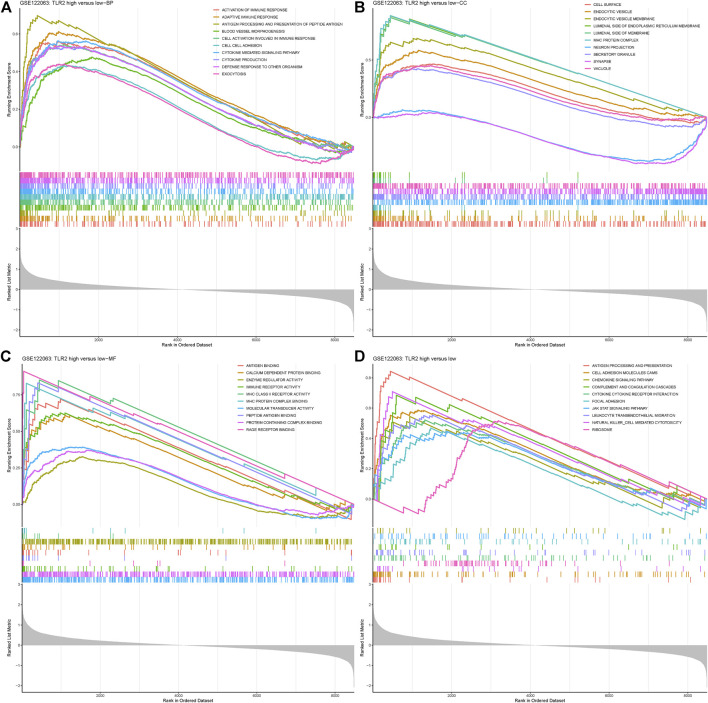
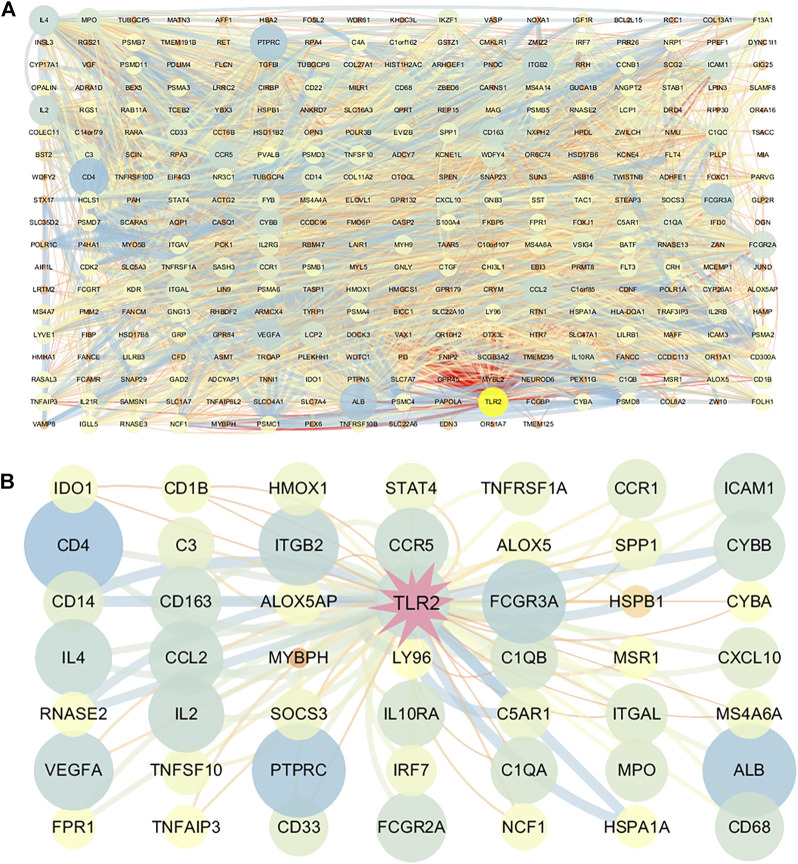
Vascular dementia (VaD) is the second most common cause of dementia. At present, precise molecular processes of VaD are unclear. We attempted to discover the VaD relevant candidate genes, enrichment biological processes and pathways, key targets, and the underlying mechanism by microarray bioinformatic analysis. We selected GSE122063 related to the autopsy samples of VaD for analysis. We first took use of Weighted Gene Co-expression Network Analysis (WGCNA) to achieve modules related to VaD and hub genes. Second, we filtered out significant differentially expressed genes (DEGs). Third, significant DEGs then went through Geno Ontology and Kyoto Encyclopedia of Genes and Genomes (KEGG) analysis. Fourth, Gene Set Enrichment Analysis (GSEA) was performed. At last, we constructed the protein-protein interaction (PPI) network. The results showed that the yellow module had the strongest correlation with VaD, and we finally identified 21 hub genes. Toll-like receptor 2 (TLR2) was the top hub gene and was strongly correlated with other possible candidate genes. In total, 456 significant DEGs were filtered out and these genes were found to be enriched in the Toll receptor signaling pathway and several other immune-related pathways. In addition, Gene Set Enrichment Analysis results showed that similar pathways were significantly over-represented in TLR2-high samples. In the PPI network, TLR2 was still an important node with high weight and combined scores. We concluded that the TLR2 acts as a key target in neuroinflammation which may participate in the pathophysiological process of VaD.
血管性痴呆(VaD)是痴呆的第二大常见病因。目前,VaD确切的分子机制尚不清楚。我们试图通过微阵列生物信息学分析来发现与VaD相关的候选基因、富集的生物学过程和通路、关键靶点及潜在机制。我们选择了与VaD尸检样本相关的GSE122063进行分析。首先,我们利用加权基因共表达网络分析(WGCNA)来获得与VaD相关的模块和枢纽基因。其次,我们筛选出显著差异表达基因(DEGs)。第三,对显著的DEGs进行基因本体论(GO)和京都基因与基因组百科全书(KEGG)分析。第四,进行基因集富集分析(GSEA)。最后,我们构建了蛋白质-蛋白质相互作用(PPI)网络。结果显示,黄色模块与VaD的相关性最强,最终我们鉴定出21个枢纽基因。Toll样受体2(TLR2)是首要枢纽基因,且与其他可能的候选基因强烈相关。总共筛选出456个显著的DEGs,这些基因被发现富集于Toll受体信号通路和其他几个免疫相关通路。此外,基因集富集分析结果显示,相似的通路在TLR2高表达样本中显著富集。在PPI网络中,TLR2仍然是一个具有高权重和综合得分的重要节点。我们得出结论,TLR2作为神经炎症中的关键靶点,可能参与了VaD的病理生理过程。