Zhang Qianqian, Zhao Huihui, Luo Maotao, Cheng Xi, Li Yanan, Li Qingyang, Wang Zheng, Niu Qi
Deartment of Geriatrics, The First Affiliated Hospital of Nanjing Medical University, Nanjing Medical University, Nanjing, China.
Front Genet. 2022 Jul 8;13:919188. doi: 10.3389/fgene.2022.919188. eCollection 2022.
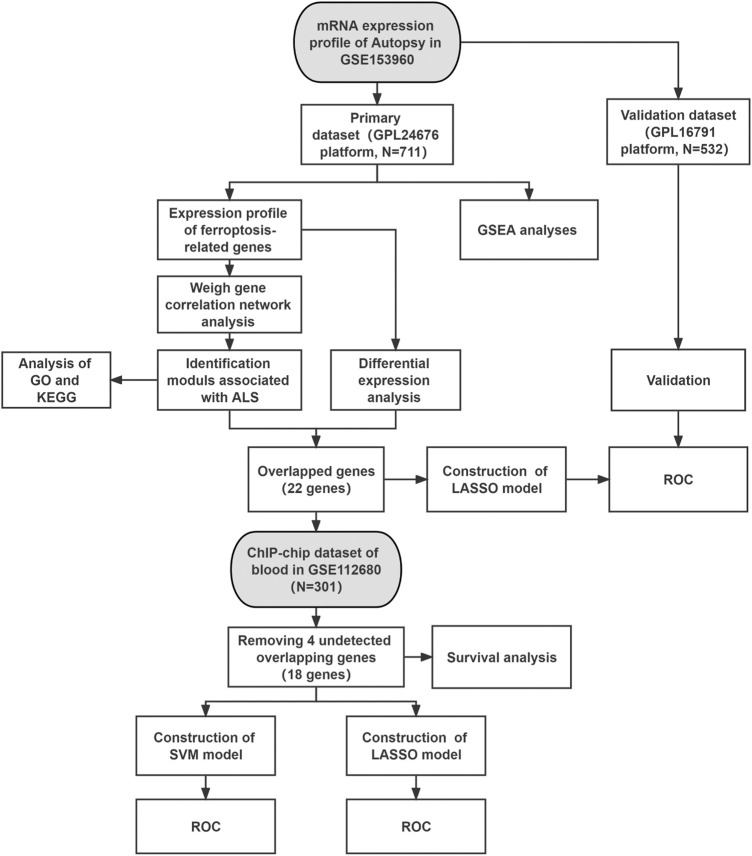
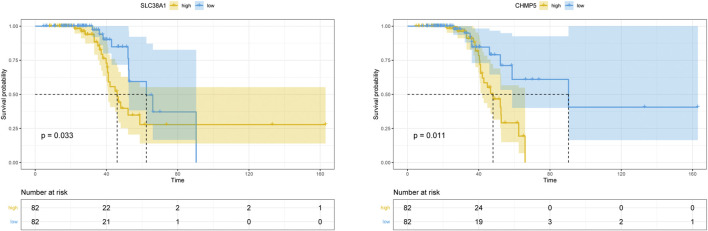
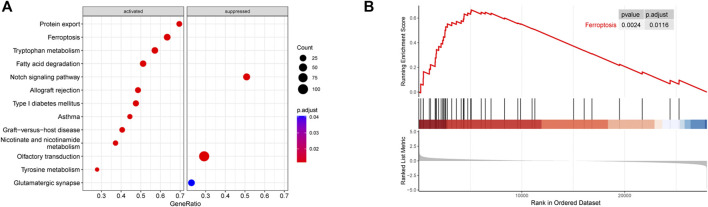
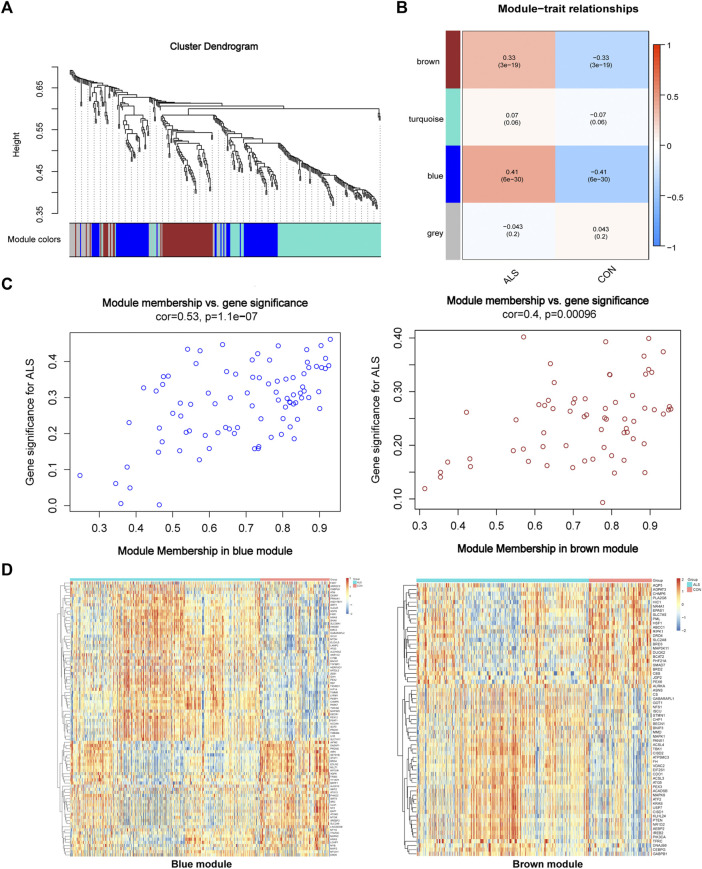
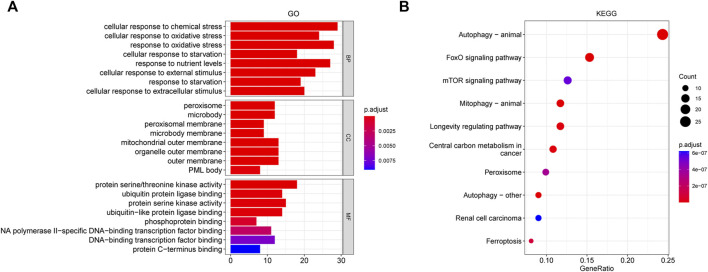
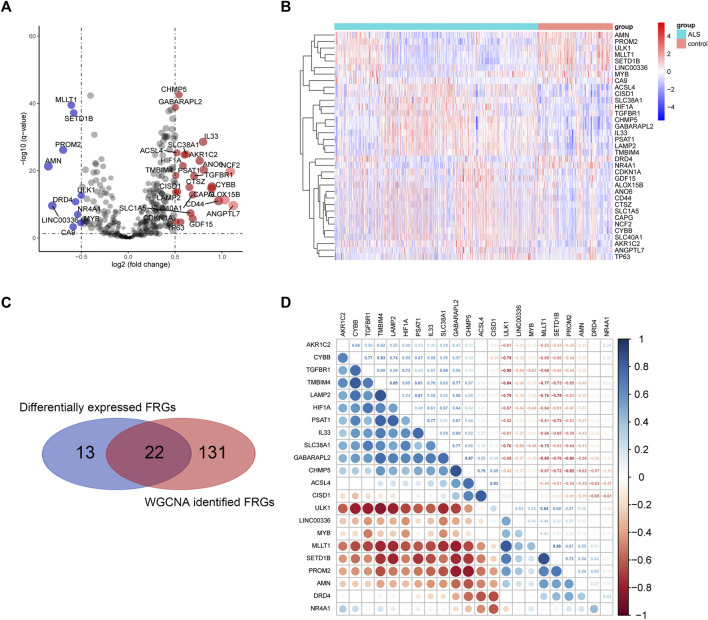
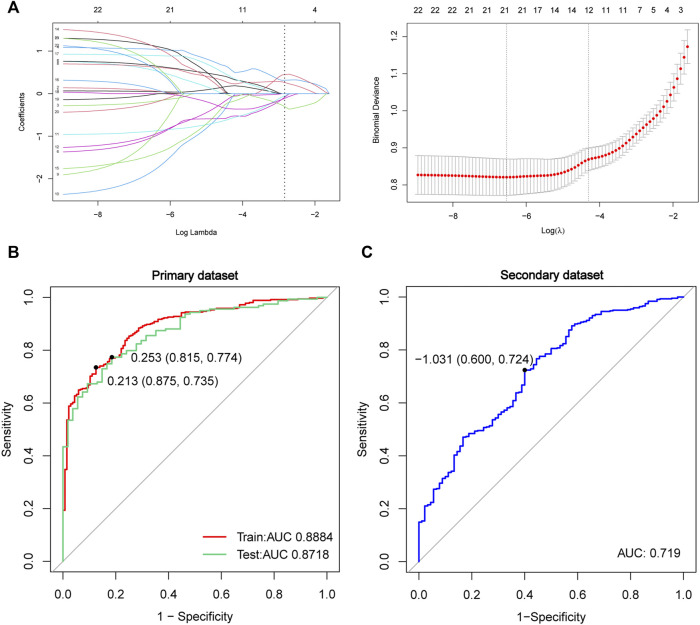
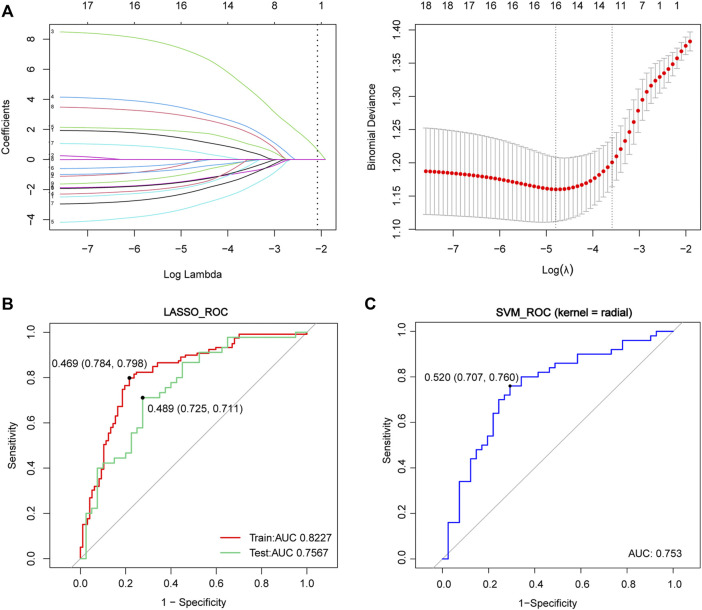
Amyotrophic lateral sclerosis (ALS) is a neurodegenerative disease characterized by progressive muscle paralysis, which is followed by degeneration of motor neurons in the motor cortex of the brainstem and spinal cord. The etiology of sporadic ALS (sALS) is still unknown, limiting the exploration of potential treatments. Ferroptosis is a new form of cell death and is reported to be closely associated with Alzheimer's disease (AD), Parkinson's disease (PD), and ALS. In this study, we used datasets (autopsy data and blood data) from Gene Expression Omnibus (GEO) to explore the role of ferroptosis and ferroptosis-related gene (FRG) alterations in ALS. Gene set enrichment analysis (GSEA) found that the activated ferroptosis pathway displayed a higher enrichment score, and the expression of 26 ferroptosis genes showed obvious group differences between ALS and controls. Using weighted gene correlation network analysis (WGCNA), we identified FRGs associated with ALS, of which the Gene Ontology (GO) analysis displayed that the biological process of oxidative stress was the most to be involved in. KEGG pathway analysis revealed that the FRGs were enriched not only in ferroptosis pathways but also in autophagy, FoxO, and mTOR signaling pathways. Twenty-one FRGs (NR4A1, CYBB, DRD4, SETD1B, LAMP2, ACSL4, MYB, PROM2, CHMP5, ULK1, AKR1C2, TGFBR1, TMBIM4, MLLT1, PSAT1, HIF1A, LINC00336, AMN, SLC38A1, CISD1, and GABARAPL2) in the autopsy data and 16 FRGs (NR4A1, DRD4, SETD1B, MYB, PROM2, CHMP5, ULK1, AKR1C2, TGFBR1, TMBIM4, MLLT1, HIF1A, LINC00336, IL33, SLC38A1, and CISD1) in the blood data were identified as target genes by least absolute shrinkage and selection operator analysis (LASSO), in which gene signature could differentiate ALS patients from controls. Finally, the higher the expression of CHMP5 and SLC38A1 in whole blood, the shorter the lifespan of ALS patients will be. In summary, our study presents potential biomarkers for the diagnosis and prognosis of ALS.
肌萎缩侧索硬化症(ALS)是一种神经退行性疾病,其特征为进行性肌肉麻痹,随后脑干和脊髓运动皮层中的运动神经元发生退化。散发性ALS(sALS)的病因仍不清楚,这限制了对潜在治疗方法的探索。铁死亡是一种新的细胞死亡形式,据报道与阿尔茨海默病(AD)、帕金森病(PD)和ALS密切相关。在本研究中,我们使用了来自基因表达综合数据库(GEO)的数据集(尸检数据和血液数据)来探索铁死亡及铁死亡相关基因(FRG)改变在ALS中的作用。基因集富集分析(GSEA)发现,激活的铁死亡途径显示出更高的富集分数,并且26个铁死亡基因的表达在ALS患者和对照组之间存在明显的组间差异。使用加权基因共表达网络分析(WGCNA),我们鉴定出了与ALS相关的FRG,其中基因本体(GO)分析显示氧化应激的生物学过程参与度最高。京都基因与基因组百科全书(KEGG)通路分析表明,FRG不仅在铁死亡途径中富集,还在自噬、FoxO和mTOR信号通路中富集。通过最小绝对收缩和选择算子分析(LASSO),在尸检数据中鉴定出21个FRG(NR4A1、CYBB、DRD4、SETD1B、LAMP2、ACSL4、MYB、PROM2、CHMP5、ULK1、AKR1C2、TGFBR1、TMBIM4、MLLT1、PSAT1、HIF1A、LINC00336、AMN、SLC38A1、CISD1和GABARAPL2),在血液数据中鉴定出16个FRG(NR4A1、DRD4、SETD1B、MYB、PROM2、CHMP5、ULK1、AKR1C2、TGFBR1、TMBIM4、MLLT1、HIF1A、LINC00336、IL33、SLC38A1和CISD1)作为靶基因,这些基因特征可以区分ALS患者和对照组。最后,全血中CHMP5和SLC38A1的表达越高,ALS患者的寿命就越短。总之,我们的研究提出了用于ALS诊断和预后的潜在生物标志物。