Remsik Alexander B, van Kan Peter L E, Gloe Shawna, Gjini Klevest, Williams Leroy, Nair Veena, Caldera Kristin, Williams Justin C, Prabhakaran Vivek
Department of Radiology, University of Wisconsin-Madison, Madison, WI, United States.
School of Medicine and Public Health, Institute for Clinical and Translational Research, University of Wisconsin-Madison, Madison, WI, United States.
Front Hum Neurosci. 2022 Jul 6;16:725715. doi: 10.3389/fnhum.2022.725715. eCollection 2022.
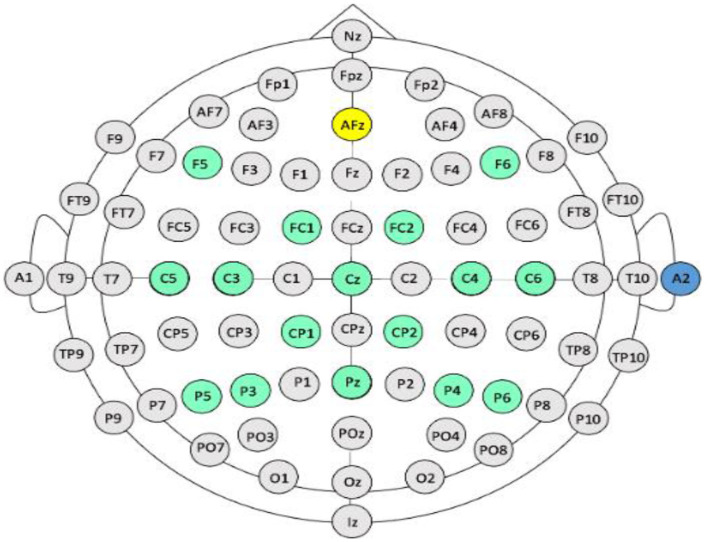
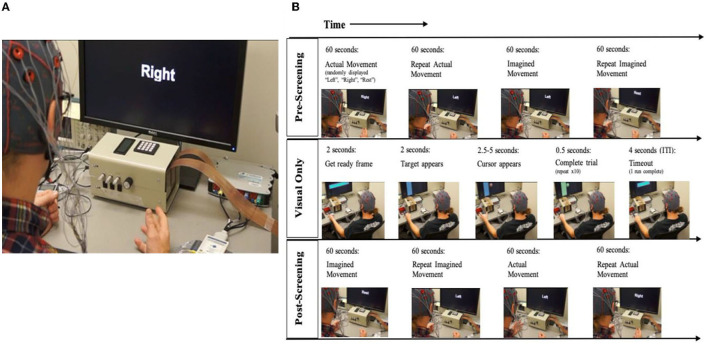
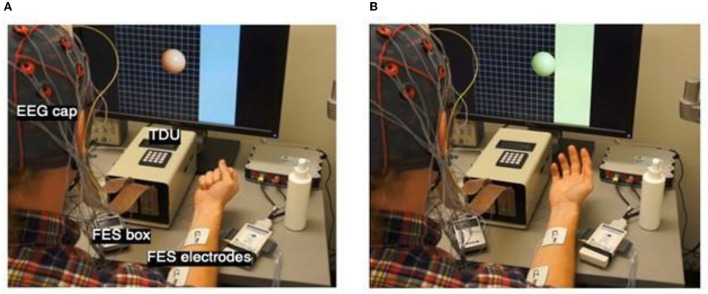
An increasing number of research teams are investigating the efficacy of brain-computer interface (BCI)-mediated interventions for promoting motor recovery following stroke. A growing body of evidence suggests that of the various BCI designs, most effective are those that deliver functional electrical stimulation (FES) of upper extremity (UE) muscles contingent on movement intent. More specifically, BCI-FES interventions utilize algorithms that isolate motor signals-user-generated intent-to-move neural activity recorded from cerebral cortical motor areas-to drive electrical stimulation of individual muscles or muscle synergies. BCI-FES interventions aim to recover sensorimotor function of an impaired extremity by facilitating and/or inducing long-term motor learning-related neuroplastic changes in appropriate control circuitry. We developed a non-invasive, electroencephalogram (EEG)-based BCI-FES system that delivers closed-loop neural activity-triggered electrical stimulation of targeted distal muscles while providing the user with multimodal sensory feedback. This BCI-FES system consists of three components: (1) EEG acquisition and signal processing to extract real-time volitional and task-dependent neural command signals from cerebral cortical motor areas, (2) FES of muscles of the impaired hand contingent on the motor cortical neural command signals, and (3) multimodal sensory feedback associated with performance of the behavioral task, including visual information, linked activation of somatosensory afferents through intact sensorimotor circuits, and electro-tactile stimulation of the tongue. In this report, we describe device parameters and intervention protocols of our BCI-FES system which, combined with standard physical rehabilitation approaches, has proven efficacious in treating UE motor impairment in stroke survivors, regardless of level of impairment and chronicity.
越来越多的研究团队正在研究脑机接口(BCI)介导的干预措施对促进中风后运动恢复的疗效。越来越多的证据表明,在各种BCI设计中,最有效的是那些根据运动意图对上肢(UE)肌肉进行功能性电刺激(FES)的设计。更具体地说,BCI-FES干预措施利用算法来分离运动信号——从大脑皮质运动区域记录的用户产生的运动意图神经活动——以驱动对单个肌肉或肌肉协同作用的电刺激。BCI-FES干预措施旨在通过促进和/或诱导适当控制电路中与长期运动学习相关的神经可塑性变化,来恢复受损肢体的感觉运动功能。我们开发了一种基于脑电图(EEG)的非侵入性BCI-FES系统,该系统在为用户提供多模态感官反馈的同时,对目标远端肌肉进行闭环神经活动触发的电刺激。这个BCI-FES系统由三个部分组成:(1)EEG采集和信号处理,以从大脑皮质运动区域提取实时的意志性和任务相关的神经指令信号;(2)根据运动皮质神经指令信号对受损手部肌肉进行FES;(3)与行为任务表现相关的多模态感官反馈,包括视觉信息、通过完整的感觉运动回路连接激活体感传入神经,以及对舌头的电触觉刺激。在本报告中,我们描述了我们的BCI-FES系统的设备参数和干预方案,该系统与标准的物理康复方法相结合,已被证明在治疗中风幸存者的UE运动障碍方面是有效的,无论损伤程度和病程如何。