Department of Pathophysiology, Medical College of Nanchang University, Nanchang, China.
Department of Pathology, Medical College of Nanchang University, Nanchang, China.
Front Immunol. 2022 Jul 8;13:901566. doi: 10.3389/fimmu.2022.901566. eCollection 2022.
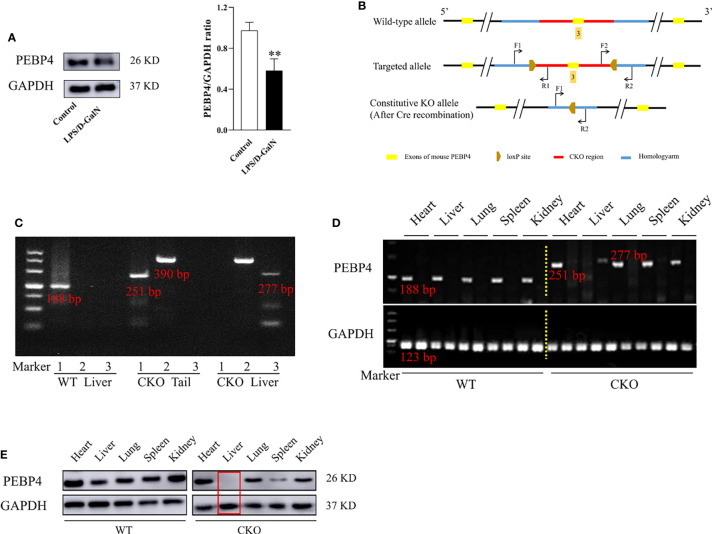
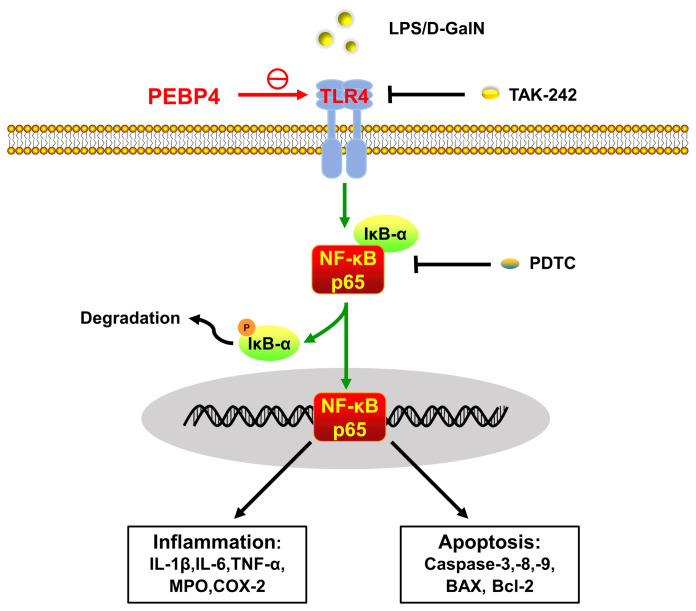
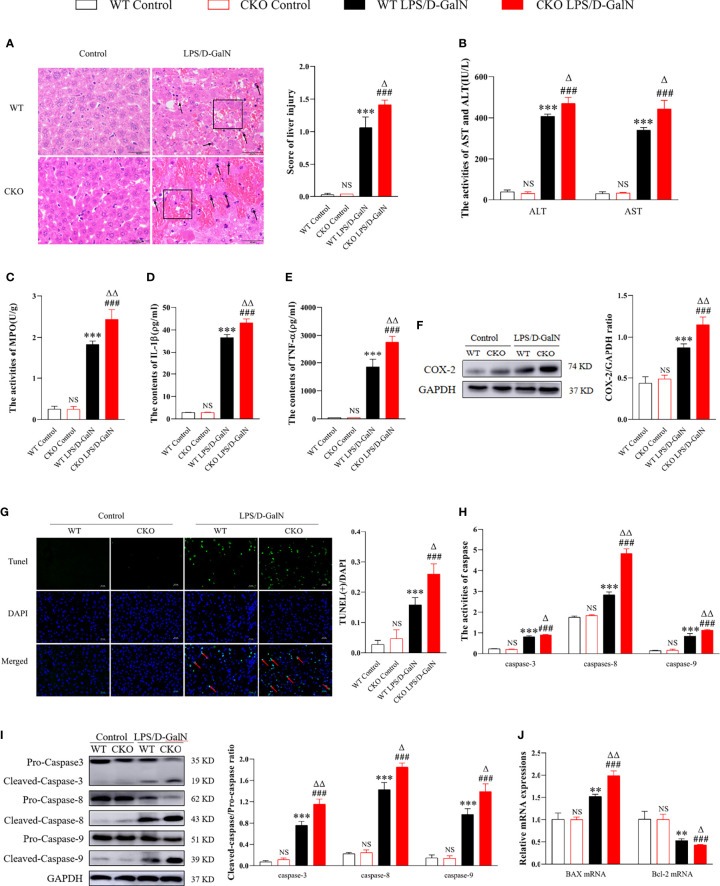
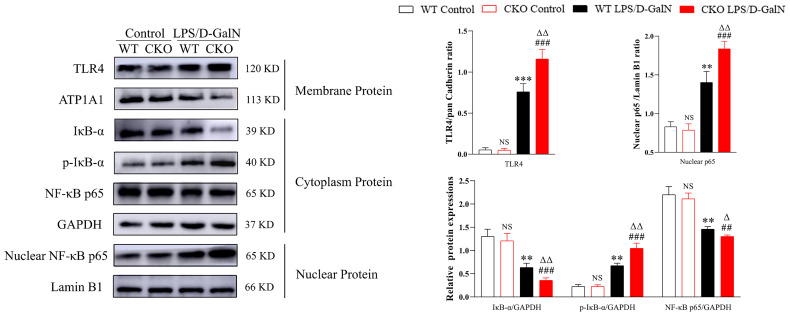
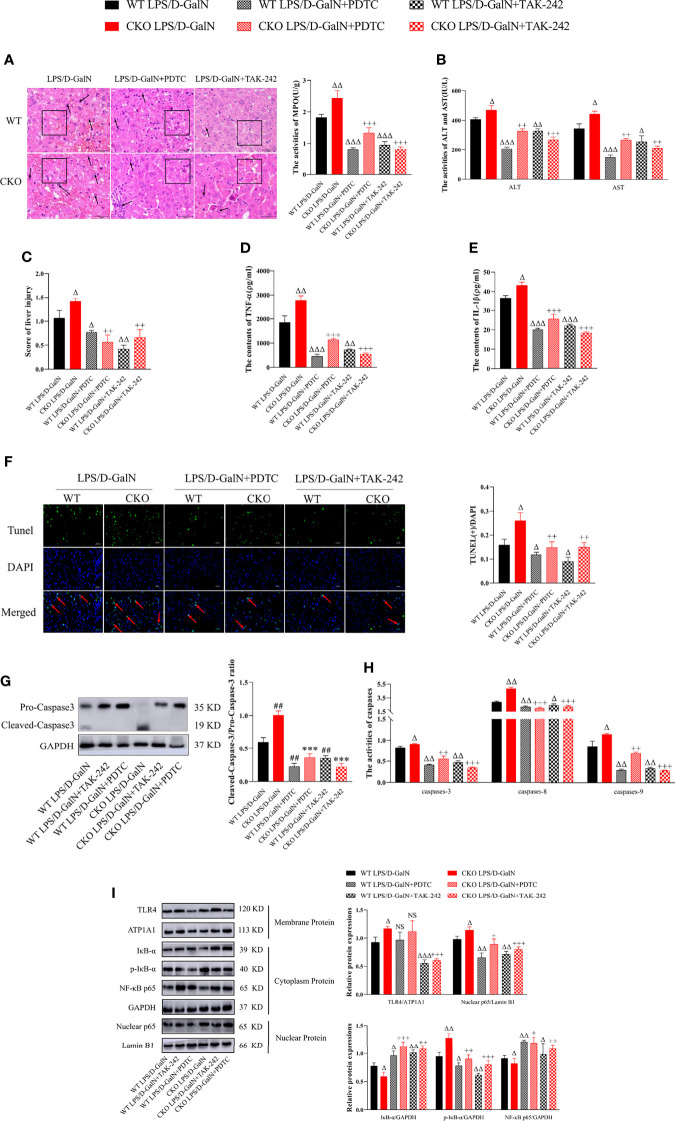
Acute liver injury (ALI) is a disease that seriously threatens human health and life, and a dysregulated inflammation response is one of the main mechanisms of ALI induced by various factors. Phosphatidylethanolamine binding protein 4 (PEBP4) is a secreted protein with multiple biological functions. At present, studies on PEBP4 exist mainly in the field of tumors and rarely in inflammation. This study aimed to explore the potential roles and mechanisms of PEBP4 on lipopolysaccharide (LPS)/D-galactosamine (D-GalN)induced ALI. PEBP4 was downregulated after treatment with LPS/D-GalN in wild-type mice. PEBP4 hepatocyte-conditional knockout (CKO) aggravated liver damage and repressed liver functions, including hepatocellular edema, red blood cell infiltration, and increased aspartate aminotransferase (AST)/alanine aminotrans-ferase (ALT) activities. The inflammatory response was promoted through increased neutrophil infiltration, myeloperoxidase (MPO) activities, and cytokine secretions (interleukin-1β, IL-1β; tumor necrosis factor alpha, TNF-α; and cyclooxygenase-2, COX-2) in PEBP4 CKO mice. PEBP4 CKO also induced an apoptotic effect, including increasing the degree of apoptotic hepatocytes, the expressions and activities of caspases, and pro-apoptotic factor Bax while decreasing anti-apoptotic factor Bcl-2. Furthermore, the data demonstrated the levels of Toll-like receptor 4 (TLR4), phosphorylation-inhibitor of nuclear factor kappaB Alpha (p-IκB-α), and nuclear factor kappaB (NF-κB) p65 were upregulated, while the expressions of cytoplasmic IκB-α and NF-κB p65 were downregulated after PEBP4 CKO. More importantly, both the NF-κB inhibitor (Ammonium pyrrolidinedithiocarbamate, PDTC) and a small-molecule inhibitor of TLR4 (TAK-242) could inhibit TLR4/NF-κB signaling activation and reverse the effects of PEBP4 CKO. In summary, the data suggested that hepatocyte-conditional knockout of PEBP4 aggravated LPS/D-GalN-induced ALI, and the effect is partly mediated by activation of the TLR4/NF-κB signaling pathway.
急性肝损伤 (ALI) 是一种严重威胁人类健康和生命的疾病,而炎症反应失调是各种因素引起 ALI 的主要机制之一。磷酯酰乙醇胺结合蛋白 4 (PEBP4) 是一种具有多种生物学功能的分泌蛋白。目前,PEBP4 的研究主要集中在肿瘤领域,很少涉及炎症。本研究旨在探讨 PEBP4 在脂多糖 (LPS)/D-半乳糖胺 (D-GalN) 诱导的 ALI 中的潜在作用和机制。在野生型小鼠中,用 LPS/D-GalN 处理后 PEBP4 的表达下调。PEBP4 肝细胞条件性敲除 (CKO) 加重了肝损伤,抑制了肝功能,包括肝细胞水肿、红细胞浸润和天冬氨酸氨基转移酶 (AST)/丙氨酸氨基转移酶 (ALT) 活性升高。通过增加中性粒细胞浸润、髓过氧化物酶 (MPO) 活性和细胞因子分泌 (白细胞介素-1β、IL-1β;肿瘤坏死因子-α、TNF-α;和环氧化酶-2、COX-2),促进了 PEBP4 CKO 小鼠的炎症反应。PEBP4 CKO 还诱导了细胞凋亡效应,包括增加凋亡肝细胞的程度、半胱天冬酶的表达和活性,以及促凋亡因子 Bax,同时降低抗凋亡因子 Bcl-2。此外,数据表明 Toll 样受体 4 (TLR4)、磷酸化核因子 kappaB 抑制蛋白 Alpha (p-IκB-α) 和核因子 kappaB (NF-κB) p65 的水平上调,而细胞质 IκB-α 和 NF-κB p65 的表达下调。更重要的是,TLR4/NF-κB 信号通路激活的 NF-κB 抑制剂 (Ammonium pyrrolidinedithiocarbamate、PDTC) 和 TLR4 的小分子抑制剂 (TAK-242) 都可以抑制 TLR4/NF-κB 信号通路的激活,并逆转 PEBP4 CKO 的作用。综上所述,数据表明,肝细胞条件性敲除 PEBP4 加重了 LPS/D-GalN 诱导的 ALI,其作用部分是通过激活 TLR4/NF-κB 信号通路介导的。