Department of Plastic Surgery, The Second Affiliated Hospital Zhejiang University School of Medicine, 1511 Jianghong Road, Hangzhou, 310000, Zhejiang, China.
Department of Burns, Changzhou No.7 People's Hospital, 288 East Yanling Road, Changzhou, 213011, Jiangsu, China.
Sci Rep. 2021 Mar 23;11(1):6679. doi: 10.1038/s41598-021-86146-w.
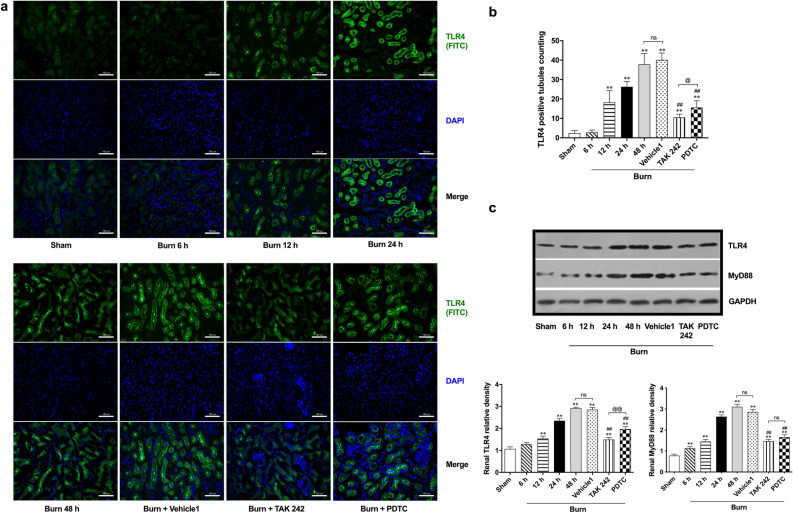
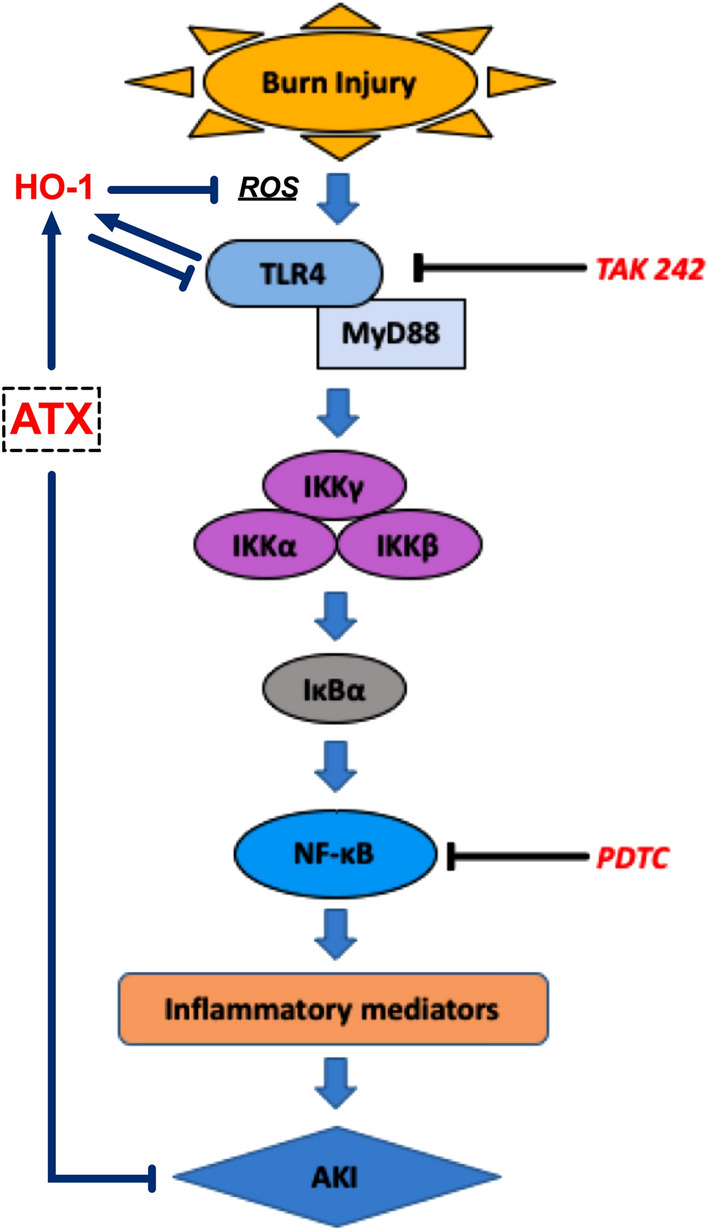
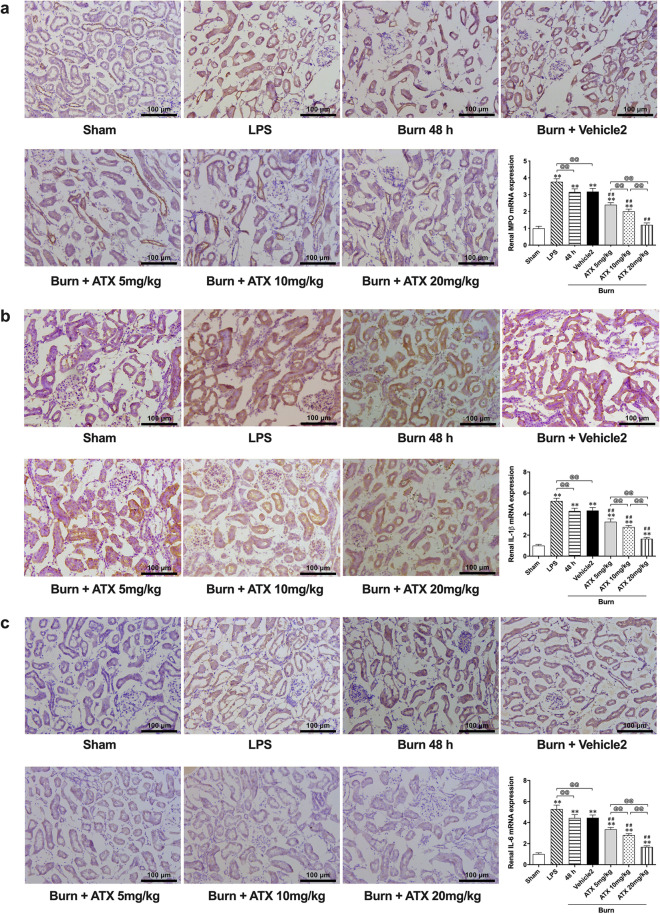
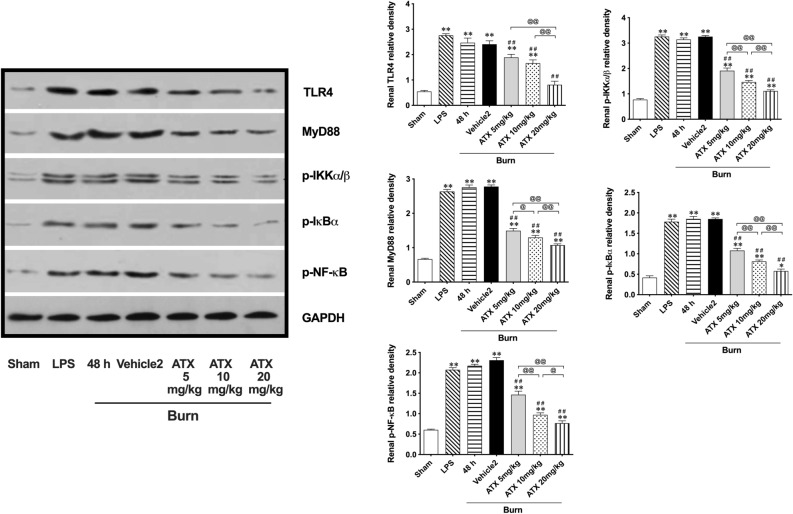
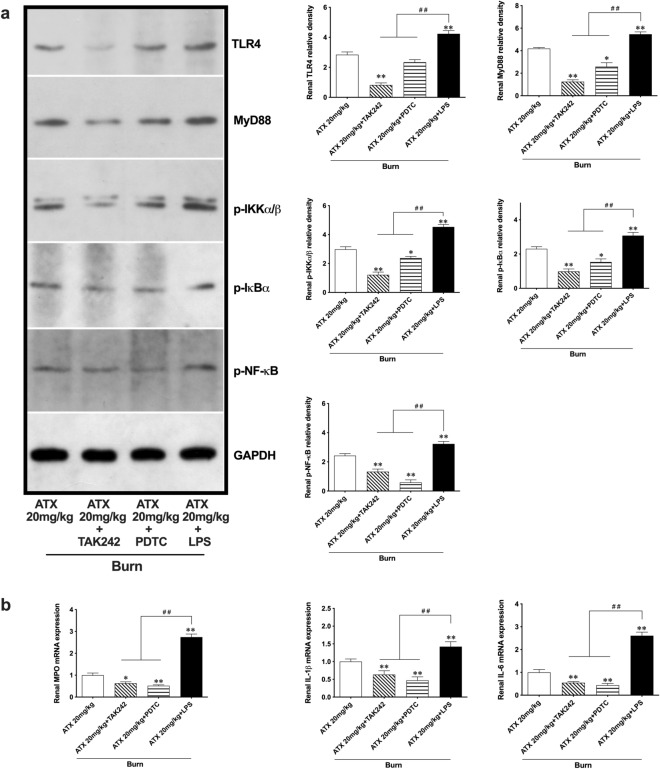
Early acute kidney injury (AKI) contributes to severe morbidity and mortality in critically burned patients. Renal inflammation plays a vital role in the progression of early AKI, acting as a therapeutic target. Astaxanthin (ATX) is a strong antioxidant widely distributed in marine organisms that exerts many biological effects in trauma and disease. ATX is also suggested to have anti-inflammatory activity. Hence, we attempted to explore the role of ATX in protecting against early postburn AKI via its anti-inflammatory effects and the related mechanisms. A severely burned model was established for histological and biochemical assessments based on adult male rats. We found that oxidative stress-induced tissue inflammation participated in the development of early AKI after burn injury and that the MyD88-dependent TLR4/NF-κB pathway was activated to regulate renal inflammation. The TLR4 and NF-κB inhibitors TAK242 and PDTC showed similar effects in attenuating burn-induced renal inflammation and early AKI. Upon ATX treatment, the release of inflammatory mediators in the kidneys was downregulated, while the TLR4/MyD88/NF-κB axis was inhibited in a dose-related manner. TAK242 and PDTC could enhance the anti-inflammatory effect of high-dose ATX, whereas lipopolysaccharide (LPS) reversed its action. Furthermore, the expression of heme oxygenase (HO)-1 was upregulated by ATX in a dose-related manner. Collectively, the above data suggest that ATX protects against renal inflammation in a dose-related manner by regulating the TLR4/MyD88/NF-κB axis and HO-1 and ultimately prevents early AKI following severe burns.
早期急性肾损伤(AKI)可导致严重烧伤患者的高发病率和死亡率。肾炎症在早期 AKI 的进展中起着至关重要的作用,是治疗的靶点。虾青素(ATX)是一种广泛分布于海洋生物中的强抗氧化剂,在创伤和疾病中具有多种生物学效应。ATX 也被认为具有抗炎活性。因此,我们试图通过其抗炎作用及其相关机制,探索 ATX 在预防烧伤后早期 AKI 中的作用。基于成年雄性大鼠,建立了严重烧伤模型,用于组织学和生化评估。我们发现,氧化应激诱导的组织炎症参与了烧伤后早期 AKI 的发生,并且 TLR4/NF-κB 途径被激活以调节肾炎症。TLR4 和 NF-κB 抑制剂 TAK242 和 PDTC 表现出相似的作用,可减轻烧伤诱导的肾炎症和早期 AKI。在 ATX 治疗下,肾脏中炎症介质的释放被下调,而 TLR4/MyD88/NF-κB 轴则呈剂量依赖性抑制。TAK242 和 PDTC 可增强高剂量 ATX 的抗炎作用,而脂多糖(LPS)则逆转其作用。此外,ATX 呈剂量依赖性地上调血红素加氧酶(HO)-1 的表达。综上所述,上述数据表明,ATX 通过调节 TLR4/MyD88/NF-κB 轴和 HO-1,以剂量依赖的方式防止肾炎症,从而预防严重烧伤后的早期 AKI。