Section of Environmental Health, Department of Public Health, University of Copenhagen, Copenhagen, Denmark.
Front Public Health. 2022 Jul 6;10:906430. doi: 10.3389/fpubh.2022.906430. eCollection 2022.
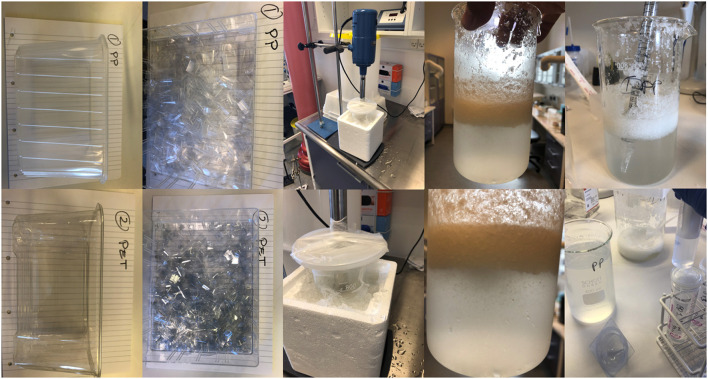
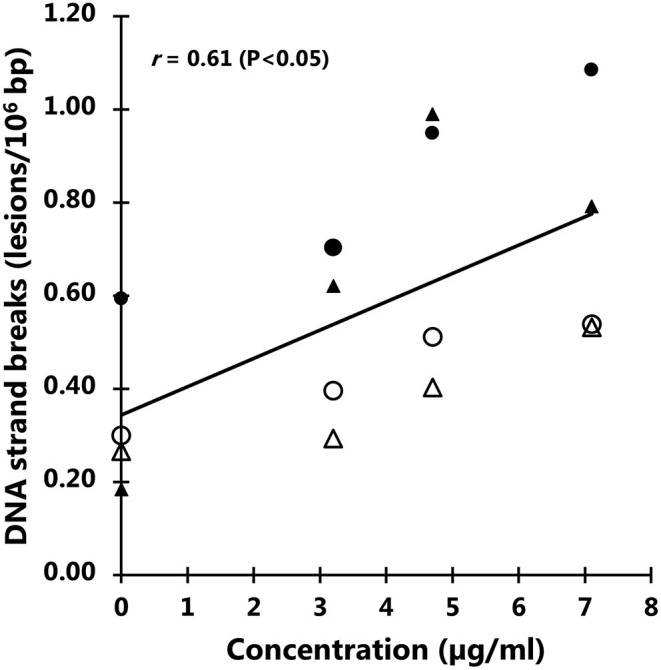
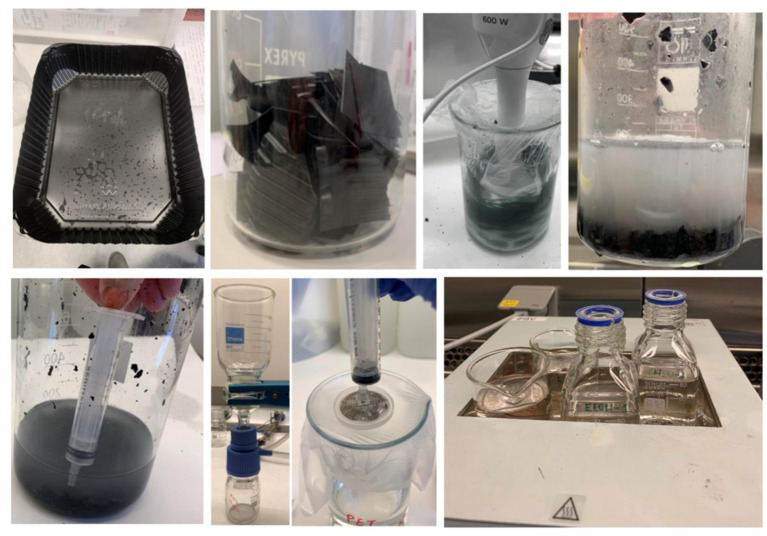
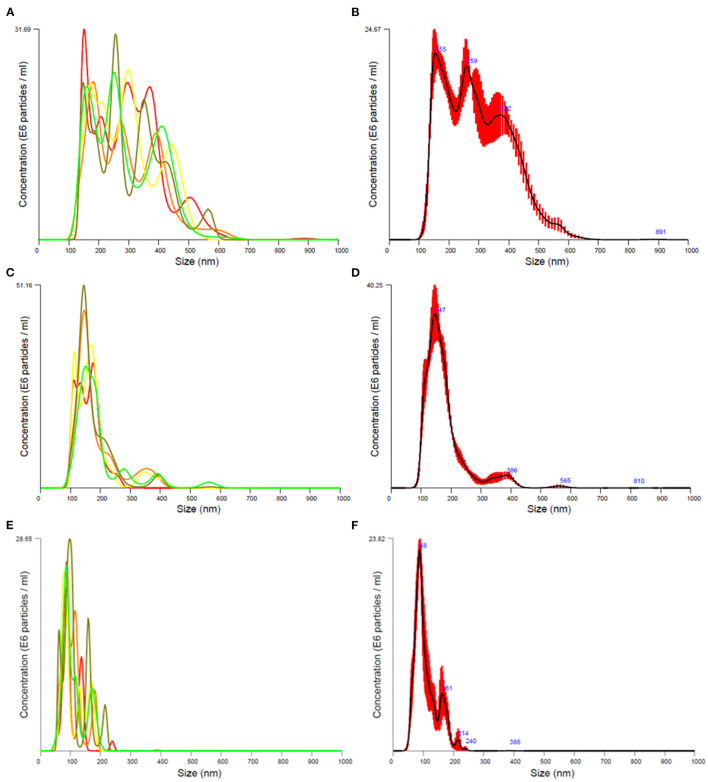
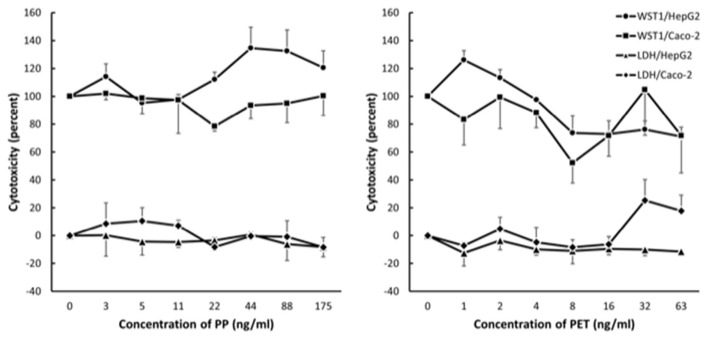
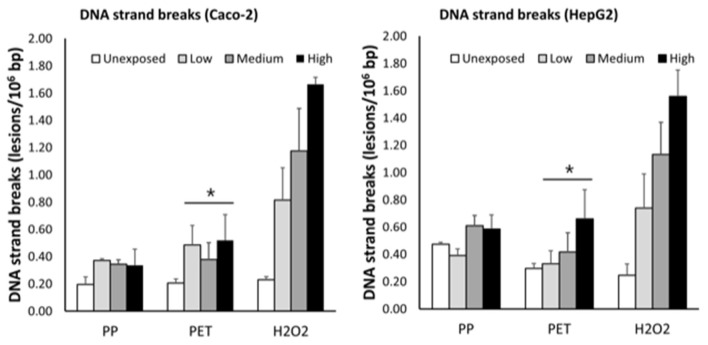
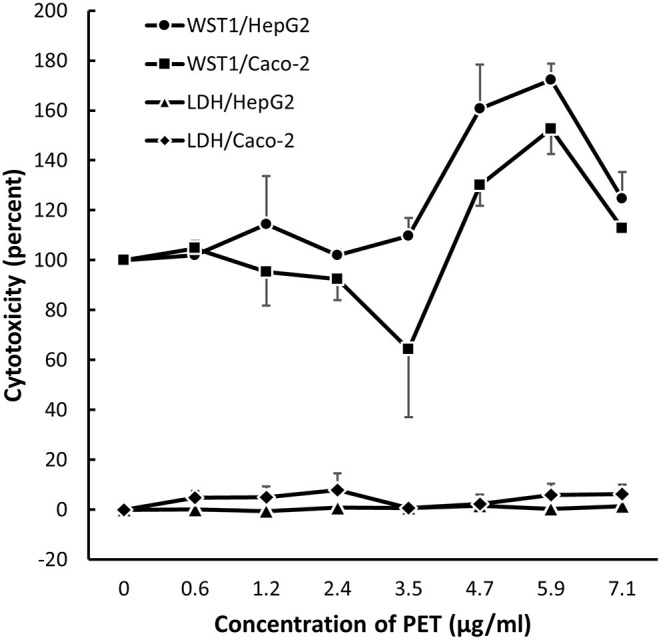
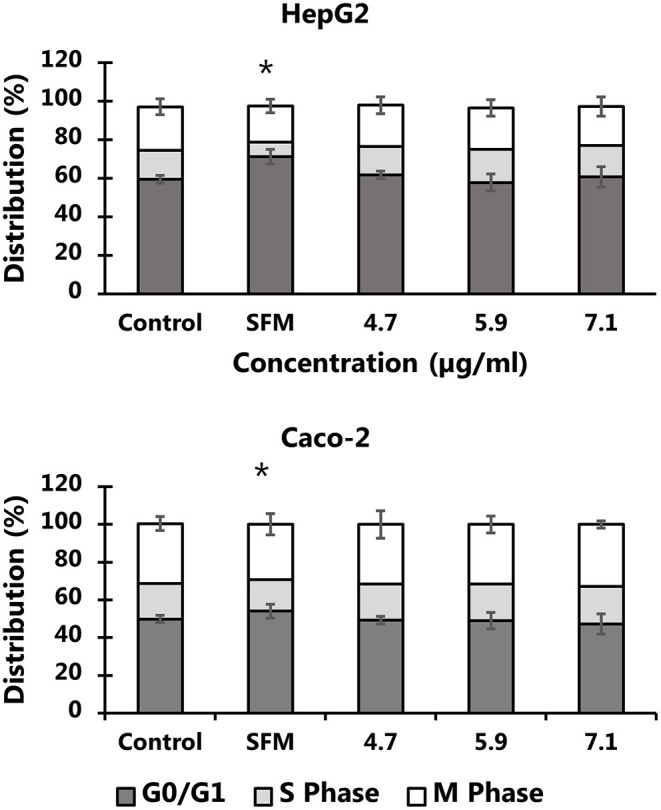
Large plastic litters degrade in the environment to micro- and nanoplastics, which may then enter the food chain and lead to human exposure by ingestion. The present study explored ways to obtain nanoplastic particles from real-life food containers. The first set of experiments gave rise to polypropylene nanoplastic suspensions with a hydrodynamic particle size range between 100 and 600 nm, whereas the same grinding process of polyethylene terephthalate (PET) produced suspensions of particles with a primary size between 100 and 300 nm. The exposure did not cause cytotoxicity measured by the lactate dehydrogenase (LDH) and water soluble tetrazolium 1 (WST-1) assays in Caco-2 and HepG2 cells. Nanoplastics of transparent PET food containers produced a modest concentration-dependent increase in DNA strand breaks, measured by the alkaline comet assay [net induction of 0.28 lesions/10 bp at the highest concentration (95% CI: 0.04; 0.51 lesions/10 base pair)]. The exposure to nanoplastics from transparent polypropylene food containers was also positively associated with DNA strand breaks [i.e., net induction of 0.10 lesions/10 base pair (95% CI: -0.04; 0.23 lesions/10 base pair)] at the highest concentration. Nanoplastics from grinding of black colored PET food containers demonstrated no effect on HepG2 and Caco-2 cells in terms of cytotoxicity, reactive oxygen species production or changes in cell cycle distribution. The net induction of DNA strand breaks was 0.43 lesions/10 bp (95% CI: 0.09; 0.78 lesions/10 bp) at the highest concentration of nanoplastics from black PET food containers. Collectively, the results indicate that exposure to nanoplastics from real-life consumer products can cause genotoxicity in cell cultures.
大型塑料垃圾在环境中降解为微塑料和纳米塑料,这些塑料可能进入食物链,并通过摄入导致人类暴露。本研究探索了从现实生活中的食品容器中获取纳米塑料颗粒的方法。第一组实验产生了聚丙烯纳米塑料悬浮液,其水动力粒径范围在 100 至 600nm 之间,而同样的聚对苯二甲酸乙二醇酯 (PET) 研磨过程产生了粒径在 100 至 300nm 之间的悬浮液。在 Caco-2 和 HepG2 细胞中,通过乳酸脱氢酶 (LDH) 和水溶性四唑盐 1 (WST-1) 测定,暴露没有引起细胞毒性。透明 PET 食品容器的纳米塑料产生了适度的浓度依赖性 DNA 链断裂增加,通过碱性彗星试验测量 [最高浓度时(95%CI:0.04;0.51 个损伤/10 个碱基对)净诱导 0.28 个损伤/10bp]。来自透明聚丙烯食品容器的纳米塑料暴露也与 DNA 链断裂呈正相关[即,最高浓度时净诱导 0.10 个损伤/10 个碱基对(95%CI:-0.04;0.23 个损伤/10 个碱基对)]。研磨黑色 PET 食品容器的纳米塑料对 HepG2 和 Caco-2 细胞在细胞毒性、活性氧产生或细胞周期分布变化方面没有影响。来自黑色 PET 食品容器的纳米塑料的最高浓度下,DNA 链断裂的净诱导为 0.43 个损伤/10bp(95%CI:0.09;0.78 个损伤/10bp)。总的来说,这些结果表明,暴露于现实生活中消费品的纳米塑料会在细胞培养物中引起遗传毒性。