Department of Life, Health and Environmental Sciences, University of L'Aquila, 67100 L'Aquila, Italy.
INFN Laboratori Nazionali del Gran Sasso, Assergi, 67100 L'Aquila, Italy.
Int J Mol Sci. 2024 Jul 21;25(14):7965. doi: 10.3390/ijms25147965.
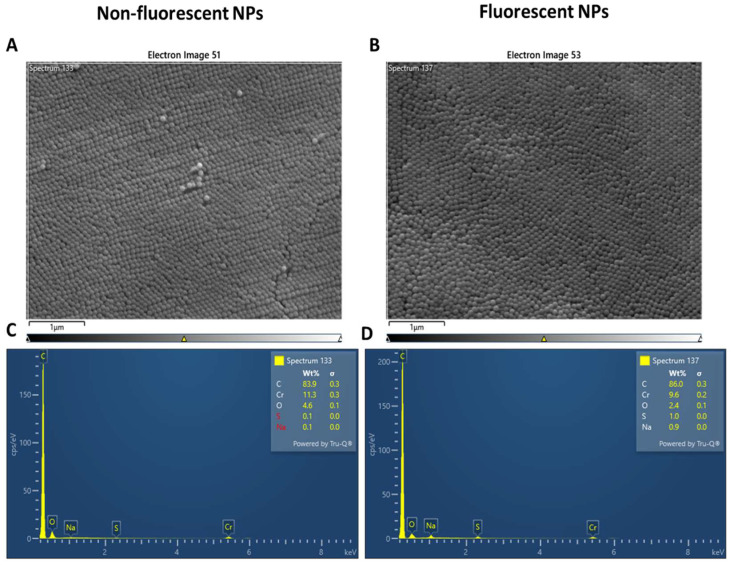
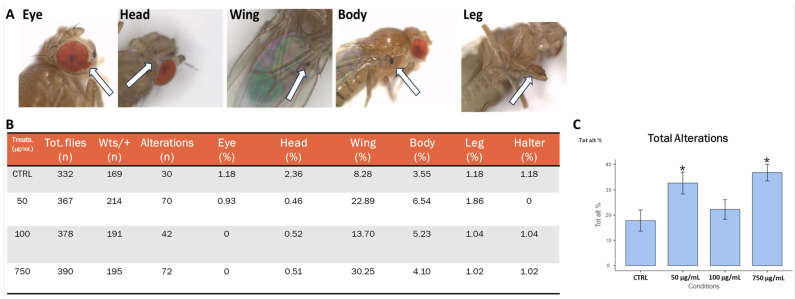
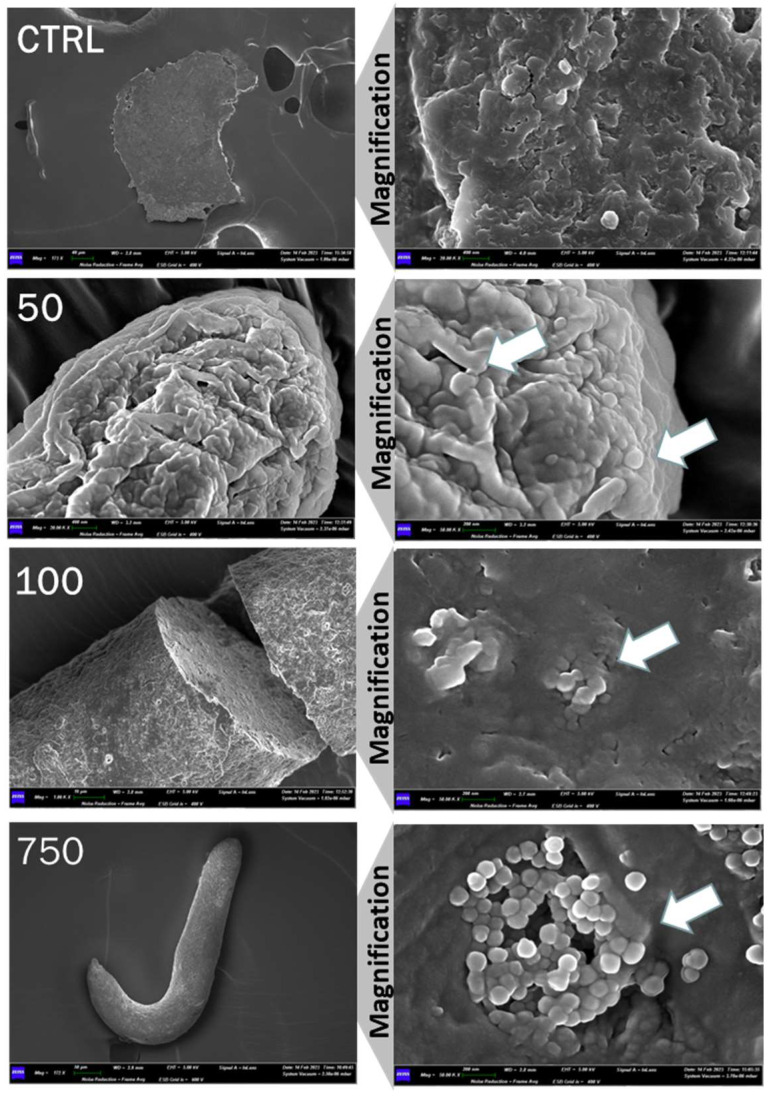
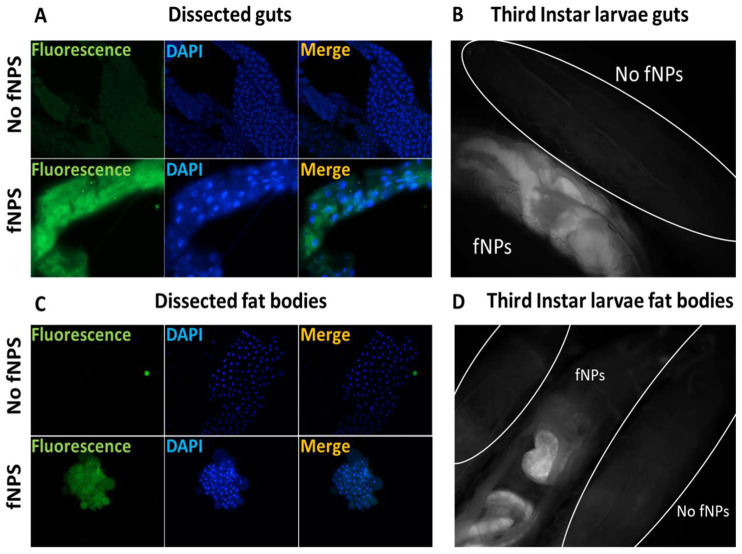
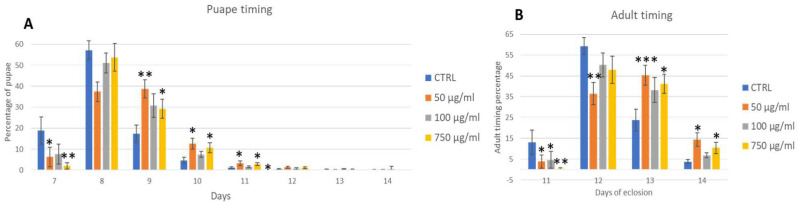
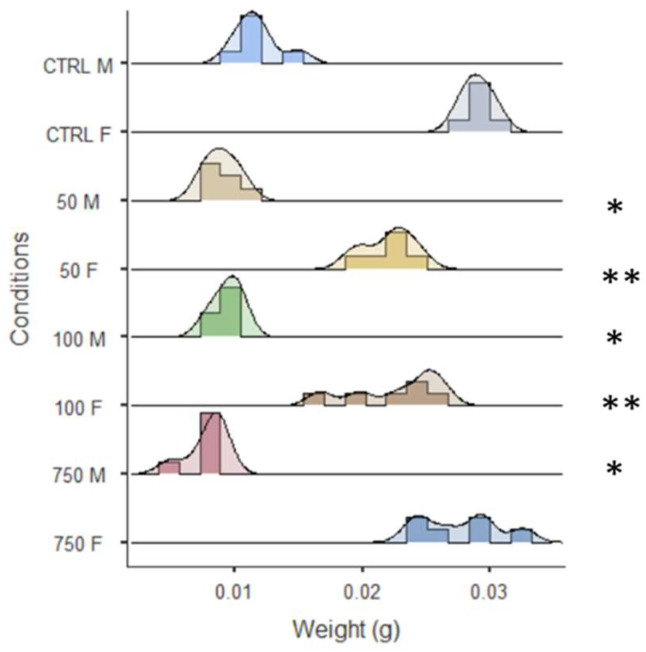
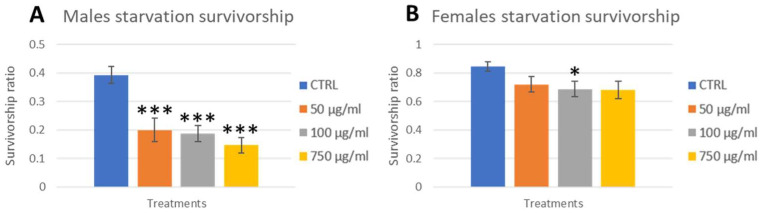
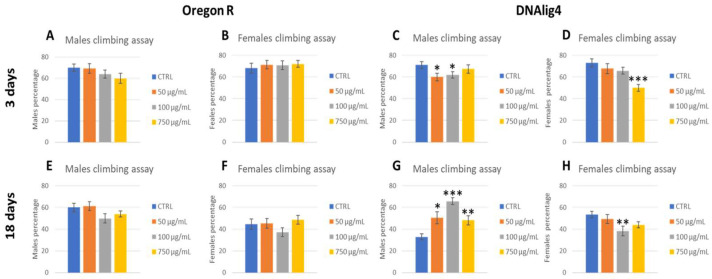
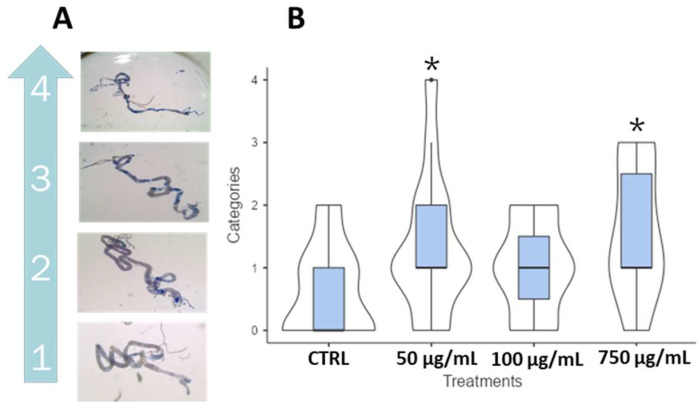
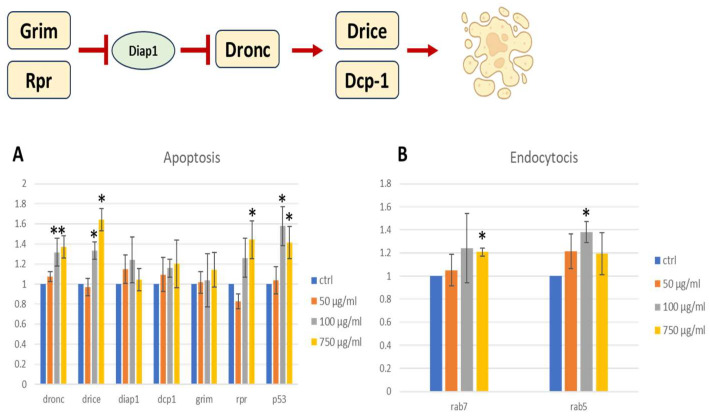
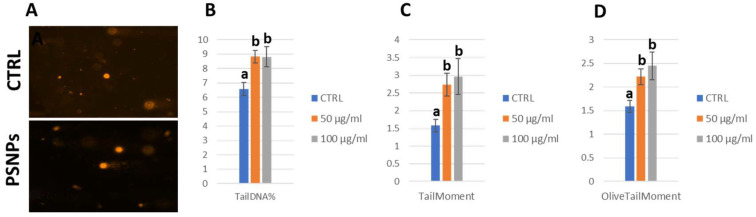
Today, plastic pollution is one of the biggest threats to the environment and public health. In the tissues of exposed species, micro- and nano-fragments accumulate, leading to genotoxicity, altered metabolism, and decreased lifespan. A model to investigate the genotoxic and tumor-promoting potential of nanoplastics (NPs) is . Here we tested polystyrene, which is commonly used in food packaging, is not well recycled, and makes up at least 30% of landfills. In order to investigate the biological effects and carcinogenic potential of 100 µm polystyrene nanoparticles (PSNPs), we raised Oregon [R] wild-type flies on contaminated food. After prolonged exposure, fluorescent PSNPs accumulated in the gut and fat bodies. Furthermore, PSNP-fed flies showed considerable alterations in weight, developmental time, and lifespan, as well as a compromised ability to recover from starvation. Additionally, we noticed a decrease in motor activity in DNA mutants fed with PSNPs, which are known to be susceptible to dietary stressors. A qPCR molecular investigation of the larval intestines revealed a markedly elevated expression of the genes and , suggesting a response to cell damage. Lastly, we used -defective mutants to assess the carcinogenic potential of PSNPs and discovered that exposed flies had more aberrant masses than untreated ones. In summary, our findings support the notion that ingested nanopolystyrene triggers metabolic and genetic modifications in the exposed organisms, eventually delaying development and accelerating death and disease.
如今,塑料污染是对环境和公共健康的最大威胁之一。在暴露物种的组织中,微纳米碎片会积累,导致遗传毒性、代谢改变和寿命缩短。一种用于研究纳米塑料(NPs)遗传毒性和致癌潜力的模型是 。在这里,我们测试了聚苯乙烯,它通常用于食品包装,回收情况不佳,至少占垃圾填埋场的 30%。为了研究 100µm 聚苯乙烯纳米颗粒(PSNPs)的生物学效应和致癌潜力,我们用污染食物喂养 Oregon [R] 野生型果蝇。经过长时间的暴露,荧光 PSNPs 会在肠道和脂肪体中积累。此外,PSNP 喂养的果蝇体重、发育时间和寿命明显改变,并且从饥饿中恢复的能力受损。此外,我们注意到喂食 PSNPs 的 DNA 突变体的运动活性下降,这些突变体已知对饮食应激敏感。对幼虫肠道的 qPCR 分子研究显示,基因 和 的表达明显升高,表明对细胞损伤的反应。最后,我们使用 -缺陷突变体来评估 PSNPs 的致癌潜力,发现暴露的果蝇比未处理的果蝇有更多的异常肿块。总之,我们的研究结果支持这样一种观点,即摄入的纳米聚苯乙烯会在暴露的生物体中引发代谢和遗传改变,最终导致发育迟缓、死亡和疾病加速。