Chou Shuli, Zhang Shiqing, Guo Huating, Chang Yung-Fu, Zhao Wenjing, Mou Xiangyu
Center for Infection and Immunity Studies, School of Medicine, Shenzhen Campus of Sun Yat-sen University, Shenzhen, China.
Department of Population Medicine and Diagnostic Sciences, College of Veterinary Medicine, Cornell University, Ithaca, NY, United States.
Front Microbiol. 2022 Jul 7;13:879207. doi: 10.3389/fmicb.2022.879207. eCollection 2022.
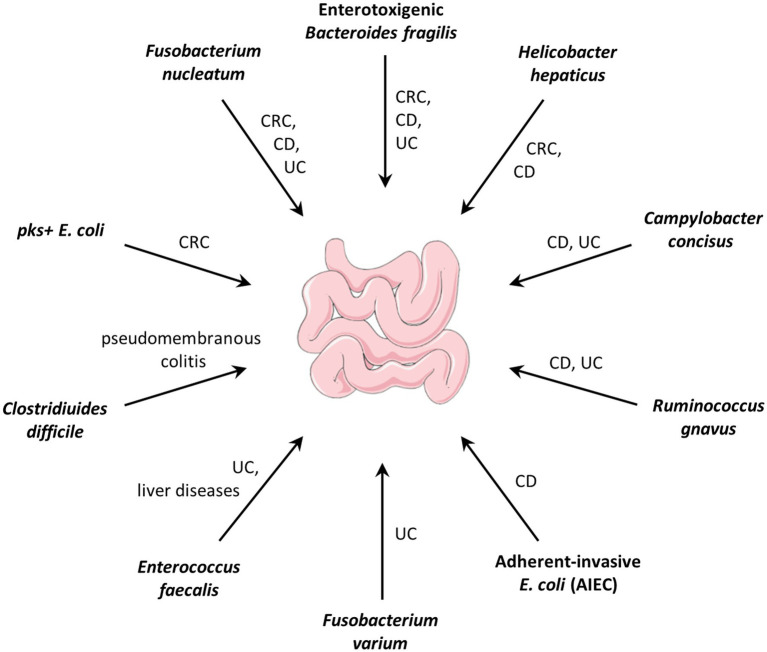
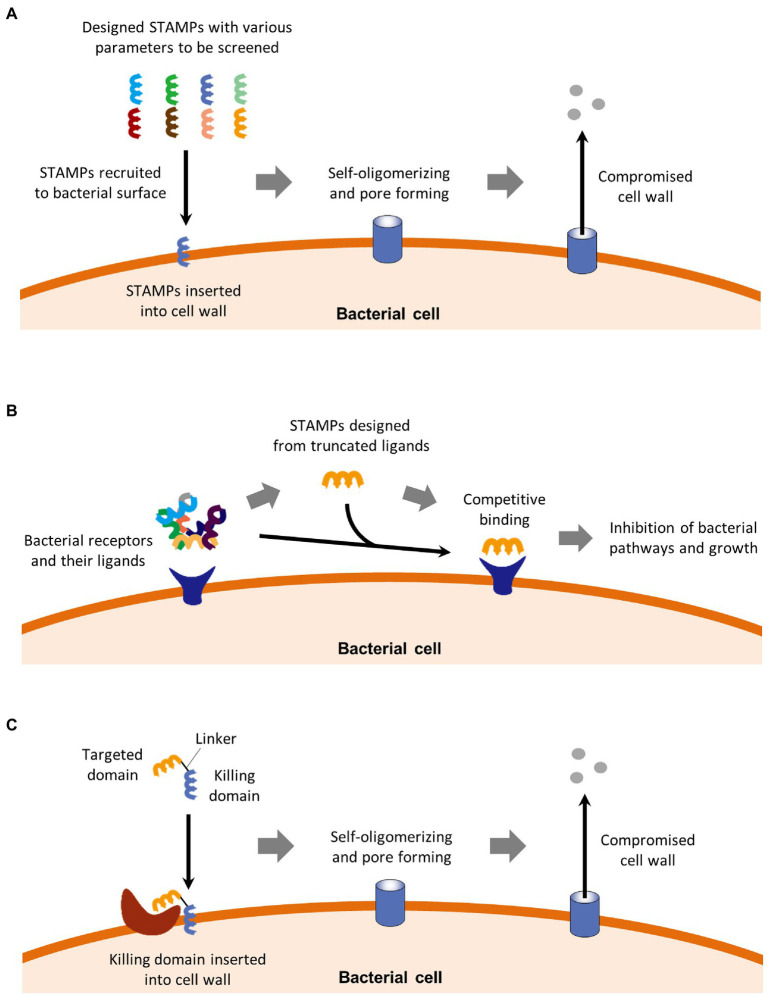
The gut microbiome plays a pivotal role in maintaining the health of the hosts; however, there is accumulating evidence that certain bacteria in the host, termed pathobionts, play roles in the progression of diseases. Although antibiotics can be used to eradicate unwanted bacteria, the side effects of antibiotic treatment lead to a great need for more targeted antimicrobial agents as tools to modulate the microbiome more precisely. Herein, we reviewed narrow-spectrum antibiotics naturally made by plants and microorganisms, followed by more targeted antibiotic agents including synthetic peptides, phage, and targeted drug delivery systems, from the perspective of using them as potential tools for modulating the gut microbiome for favorable effects on the health of the host. Given the emerging discoveries on pathobionts and the increasing knowledge on targeted antimicrobial agents reviewed in this article, we anticipate targeted antimicrobial agents will emerge as a new generation of a drug to treat microbiome-involved diseases.
肠道微生物群在维持宿主健康方面起着关键作用;然而,越来越多的证据表明,宿主体内某些被称为病理共生菌的细菌在疾病进展中发挥作用。尽管抗生素可用于根除不需要的细菌,但抗生素治疗的副作用导致迫切需要更具针对性的抗菌剂,作为更精确调节微生物群的工具。在此,我们从将其用作调节肠道微生物群以对宿主健康产生有利影响的潜在工具的角度,综述了植物和微生物天然产生的窄谱抗生素,以及包括合成肽、噬菌体和靶向药物递送系统在内的更具针对性的抗生素剂。鉴于本文中关于病理共生菌的新发现以及对靶向抗菌剂的认识不断增加,我们预计靶向抗菌剂将成为治疗微生物群相关疾病的新一代药物。