Department of Environmental Microbiology, School of Earth and Environmental Sciences, Babasaheb Bhimrao Ambedkar University, Lucknow, Uttar Pradesh, India.
Department of Molecular Genetics, Biochemistry and Microbiology, University of Cincinnati College of Medicine, Cincinnati, OH, USA.
Gut Microbes. 2021 Jan-Dec;13(1):1979882. doi: 10.1080/19490976.2021.1979882.
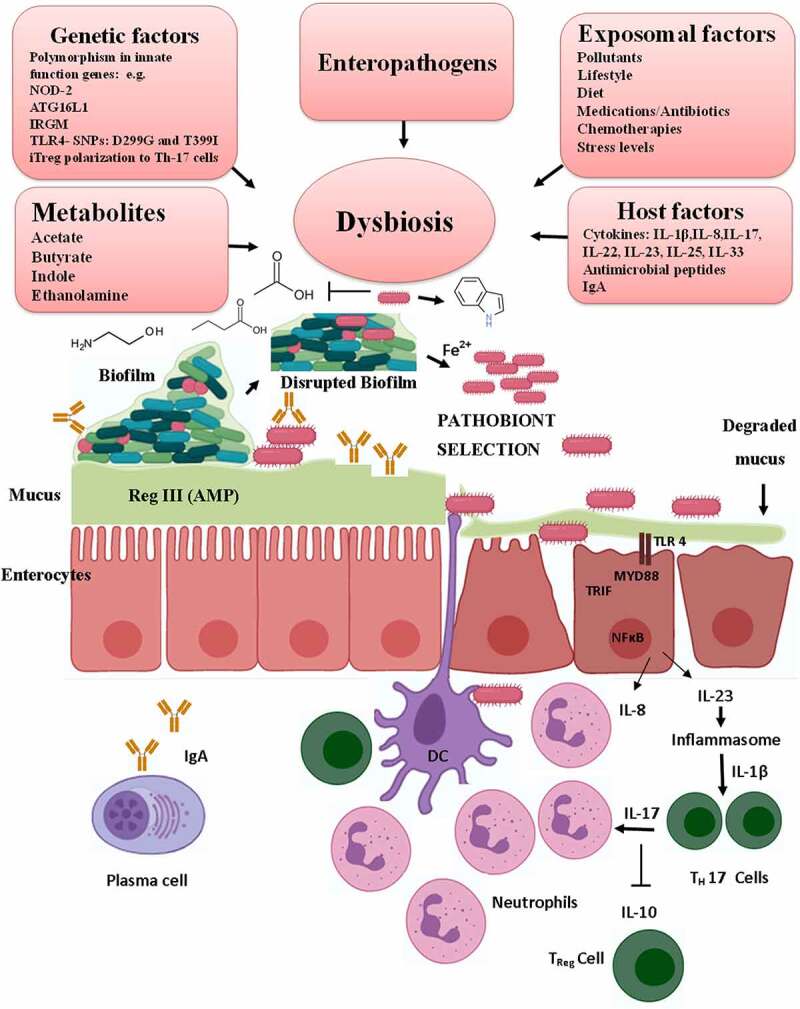
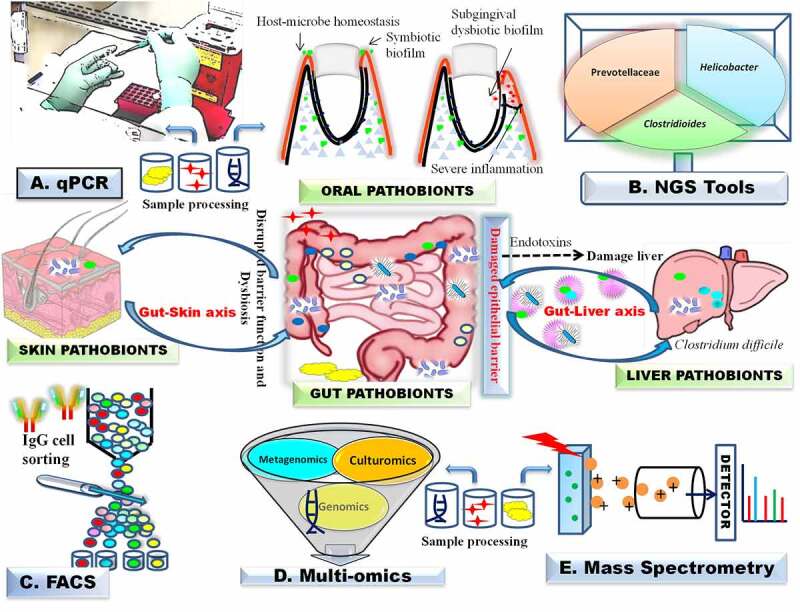
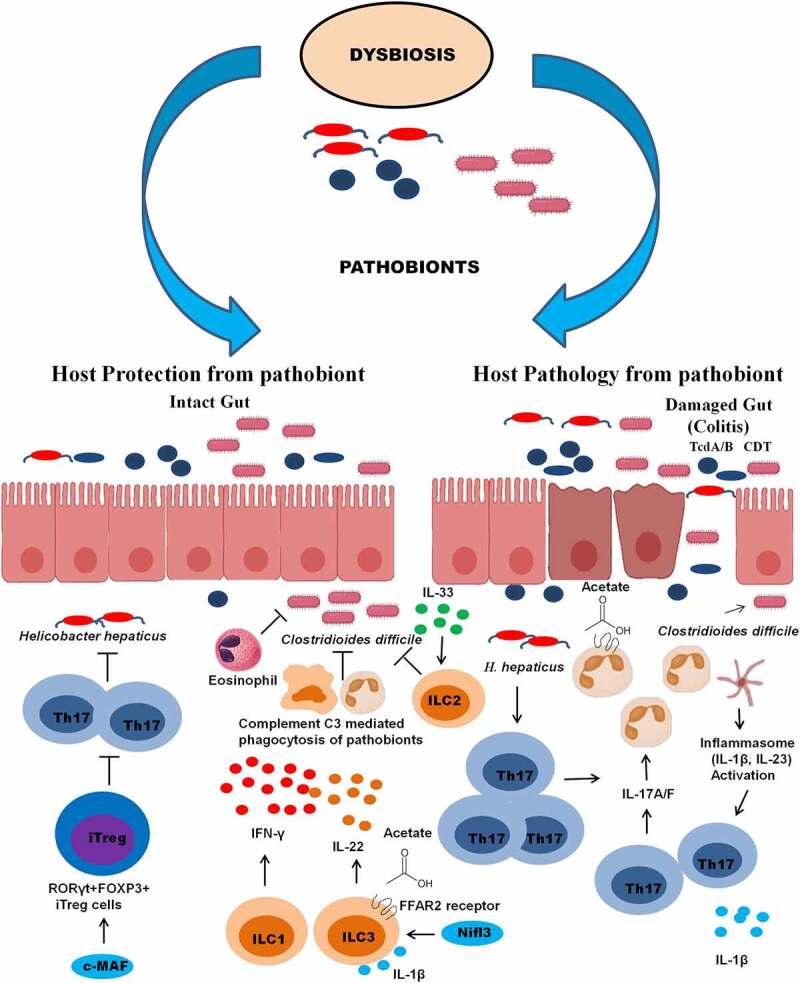
Pathobionts are opportunistic microbes that emerge as a result of perturbations in the healthy microbiome due to complex interactions of various genetic, exposomal, microbial, and host factors that lead to their selection and expansion. Their proliferations can aggravate inflammatory manifestations, trigger autoimmune diseases, and lead to severe life-threatening conditions. Current surge in microbiome research is unwinding these complex interplays between disease development and protection against pathobionts. This review summarizes the current knowledge of pathobiont emergence with a focus on and the recent findings on the roles of immune cells such as iTreg cells, Th17 cells, innate lymphoid cells, and cytokines in protection against pathobionts. The review calls for adoption of innovative tools and cutting-edge technologies in clinical diagnostics and therapeutics to provide insights in identification and quantification of pathobionts.
条件致病菌是指由于各种遗传、外显子组、微生物和宿主因素的复杂相互作用,导致其选择和扩增,从而在健康微生物组中出现的机会性微生物。它们的增殖会加重炎症表现,引发自身免疫性疾病,并导致严重的危及生命的情况。目前,微生物组研究的热潮正在揭示疾病发展和抵御条件致病菌之间的这些复杂相互作用。本综述总结了条件致病菌出现的现有知识,重点介绍了免疫细胞(如 iTreg 细胞、Th17 细胞、固有淋巴细胞和细胞因子)在抵御条件致病菌中的作用,以及最近的发现。该综述呼吁在临床诊断和治疗中采用创新工具和前沿技术,以提供对条件致病菌的识别和定量的见解。