Siriapisith Thanongchai, Kusakunniran Worapan, Haddawy Peter
Department of Radiology, Faculty of Medicine Siriraj Hospital, Mahidol University, Bangkok, Thailand.
Faculty of Information and Communication Technology, Mahidol University, Nakhon Pathom, Thailand.
PeerJ Comput Sci. 2022 Jul 11;8:e1033. doi: 10.7717/peerj-cs.1033. eCollection 2022.
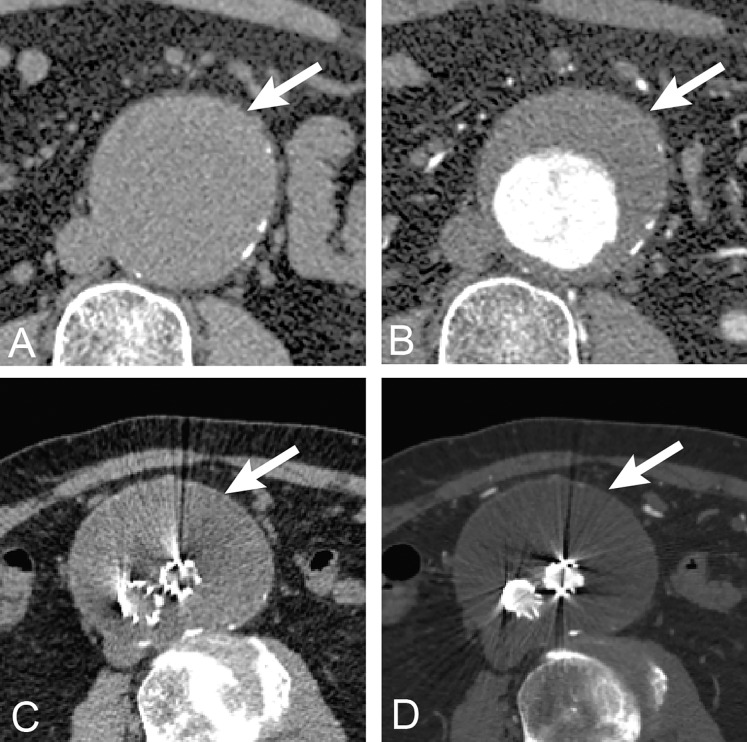
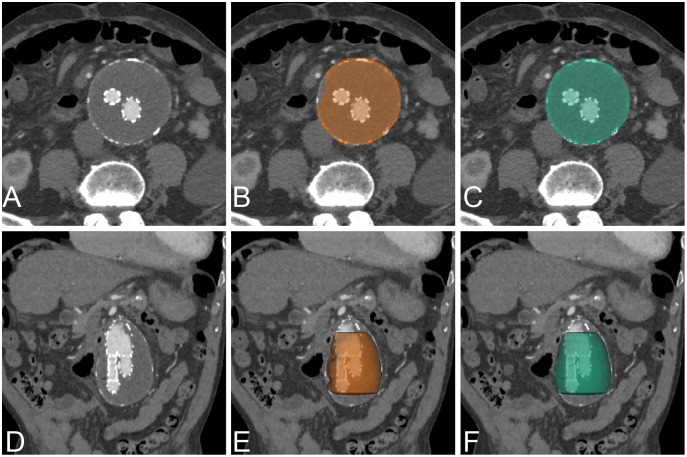
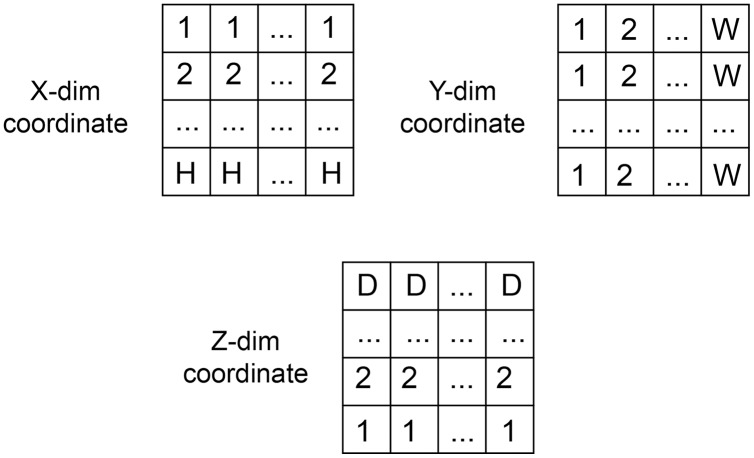
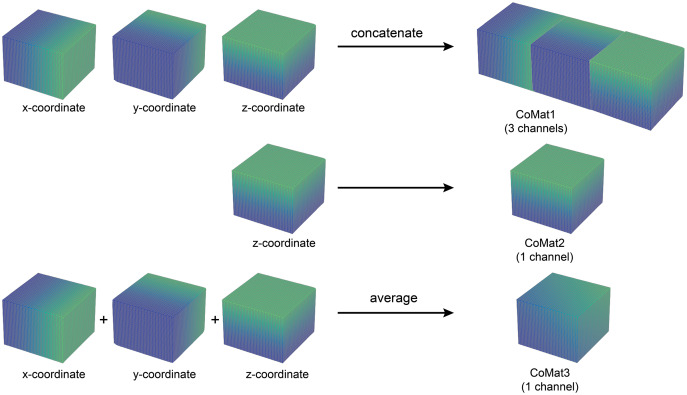
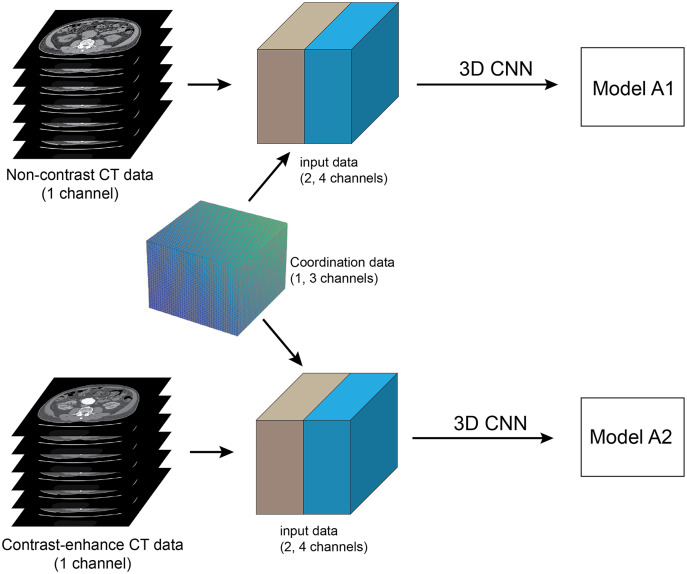
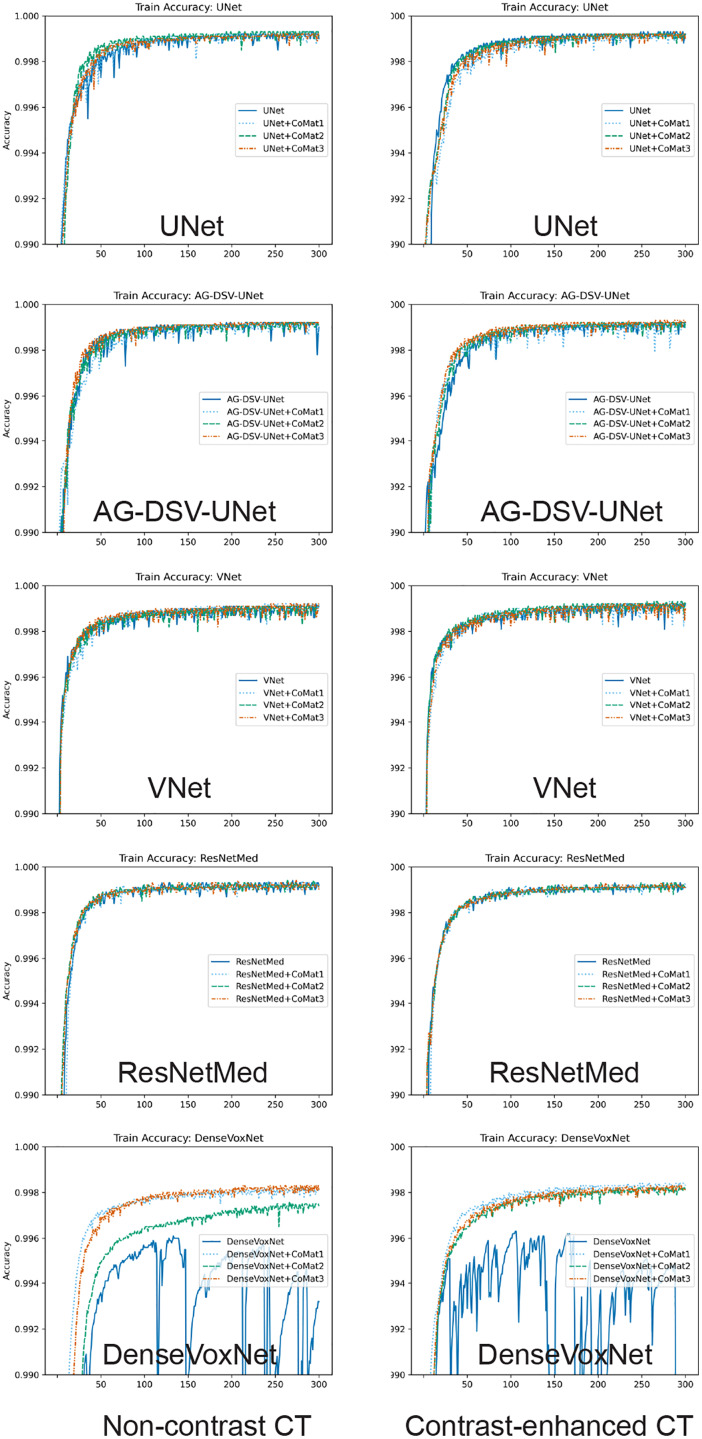
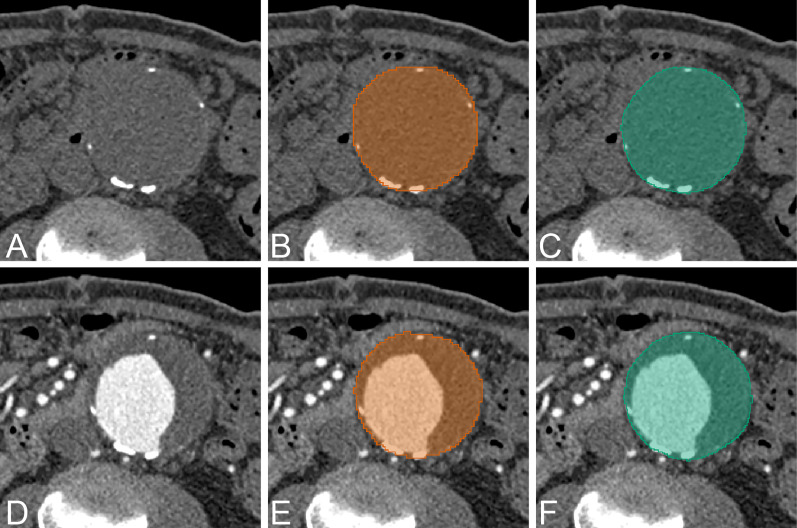
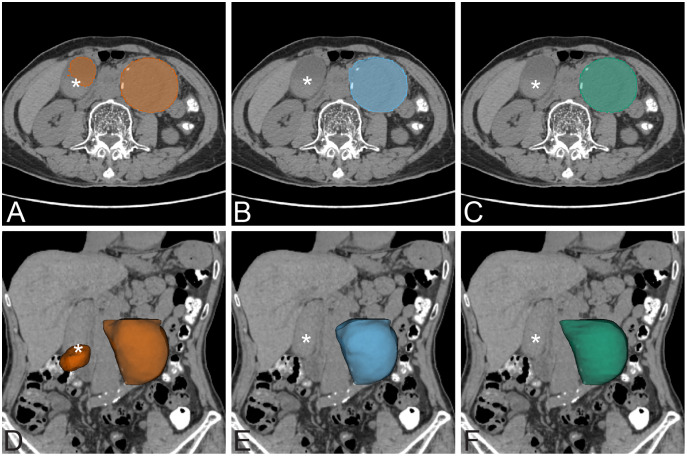
Abdominal aortic aneurysm (AAA) is one of the most common diseases worldwide. 3D segmentation of AAA provides useful information for surgical decisions and follow-up treatment. However, existing segmentation methods are time consuming and not practical in routine use. In this article, the segmentation task will be addressed automatically using a deep learning based approach which has been proved to successfully solve several medical imaging problems with excellent performances. This article therefore proposes a new solution of AAA segmentation using deep learning in a type of 3D convolutional neural network (CNN) architecture that also incorporates coordinate information. The tested CNNs are UNet, AG-DSV-UNet, VNet, ResNetMed and DenseVoxNet. The 3D-CNNs are trained with a dataset of high resolution (256 × 256) non-contrast and post-contrast CT images containing 64 slices from each of 200 patients. The dataset consists of contiguous CT slices without augmentation and no post-processing step. The experiments show that incorporation of coordinate information improves the segmentation results. The best accuracies on non-contrast and contrast-enhanced images have average dice scores of 97.13% and 96.74%, respectively. Transfer learning from a pre-trained network of a pre-operative dataset to post-operative endovascular aneurysm repair (EVAR) was also performed. The segmentation accuracy of post-operative EVAR using transfer learning on non-contrast and contrast-enhanced CT datasets achieved the best dice scores of 94.90% and 95.66%, respectively.
腹主动脉瘤(AAA)是全球最常见的疾病之一。AAA的三维分割为手术决策和后续治疗提供了有用信息。然而,现有的分割方法耗时且在常规使用中不实用。在本文中,将使用基于深度学习的方法自动解决分割任务,该方法已被证明能够以优异的性能成功解决多个医学成像问题。因此,本文提出了一种在一种还整合了坐标信息的三维卷积神经网络(CNN)架构中使用深度学习进行AAA分割的新解决方案。所测试的CNN包括UNet、AG-DSV-UNet、VNet、ResNetMed和DenseVoxNet。这些三维CNN使用一个高分辨率(256×256)的数据集进行训练,该数据集包含来自200名患者的非增强和增强后CT图像,每个患者有64个切片。该数据集由连续的CT切片组成,没有进行增强和后处理步骤。实验表明,整合坐标信息可改善分割结果。在非增强和增强图像上的最佳准确率分别具有平均骰子系数得分97.13%和96.74%。还进行了从术前数据集的预训练网络到术后血管内动脉瘤修复(EVAR)的迁移学习。在非增强和增强CT数据集上使用迁移学习对术后EVAR进行分割的准确率分别达到了最佳骰子系数得分94.90%和95.66%。