Gu Xuefeng, Lai Donglin, Liu Shuang, Chen Kaijie, Zhang Peng, Chen Bing, Huang Gang, Cheng Xiaoqin, Lu Changlian
Shanghai Key Laboratory of Molecular Imaging, Zhoupu Hospital, Shanghai University of Medicine and Health Sciences, Shanghai, China.
School of Pharmacy, Shanghai University of Medicine and Health Sciences, Shanghai, China.
Front Aging Neurosci. 2022 Jul 7;14:949083. doi: 10.3389/fnagi.2022.949083. eCollection 2022.
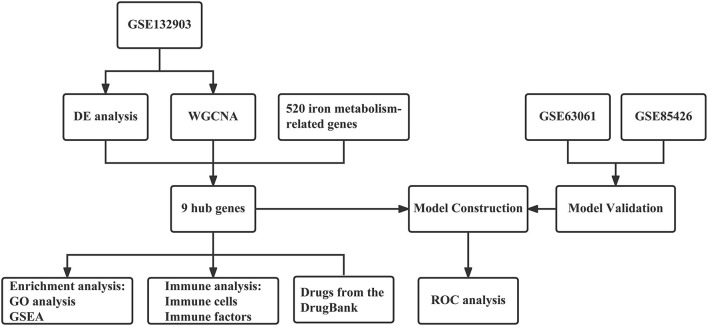
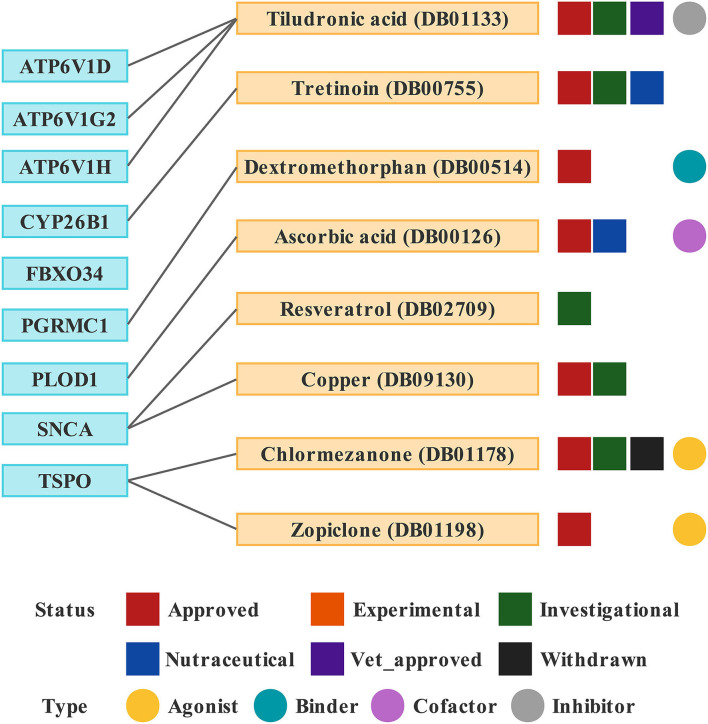
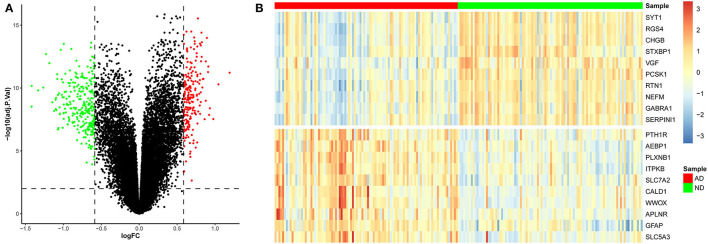
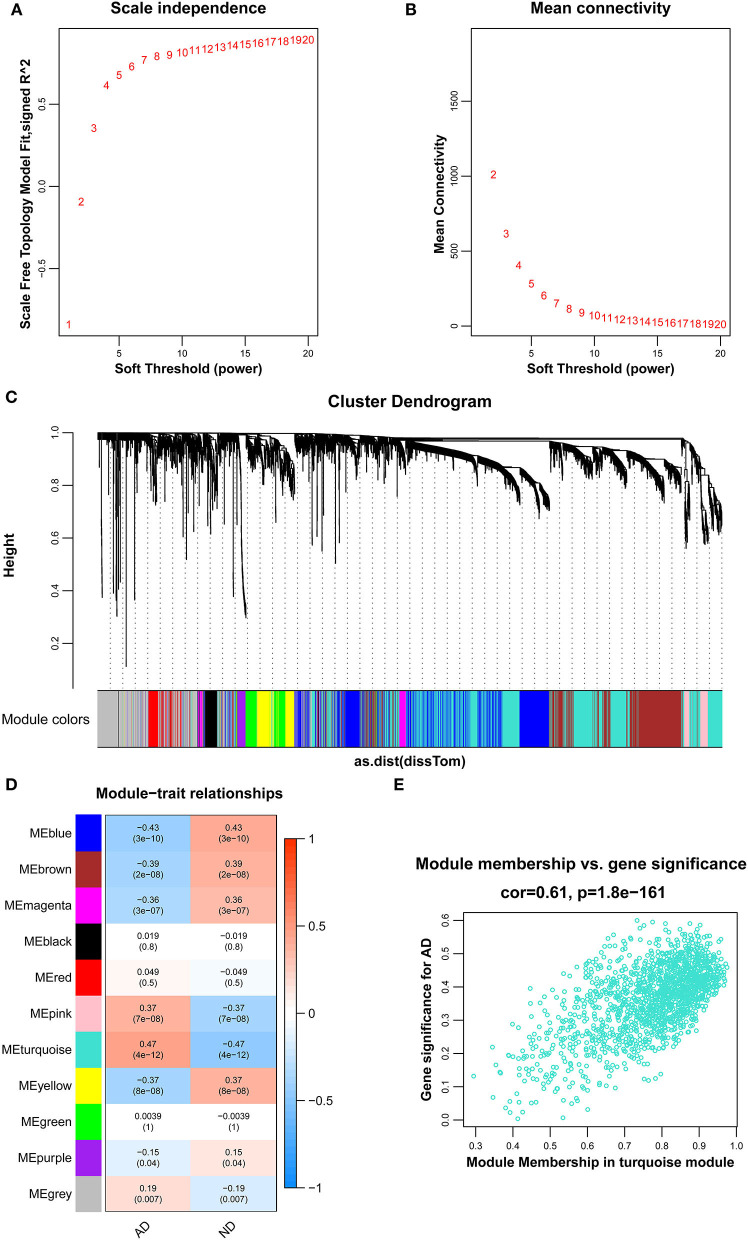
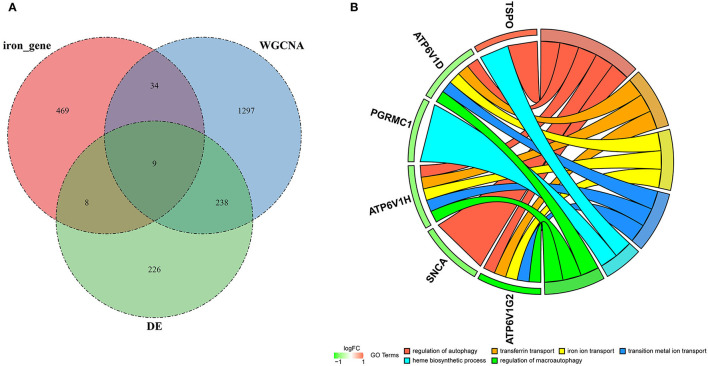
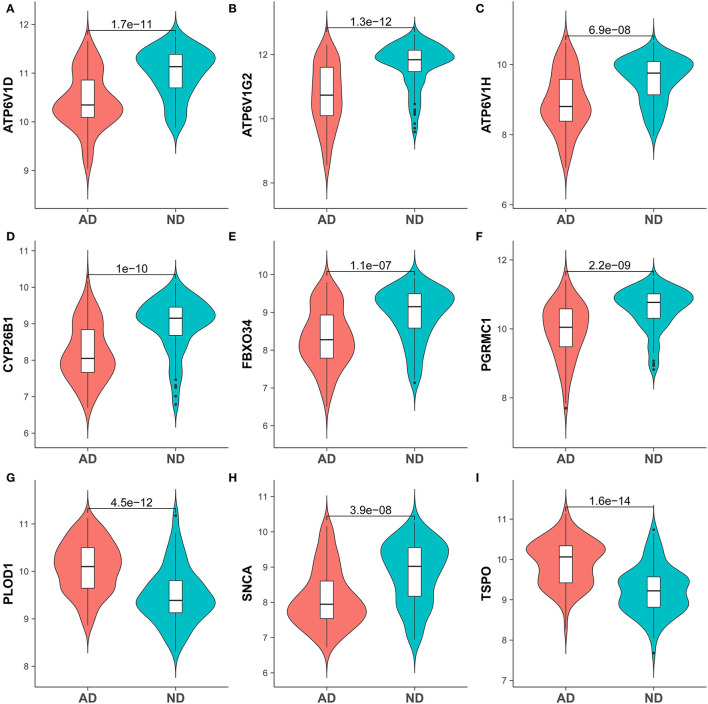
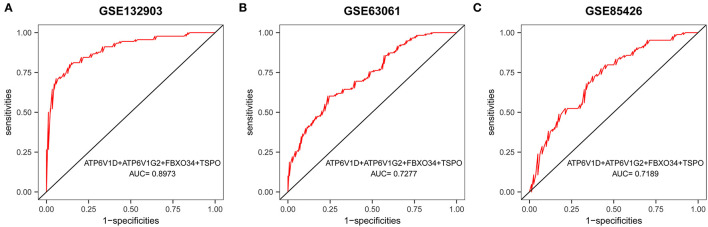
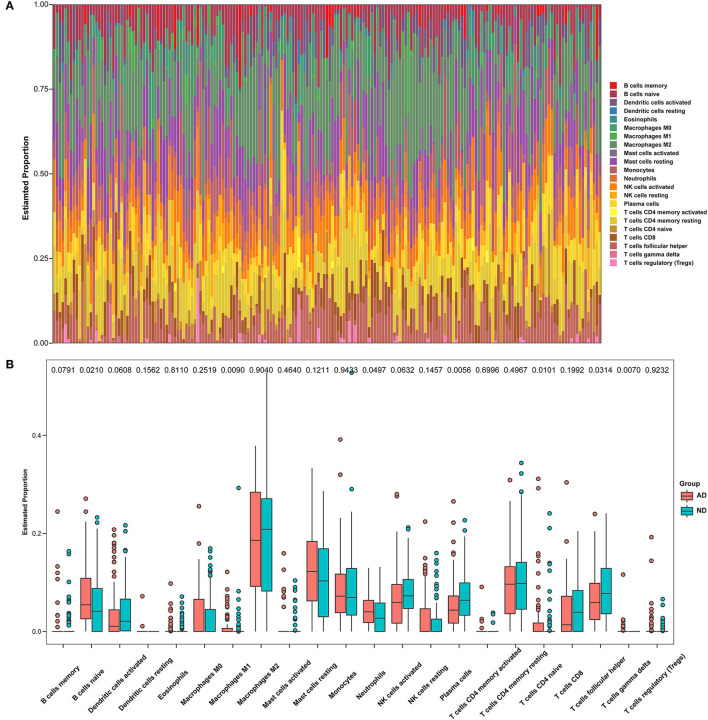
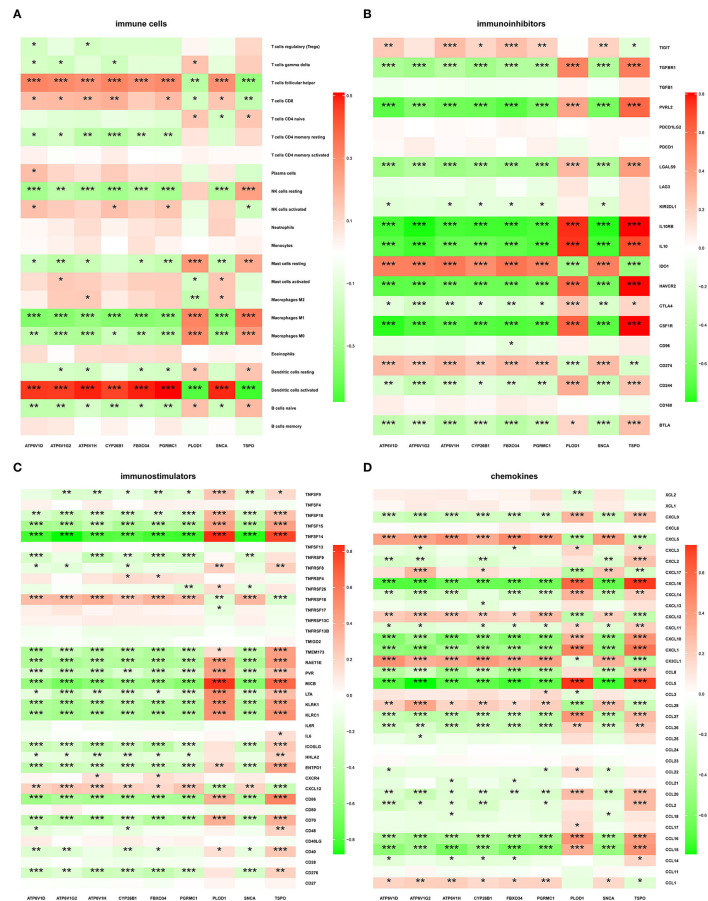
Alzheimer's disease (AD), the most common neurodegenerative disease, remains unclear in terms of its underlying causative genes and effective therapeutic approaches. Meanwhile, abnormalities in iron metabolism have been demonstrated in patients and mouse models with AD. Therefore, this study sought to find hub genes based on iron metabolism that can influence the diagnosis and treatment of AD. First, gene expression profiles were downloaded from the GEO database, including non-demented (ND) controls and AD samples. Fourteen iron metabolism-related gene sets were downloaded from the MSigDB database, yielding 520 iron metabolism-related genes. The final nine hub genes associated with iron metabolism and AD were obtained by differential analysis and WGCNA in brain tissue samples from GSE132903. GO analysis revealed that these genes were mainly involved in two major biological processes, autophagy and iron metabolism. Through stepwise regression and logistic regression analyses, we selected four of these genes to construct a diagnostic model of AD. The model was validated in blood samples from GSE63061 and GSE85426, and the AUC values showed that the model had a relatively good diagnostic performance. In addition, the immune cell infiltration of the samples and the correlation of different immune factors with these hub genes were further explored. The results suggested that these genes may also play an important role in immunity to AD. Finally, eight drugs targeting these nine hub genes were retrieved from the DrugBank database, some of which were shown to be useful for the treatment of AD or other concomitant conditions, such as insomnia and agitation. In conclusion, this model is expected to guide the diagnosis of patients with AD by detecting the expression of several genes in the blood. These hub genes may also assist in understanding the development and drug treatment of AD.
阿尔茨海默病(AD)是最常见的神经退行性疾病,其潜在致病基因和有效治疗方法仍不明确。同时,AD患者和小鼠模型已证实存在铁代谢异常。因此,本研究旨在寻找基于铁代谢的关键基因,以影响AD的诊断和治疗。首先,从GEO数据库下载基因表达谱,包括非痴呆(ND)对照和AD样本。从MSigDB数据库下载了14个与铁代谢相关的基因集,得到520个与铁代谢相关的基因。通过对GSE132903脑组织样本进行差异分析和WGCNA,最终获得了9个与铁代谢和AD相关的关键基因。GO分析表明,这些基因主要参与两个主要生物学过程,自噬和铁代谢。通过逐步回归和逻辑回归分析,我们从这些基因中选择了4个构建AD诊断模型。该模型在GSE63061和GSE85426的血液样本中得到验证,AUC值表明该模型具有较好的诊断性能。此外,进一步探讨了样本的免疫细胞浸润以及不同免疫因子与这些关键基因的相关性。结果表明,这些基因在AD免疫中可能也发挥重要作用。最后,从DrugBank数据库中检索到8种靶向这9个关键基因的药物,其中一些药物已显示对AD或其他伴随病症(如失眠和烦躁)的治疗有用。总之,该模型有望通过检测血液中几个基因的表达来指导AD患者的诊断。这些关键基因也可能有助于理解AD的发展和药物治疗。