Chen Wenbin, He Zijian, Li Shuyu, Wu Zixin, Tan Jin, Yang Weifeng, Li Guanwei, Pan Xiaoting, Liu Yuying, Lyu Feng-Juan, Li Wanglin
Department of Colorectal and Anal Surgery, The Second Affiliated Hospital, School of Medicine, South China University of Technology, Guangzhou 510641, China.
School of Biology and Biological Engineering, South China University of Technology, Guangzhou 510641, China.
Bioengineering (Basel). 2022 Jul 15;9(7):318. doi: 10.3390/bioengineering9070318.
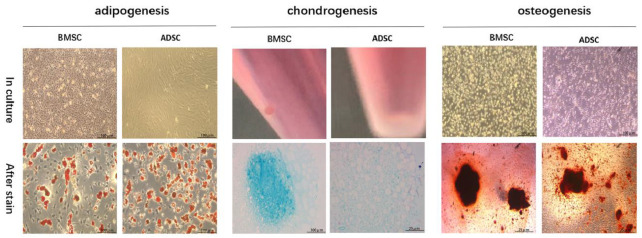
Anal sphincter incontinence (ASI) can cause a serious decline in the quality of life and can cause a socioeconomic burden. Studies have shown that bone marrow mesenchymal stem cells (MSC) have significant therapeutic effects on ASI, but the cost and risk of MSC harvest limit their further application. In contrast, adipose tissue derived stem cells (ADSC) and cellular stromal vascular fraction (CSVF) as stem cell sources have multipotency and the advantage of easy harvest.
Here we aim to investigate the effects of ADSC and CSVF on treating ASI and compare them to that of bone marrow MSC.
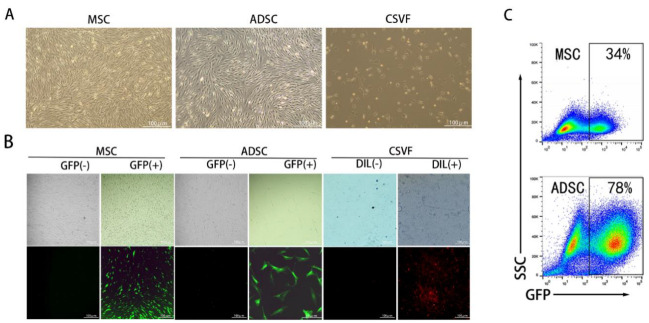
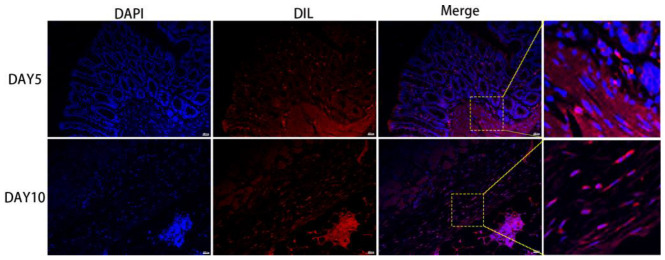
Bone marrow MSC, ADSC, and CSVF were obtained and labeled with green fluorescent protein (GFP), and CSVF was labeled with DIL. Sprague Dawley (SD) rats were divided into 5 groups. Four groups were injected with 0.2 mL phosphate buffer saline (PBS), 1 × 10/0.2 mL of MSC, ADSC, or CSVF, respectively, after model establishment. The control group received no treatment. The repair was assessed by anal functional tests and immunostaining on day 5 and day 10 after injection.
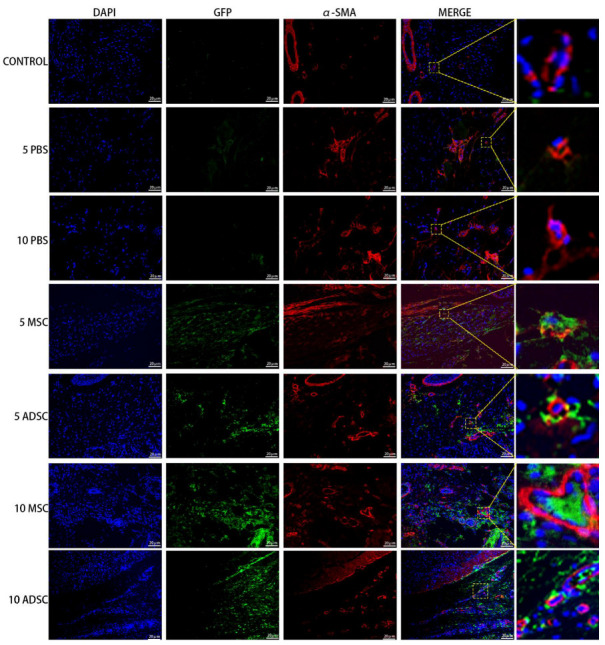
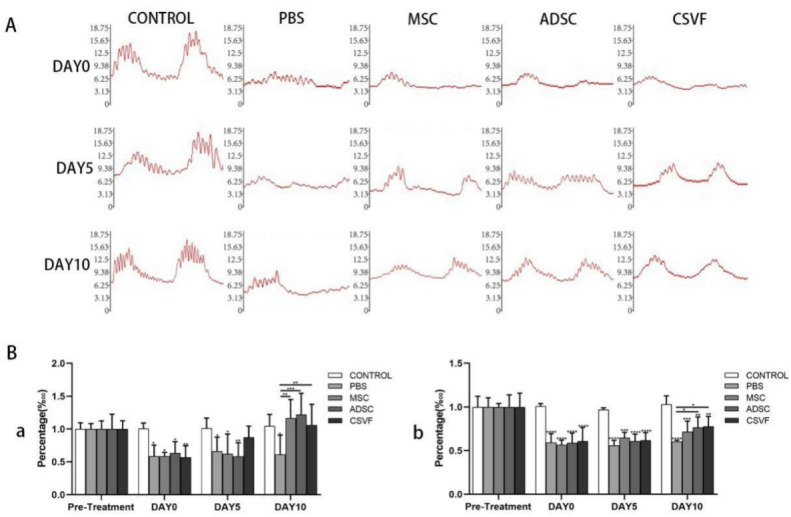
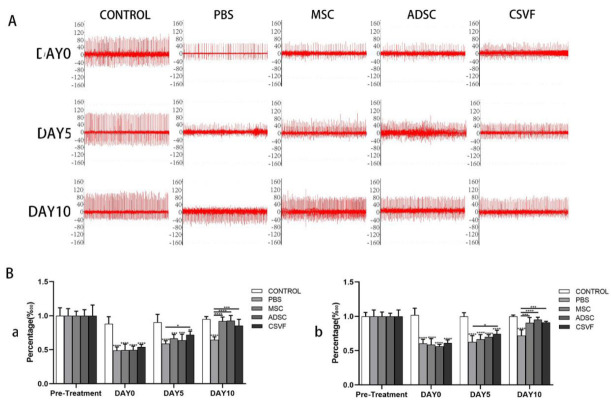
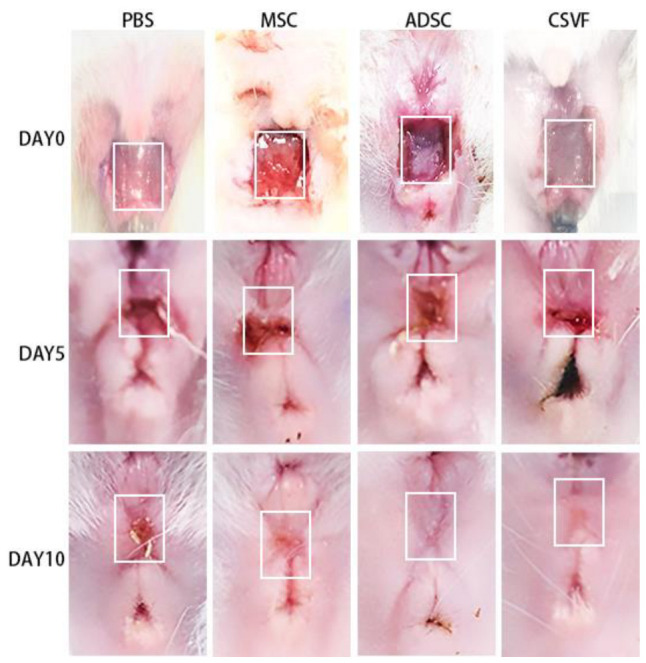
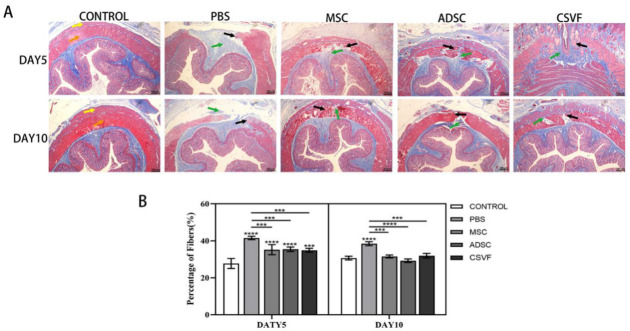
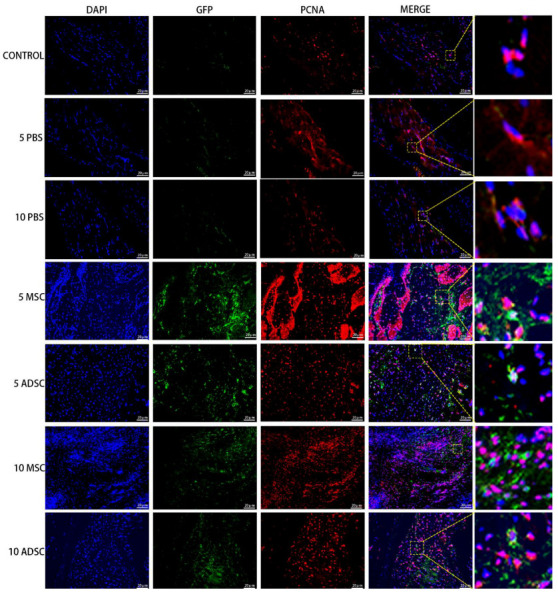
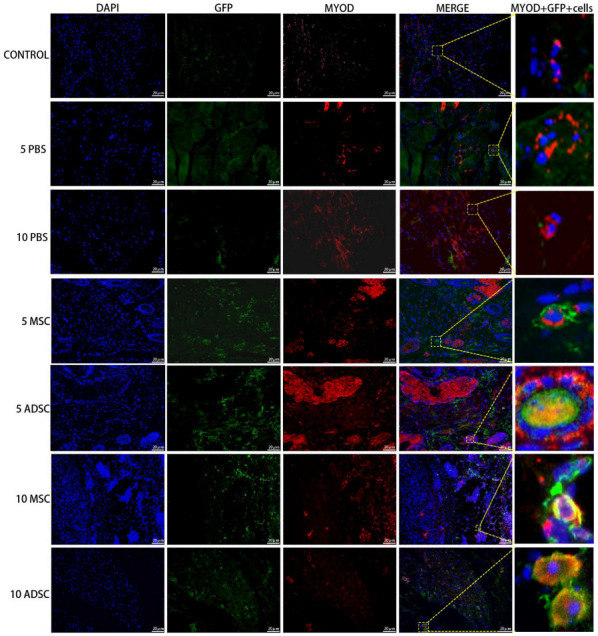
MSC, ADSC, and CSVF significantly promoted tissue repair and the recovery of muscle contraction and electromyographic activity in ASI. The generation of myosatellite cells by injected MSC, ADSC, and CSVF was found in the wounded area. On day 5, CSVF showed highest therapeutic effect, while on day 10, MSC and ADSC showed higher therapeutic effects than CSVF. When comparing the effects of MSC and ADSC, ADSC was slightly better than MSC in the indexes of anal pressure, etc. Conclusion: ADSC and CVSF are alternative stem cell sources for ASI repair.
肛门括约肌失禁(ASI)可导致生活质量严重下降,并会造成社会经济负担。研究表明,骨髓间充质干细胞(MSC)对ASI具有显著的治疗作用,但MSC采集的成本和风险限制了其进一步应用。相比之下,脂肪组织来源的干细胞(ADSC)和细胞基质血管成分(CSVF)作为干细胞来源具有多能性且易于采集。
本研究旨在探讨ADSC和CSVF对治疗ASI的作用,并与骨髓MSC进行比较。
获取骨髓MSC、ADSC和CSVF并用绿色荧光蛋白(GFP)标记,CSVF用DIL标记。将Sprague Dawley(SD)大鼠分为5组。4组在建立模型后分别注射0.2 mL磷酸盐缓冲盐水(PBS)、1×10/0.2 mL的MSC、ADSC或CSVF。对照组不接受治疗。在注射后第5天和第10天通过肛门功能测试和免疫染色评估修复情况。
MSC、ADSC和CSVF均显著促进了ASI的组织修复以及肌肉收缩和肌电活动的恢复。在损伤区域发现注射的MSC、ADSC和CSVF可生成肌卫星细胞。在第5天,CSVF显示出最高的治疗效果,而在第10天,MSC和ADSC的治疗效果高于CSVF。比较MSC和ADSC的作用时,在肛门压力等指标上ADSC略优于MSC。结论:ADSC和CVSF是用于ASI修复的替代干细胞来源。