Bel'skaya Lyudmila V, Sarf Elena A
Biochemistry Research Laboratory, Omsk State Pedagogical University, 644043 Omsk, Russia.
Curr Issues Mol Biol. 2022 Jul 5;44(7):3053-3074. doi: 10.3390/cimb44070211.
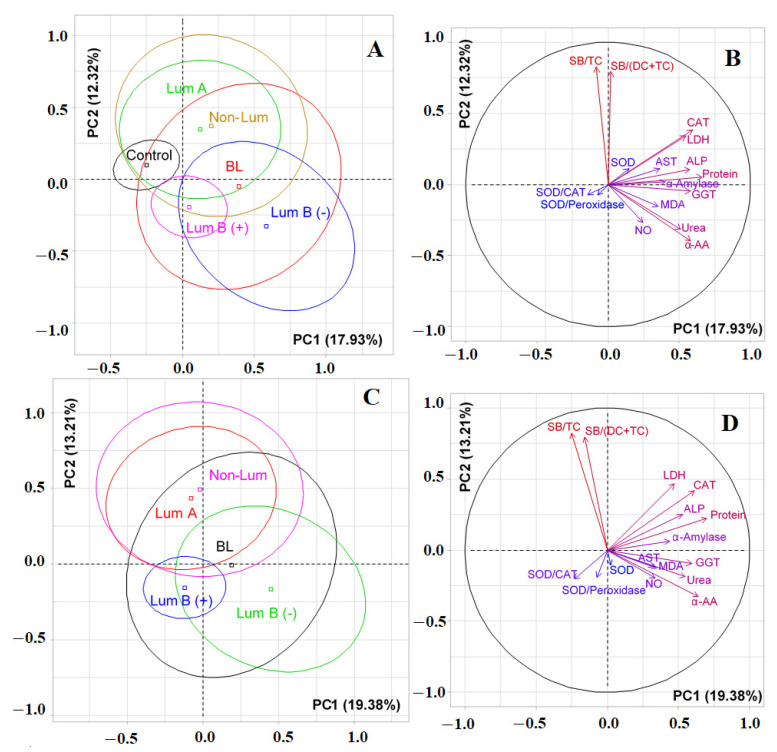
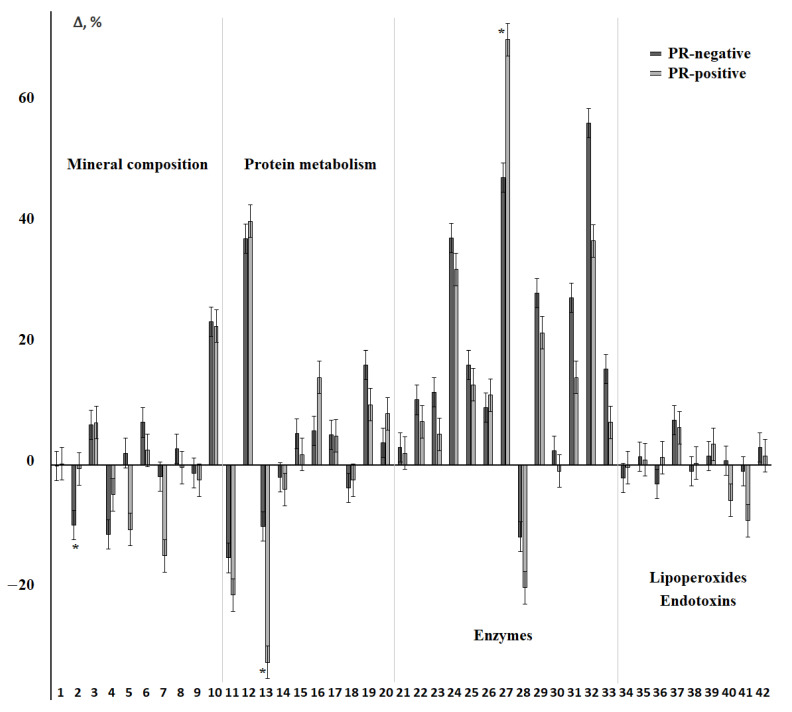
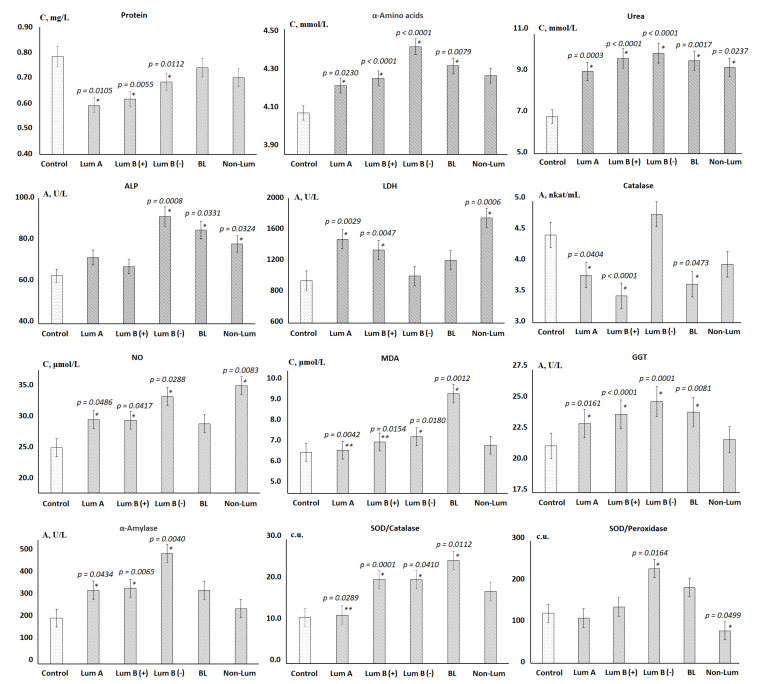
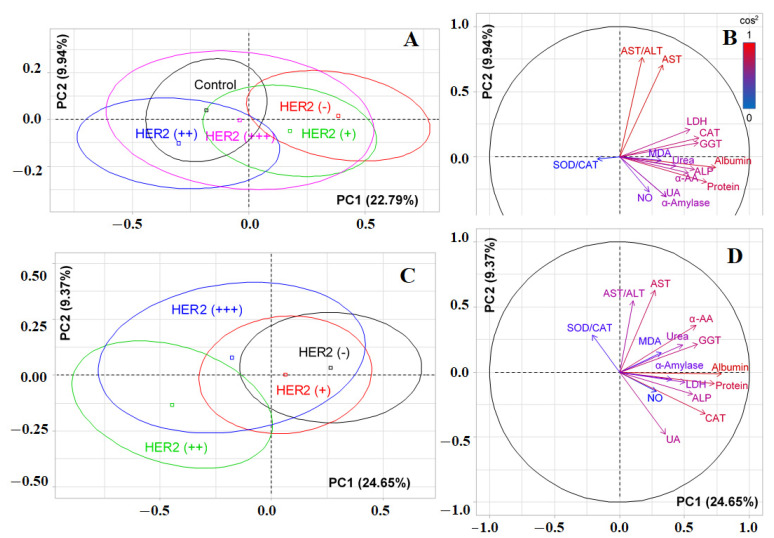
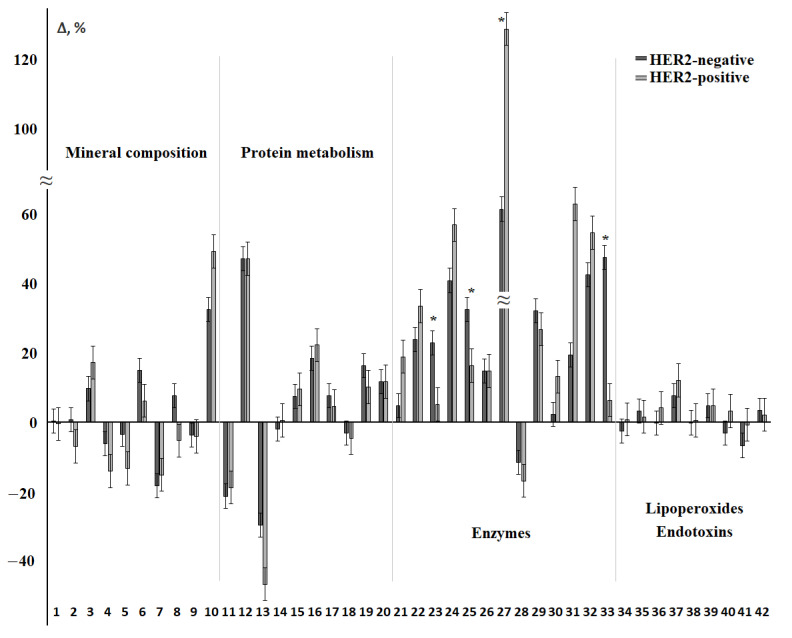
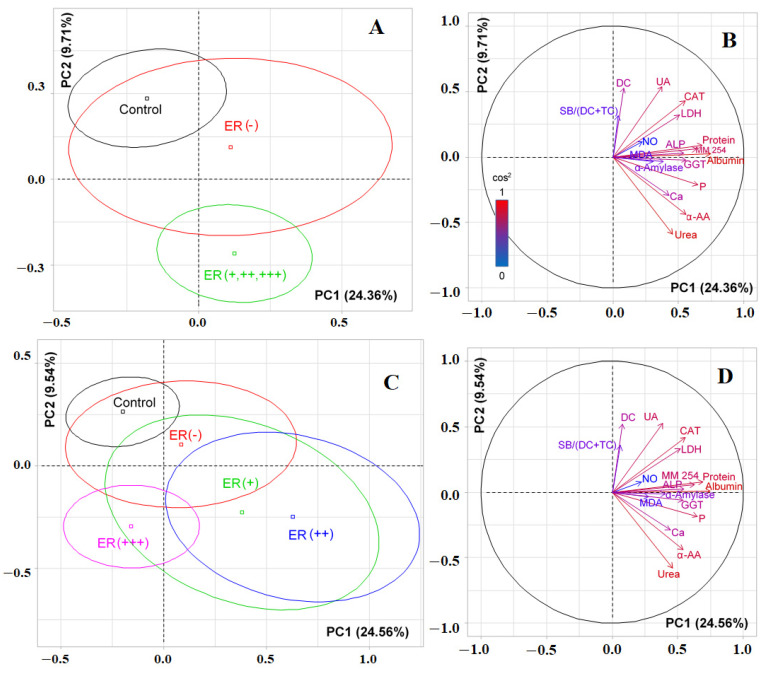
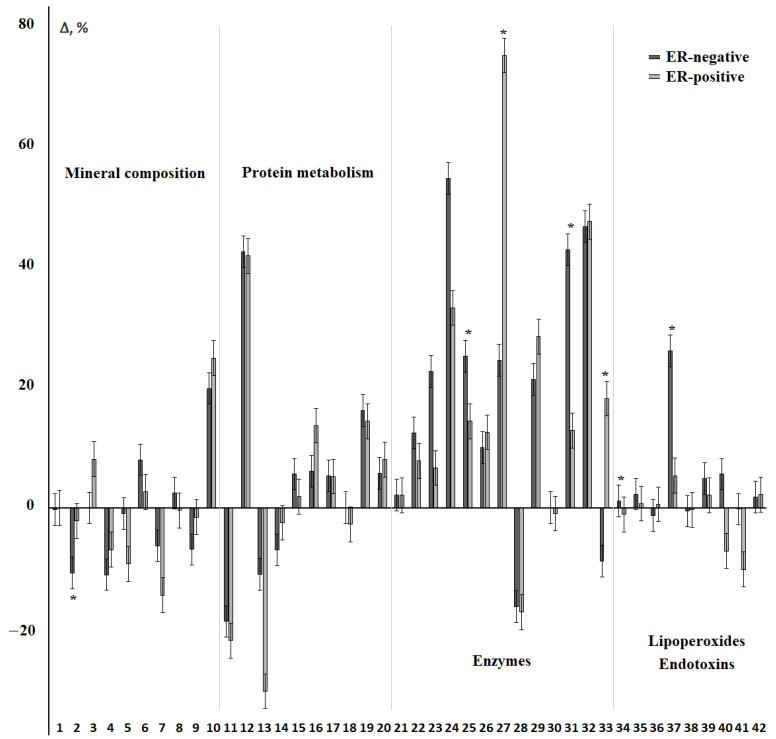
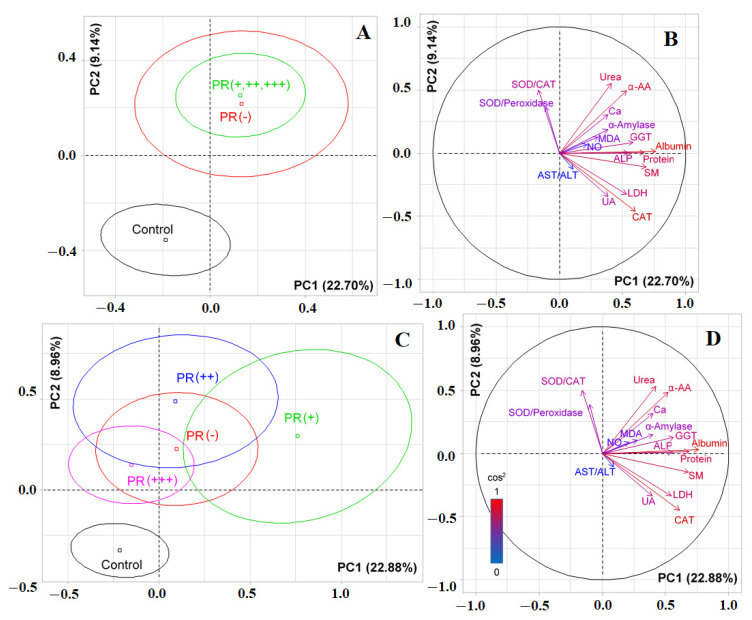
The aim of the study was to determine the metabolic characteristics of saliva depending on the molecular biological subtype of breast cancer, as well as depending on the expression levels of HER2, estrogen receptors (ER), and progesterone receptors (PR). The study included 487 patients with morphologically verified breast cancer and 298 volunteers without breast pathologies. Saliva samples were obtained from all patients strictly before the start of treatment and the values of 42 biochemical indicators were determined. It has been established that the saliva of healthy volunteers and patients with various molecular biological subtypes of breast cancer differs in 12 biochemical indicators: concentrations of protein, urea, nitric oxide, malondialdehyde, total amino acid content, and activity of lactate dehydrogenase, alkaline phosphatase, gamma-glutamyltransferase, catalase, amylase, superoxide dismutase, and peroxidases. The saliva composition of patients with basal-like breast cancer differs from other subtypes in terms of the maximum number of indicators. Changes in biochemical indicators indicated an increase in the processes of lipid peroxidation and endogenous intoxication and a weakening of antioxidant protection, which correlates with the severity of the disease and the least favorable prognosis for this subtype of breast cancer. An analysis was made of the individual contribution of the expression level of HER2, estrogen, and progesterone receptors to changes in the biochemical composition of saliva. The HER2 (-)/HER2 (+) group, which should be considered as a single group, as well as ER-positive breast cancer, differ statistically significantly from the control group. For ER/PR-positive breast cancer, a more favorable ratio of saliva biochemical indicators was also noted compared to ER/PR-negative breast cancer.
本研究的目的是确定唾液的代谢特征,其取决于乳腺癌的分子生物学亚型,以及取决于人表皮生长因子受体2(HER2)、雌激素受体(ER)和孕激素受体(PR)的表达水平。该研究纳入了487例经形态学证实的乳腺癌患者和298例无乳腺病变的志愿者。在所有患者严格于治疗开始前采集唾液样本,并测定42项生化指标的值。已确定健康志愿者和不同分子生物学亚型乳腺癌患者的唾液在12项生化指标上存在差异:蛋白质、尿素、一氧化氮、丙二醛的浓度、总氨基酸含量以及乳酸脱氢酶、碱性磷酸酶、γ-谷氨酰转移酶、过氧化氢酶、淀粉酶、超氧化物歧化酶和过氧化物酶的活性。基底样乳腺癌患者的唾液成分在指标数量上与其他亚型不同。生化指标的变化表明脂质过氧化和内源性中毒过程增加,抗氧化保护减弱,这与疾病的严重程度以及该亚型乳腺癌最不利的预后相关。分析了HER2、雌激素和孕激素受体表达水平对唾液生化成分变化的个体贡献。HER2(-)/HER2(+)组应视为一个单一组,以及雌激素受体阳性乳腺癌,与对照组在统计学上有显著差异。与雌激素受体/孕激素受体阴性乳腺癌相比,雌激素受体/孕激素受体阳性乳腺癌的唾液生化指标比例也更有利。