
成人室间隔缺损合并放射性根瘤菌性心内膜炎及感染性休克的三尖瓣置换术。病例报告。
Triple-valve replacement for Rhizobium radiobacter endocarditis with septic shock in an adult with ventricular septal defect. A case report.
作者信息
Iosifescu Andrei George, Marinică Ioana, Popescu Alexandru, Timișescu Alina Teodora, Antohi Elena-Laura, Iliescu Vlad Anton
机构信息
Carol Davila University of Medicine and Pharmacy, Bucharest, Romania; Department of Cardiac Surgery, C.C. Iliescu Emergency Institute for Cardiovascular Diseases, Bucharest, Romania.
Department of Anesthesia and Intensive Care, C.C. Iliescu Emergency Institute for Cardiovascular Diseases, Bucharest, Romania.
出版信息
Int J Surg Case Rep. 2022 Aug;97:107401. doi: 10.1016/j.ijscr.2022.107401. Epub 2022 Jul 13.
INTRODUCTION AND IMPORTANCE
Triple-valve replacement in active infective endocarditis has rarely been reported. This paper is the first report of a triple-valve replacement performed in endocarditis with septic shock and the first presentation of multivalvular endocarditis due to Rhizobium radiobacter.
CASE PRESENTATION
A 26-year-old patient with a neglected ventricular septal defect referred to us in septic shock, with multiple organ failure, severe biventricular dysfunction, and pulmonary hypertension, due to Rhizobium radiobacter infective endocarditis affecting the aortic, tricuspid and pulmonary valves. Initially, he was deemed unfit for surgery. However, after clinical stabilization, triple-valve replacement, aortic annular abscess repair, membranous septum aneurysm resection, and ventricular septal defect patch closure were performed. The postoperative evolution was good; both ventricles showed functional recovery after six months.
CLINICAL DISCUSSION
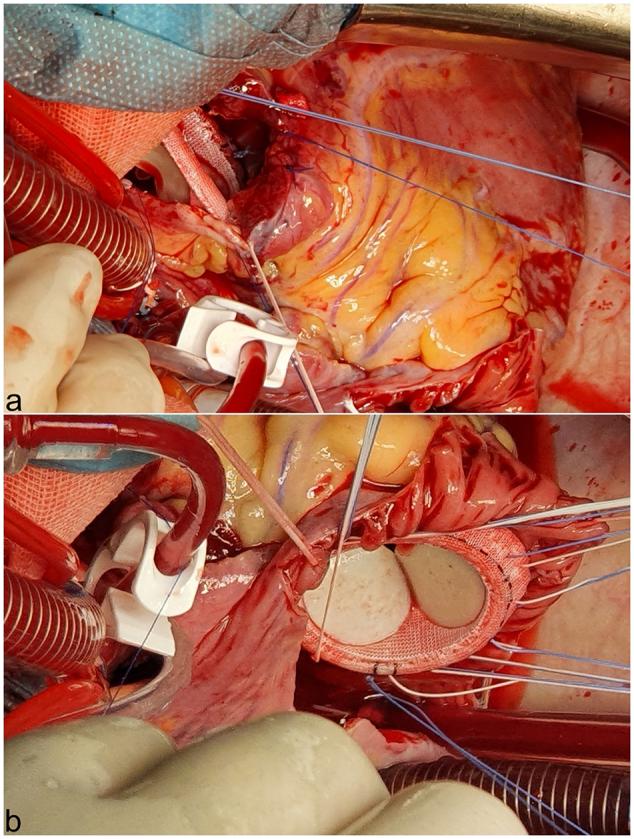
Although surgery provides the best chances of survival in endocarditis with septic shock, reportedly, most cases are considered inoperable. Clinical stabilization under intensive care using specific therapies to manage septic shock, myocardial dysfunction, and pulmonary hypertension was crucial for surgery success. Custodiol® cardioplegia, and replacement of the right-sided valves using a beating-heart technique were used to reduce the myocardial ischemic time.
CONCLUSION
Rhizobium radiobacter, an opportunistic gram-negative bacterium, potentially may cause multiple valve endocarditis. Patients with endocarditis and septic shock initially considered inoperable can still benefit from surgery after tenacious intensive care (cytokine hemoadsorption and levosimendan are helpful in this process). In complex multivalvular procedures, a beating heart technique to replace the right-sided valves should be considered to minimize the duration of myocardial ischemia.
引言与重要性
活动性感染性心内膜炎患者行三尖瓣置换术的报道极为罕见。本文首次报道了在感染性心内膜炎合并感染性休克患者中进行三尖瓣置换术,也是首例因放射性根瘤菌引起的多瓣膜心内膜炎病例。
病例介绍
一名26岁的患者,因被忽视的室间隔缺损而就诊,处于感染性休克状态,伴有多器官功能衰竭、严重的双心室功能障碍和肺动脉高压,病因是放射性根瘤菌感染性心内膜炎累及主动脉瓣、三尖瓣和肺动脉瓣。起初,他被认为不适合手术。然而,在病情稳定后,进行了三尖瓣置换术、主动脉瓣环脓肿修复术、膜周部室间隔瘤切除术和室间隔缺损修补术。术后恢复良好;六个月后两个心室均显示功能恢复。
临床讨论
尽管手术为感染性心内膜炎合并感染性休克患者提供了最佳的生存机会,但据报道,大多数病例被认为无法手术。在重症监护下通过使用特定疗法来治疗感染性休克、心肌功能障碍和肺动脉高压以实现临床稳定,对于手术成功至关重要。使用科停德奥(Custodiol®)心脏停搏液,并采用不停跳技术置换右侧瓣膜以减少心肌缺血时间。
结论
放射性根瘤菌是一种机会性革兰氏阴性菌,有可能导致多瓣膜心内膜炎。最初被认为无法手术的感染性心内膜炎合并感染性休克患者,经过顽强的重症监护(细胞因子血液吸附和左西孟旦在此过程中有所帮助)后仍可从手术中获益。在复杂的多瓣膜手术中,应考虑采用不停跳技术置换右侧瓣膜,以尽量缩短心肌缺血时间。


 Zotero 插件