Emergency Center, National Center for Cardiovascular Disease, National Clinical Research Center of Cardiovascular Diseases, Fuwai Hospital, Chinese Academy of Medical Sciences and Peking Union Medical College, No. 167 Beilishi Road, Xicheng District, 100037, Beijing, People's Republic of China.
BMC Cardiovasc Disord. 2022 Jul 25;22(1):331. doi: 10.1186/s12872-022-02773-9.
Sleep apnea is a risk factor for atrial fibrillation (AF) but it is underdiagnosed. Whether obstructive sleep apnea (OSA) is correlated with thrombotic risk in AF remains unclear. The aim of the present study was to analyze the clinical characteristics and assess the thrombotic risk of AF with OSA.
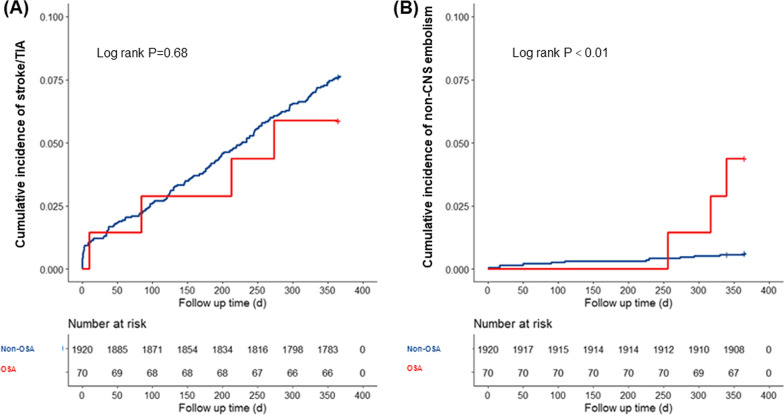
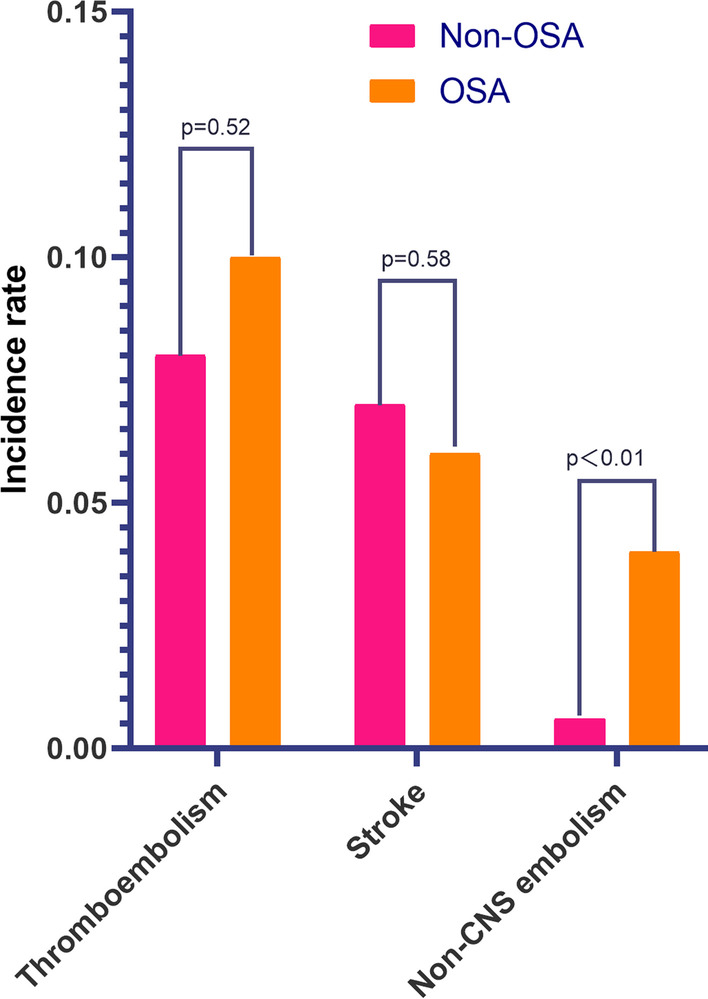
In the present registry study,1990 consecutive patients with AF from 20 centers were enrolled. The patients were divided into 2 groups depending on whether they presented with both AF and OSA. All the patients were followed up for 1 year to evaluate the incidences of stroke and non-central nervous system (CNS) embolism.
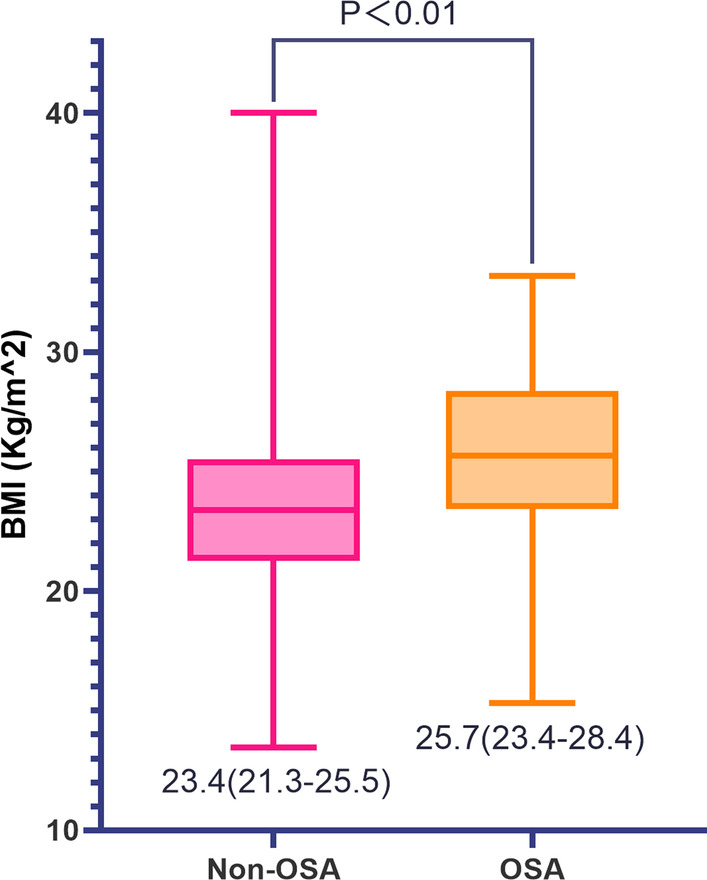
Of the 1990 AF patients, 70 (3.5%) and 1920 (96.5%) patients were in the OSA group and non-OSA group, respectively. The results of the multivariate logistic model analysis showed that male sex, body mass index (BMI), smoking, and major bleeding history were independent risk factors for patients with AF and OSA. The comparison of the Kaplan-Meier curves using the log-rank test revealed that AF with OSA was correlated with an increased risk of non-CNS embolism (p < 0.01). After multivariate adjustments were performed, OSA remained an independent risk factor for non-CNS embolism (HR 5.42, 95% CI 1.34-22.01, p = 0.02), but was not correlated with the risk of stroke in patients with AF.
The present study revealed that male sex, high BMI values, smoking, and major bleeding history were independent risk factors for patients with AF and OSA. Moreover, OSA was an independent risk factor for non-CNS embolism in AF. Our results indicate that non-CNS embolism requires focus in patients with AF and OSA.
睡眠呼吸暂停是心房颤动(AF)的一个危险因素,但它的诊断不足。阻塞性睡眠呼吸暂停(OSA)是否与 AF 中的血栓形成风险相关尚不清楚。本研究旨在分析 AF 合并 OSA 的临床特征并评估其血栓形成风险。
在本注册研究中,纳入了来自 20 个中心的 1990 例连续 AF 患者。根据患者是否同时患有 AF 和 OSA,将其分为 2 组。所有患者均随访 1 年,以评估中风和非中枢神经系统(CNS)栓塞的发生率。
在 1990 例 AF 患者中,70 例(3.5%)和 1920 例(96.5%)患者分别为 OSA 组和非 OSA 组。多变量逻辑模型分析的结果表明,男性、体重指数(BMI)、吸烟和主要出血史是 AF 合并 OSA 患者的独立危险因素。使用对数秩检验的 Kaplan-Meier 曲线比较显示,AF 合并 OSA 与非 CNS 栓塞风险增加相关(p<0.01)。在进行多变量调整后,OSA 仍然是非 CNS 栓塞的独立危险因素(HR 5.42,95%CI 1.34-22.01,p=0.02),但与 AF 患者中风风险无关。
本研究表明,男性、高 BMI 值、吸烟和主要出血史是 AF 合并 OSA 患者的独立危险因素。此外,OSA 是 AF 中非 CNS 栓塞的独立危险因素。我们的研究结果表明,非 CNS 栓塞需要在 AF 合并 OSA 患者中引起重视。