Molinari-Ulate Mauricio, Woodcock Rebecca, Smith Isabelle, van der Roest Henriëtte G, Franco-Martín Manuel A, Craven Michael P
Psycho-Sciences Research Group, Institute of Biomedical Research of Salamanca, University of Salamanca, Salamanca, Spain.
Department of Research and Development, Iberian Institute of Research in Psycho-Sciences, INTRAS Foundation, Zamora, Spain.
Res Involv Engagem. 2022 Jul 26;8(1):33. doi: 10.1186/s40900-022-00371-9.
The rapid transition to digital working, accelerated due to the response to the COVID-19 pandemic, has impacted the involvement of patients and public in research. This paper presents experiences of engaging in digital Patient and Public Involvement (e-PPI) in dementia research since the lockdowns, offering recommendations regarding future digital and hybrid working. Furthermore, it introduces a co-produced framework for researchers, PPI coordinators and public contributors to identify and discuss challenges and opportunities provided by e-PPI.
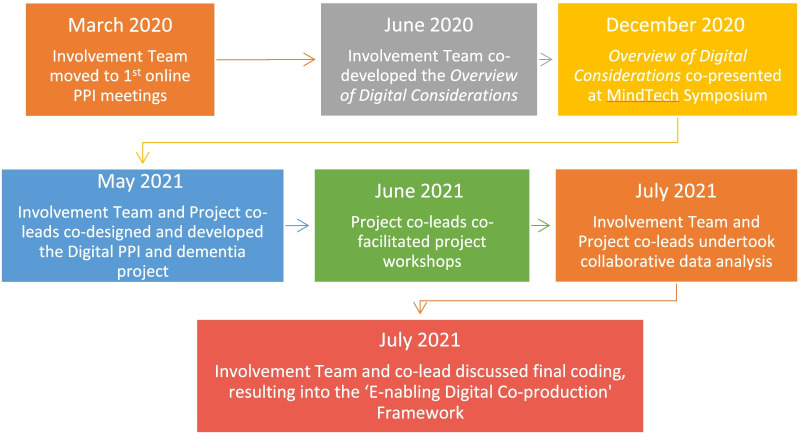
Two online workshops and one individual interview were performed with a group of researchers and PPI coordinators with experience in PPI in dementia research, and with an existing dementia PPI group having some experience of working online during the pandemic. The project was constructed as a PPI activity, with the MindTech Involvement Team (PPI group) involved in the entire process, and a collaborative data analysis process was adopted.
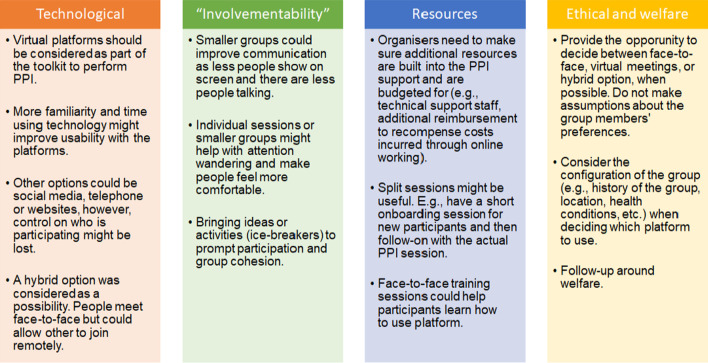
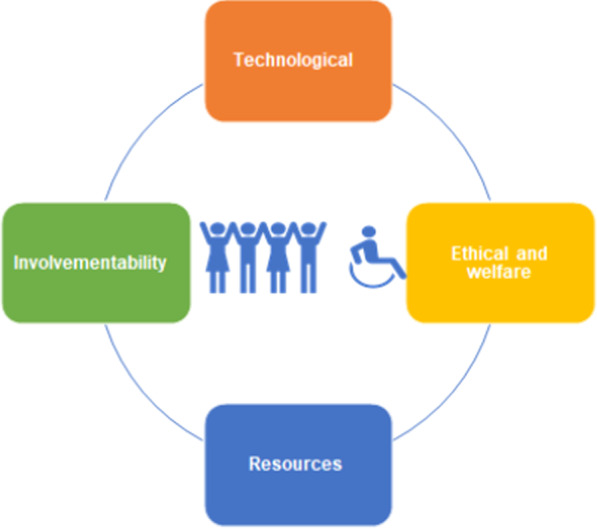
After refinement of the coding structure, the MindTech Involvement Team and Project Leaders identified four main themes, resulting in the 'E-nabling Digital Co-production' Framework. During this framework development, different positions were expressed, associated with the transition to digital working. Two main themes were shared by the participating groups regarding e-PPI: wider potential reach without geographical constraints, and the perception of more business-like sessions with reduced opportunities for social interactions and communication. Specifically for dementia research, whilst e-PPI may allow public contributors to attend more meetings, potentially mutually supportive environments provided by face-to-face meetings could be diminished, with carers experiencing a possible reduction in informal respite opportunities.
Through involving public contributors, researchers, and PPI coordinators with a focus on digital PPI in dementia research, we were able to further refine and co-produce the 'E-nabling Digital Co-production' Framework. Demonstrating potential for analysis of benefits and limitations within e-PPI, it was possible to identify both general insights and those specific to dementia research. However, the most significant contribution of the framework is the potential to support local journeys of co-production in ongoing digital and hybrid public involvement activities.
由于对新冠疫情的应对,向数字工作的快速转变加速,这对患者和公众参与研究产生了影响。本文介绍了自封锁以来在痴呆症研究中开展数字患者和公众参与(e-PPI)的经验,就未来的数字和混合工作提供了建议。此外,它还为研究人员、PPI协调员和公众贡献者引入了一个共同制定的框架,以识别和讨论e-PPI带来的挑战和机遇。
对一组在痴呆症研究中具有PPI经验的研究人员和PPI协调员,以及一个在疫情期间有在线工作经验的现有痴呆症PPI小组进行了两次在线研讨会和一次个人访谈。该项目被构建为一项PPI活动,MindTech参与团队(PPI小组)参与了整个过程,并采用了协作式数据分析过程。
在完善编码结构后,MindTech参与团队和项目负责人确定了四个主要主题,形成了“实现数字共同生产”框架。在这个框架的开发过程中,表达了与向数字工作转变相关的不同立场。参与小组就e-PPI分享了两个主要主题:不受地理限制的更广泛潜在覆盖范围,以及对会议更具商业氛围的看法,社交互动和交流机会减少。具体到痴呆症研究,虽然e-PPI可能使公众贡献者能够参加更多会议,但面对面会议可能提供的相互支持环境可能会减少,照顾者的非正式喘息机会可能会减少。
通过让公众贡献者、研究人员和PPI协调员参与,专注于痴呆症研究中的数字PPI,我们能够进一步完善并共同制定“实现数字共同生产”框架。展示了分析e-PPI中利弊的潜力,既可以确定一般见解,也可以确定特定于痴呆症研究的见解。然而,该框架最重要的贡献在于有可能支持正在进行的数字和混合式公众参与活动中的本地共同生产进程。