International Institute for Population Sciences (IIPS), Mumbai, India.
Department of Public Health and Mortality Studies, International Institute for Population Sciences (IIPS), Mumbai, India.
BMC Public Health. 2022 Jul 26;22(1):1419. doi: 10.1186/s12889-022-13820-7.
Tobacco is strongly associated with socioeconomic status (SES), however evidence on differences in tobacco cessation by socio-economic attributes remains fragmented, especially in developing countries. The present study aims to estimate socioeconomic inequalities in tobacco cessation among Indian men and women above 15 years of age.
Two rounds of the Global Adult Tobacco Survey (2009-2010 and 2016-2017), India was used to estimate the association between socioeconomic indicators (wealth index and educational attainment) with tobacco cessation using a multinomial modeling approach.
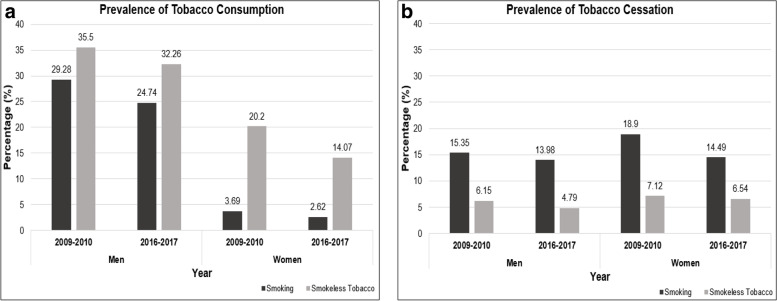
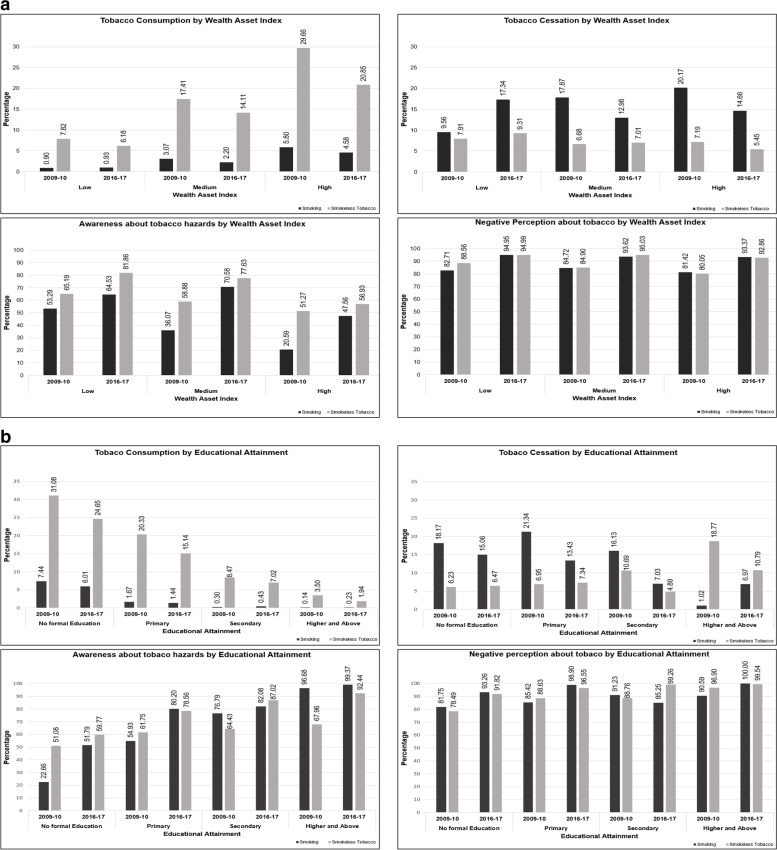
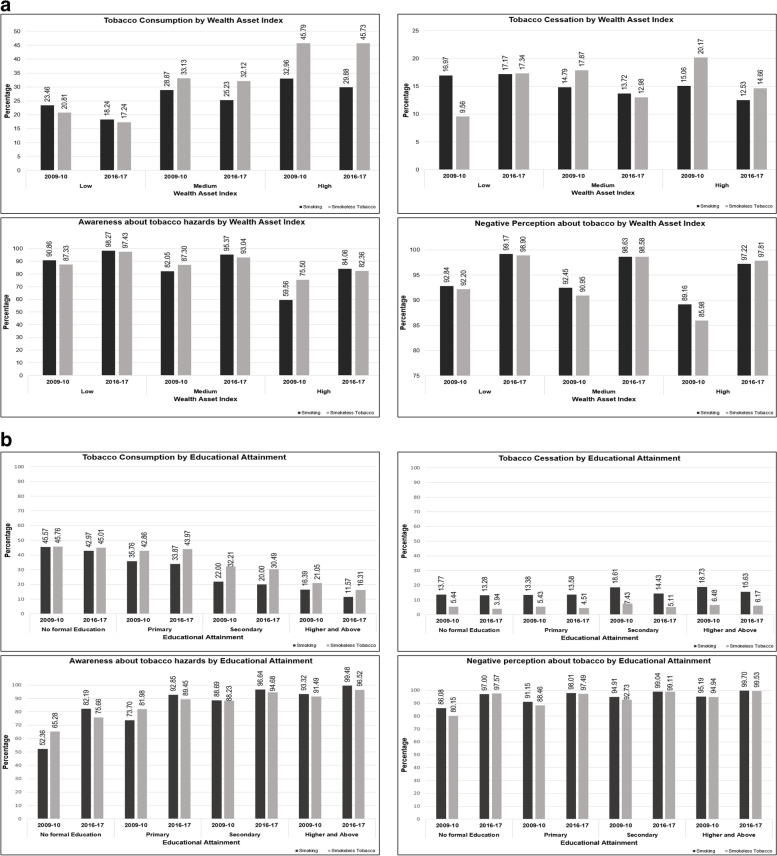
After adjusting for SES and demographic variables, we found significantly lower odds in tobacco cessation rates among respondents of GATS-2 (2016-2017) compared to GATS-1 (2009-2010). Additionally, huge regional variations in smoking and smokeless tobacco cessation rates were observed. Population belonging to the low wealth-asset score had higher odds of cessation compared to the high asset index. While greater educational attainment was seen to have a positive effect on cessation, the results were insignificant. Individuals belonging to the northeastern geographic region were seen to have the lowest odds of cessation. Though awareness about the health hazards of tobacco increased, cessation declined for both men and women. Quitting smokeless tobacco among men and women was observed to be lower than smoking.
This study is the first to provide national-level evidence on the association between tobacco cessation and socioeconomic attributes among Indians above 15 years of age. Findings suggest the need to scale up tobacco cessation services separately for men and women, and also for smoking and smokeless tobacco forms.
烟草与社会经济地位(SES)密切相关,但关于社会经济特征与戒烟之间差异的证据仍然零散,尤其是在发展中国家。本研究旨在评估印度 15 岁及以上男性和女性戒烟方面的社会经济不平等现象。
利用两轮全球成人烟草调查(2009-2010 年和 2016-2017 年)的数据,采用多变量建模方法来估计社会经济指标(财富指数和教育程度)与戒烟之间的关系。
在调整 SES 和人口统计学变量后,我们发现与 GATS-1(2009-2010 年)相比,GATS-2(2016-2017 年)受访者的戒烟率明显较低。此外,吸烟和无烟烟草戒烟率存在巨大的地区差异。与高资产指数相比,低财富资产评分的人群戒烟的可能性更高。虽然较高的教育程度对戒烟有积极影响,但结果并不显著。来自东北部地区的个体被认为戒烟的几率最低。尽管人们对烟草危害的认识有所提高,但男性和女性的戒烟率都有所下降。与男性相比,女性更倾向于戒烟,而男性更倾向于戒烟。
这项研究首次提供了印度 15 岁及以上人群中,戒烟与社会经济特征之间关联的全国性证据。研究结果表明,需要分别为男性和女性,以及吸烟和无烟烟草形式,扩大戒烟服务。