
通过医疗支出对咨询和手术等待时间的影响分析患者满意度
Analysis of Patient Satisfaction through the Effect of Healthcare Spending on Waiting Times for Consultations and Operations.
作者信息
Santos-Jaén José Manuel, Valls Martínez María Del Carmen, Palacios-Manzano Mercedes, Grasso Mayra Soledad
机构信息
Department of Accounting and Finance, University of Murcia, 30100 Murcia, Spain.
Mediterranean Research Center on Economics and Sustainable Development, 04120 Almería, Spain.
出版信息
Healthcare (Basel). 2022 Jun 30;10(7):1229. doi: 10.3390/healthcare10071229.
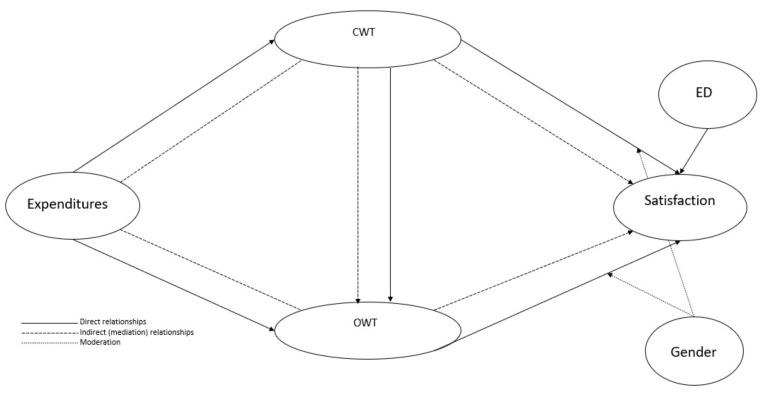
In recent years, public authorities have invested large amounts of public money in trying to reduce waiting times for consultations and operations with the aim of improving the quality of the healthcare system. Our research aims to analyze the effect of these investments on patient satisfaction through the mediating relationship of waiting times for consultations and operations, as well as from a gender perspective. By studying a series of key indicators of the Spanish healthcare system and applying partial least squares structural equation modelling (PLS-SEM), the findings show that the model explains 12.10% of the variance in consultant waiting times, 51.90% in operation waiting times, and 27.00% in patient satisfaction. We found that increased public spending leads to increased patient satisfaction by reducing waiting times. However, no gender-based differences were found. The results provide exciting implications for theory and practice, indicating how policymakers can orient their strategies towards improving patient satisfaction.
近年来,公共部门投入了大量公共资金,试图缩短会诊和手术的等待时间,以提高医疗体系的质量。我们的研究旨在通过会诊和手术等待时间的中介关系,以及从性别角度分析这些投资对患者满意度的影响。通过研究西班牙医疗体系的一系列关键指标,并应用偏最小二乘结构方程模型(PLS-SEM),研究结果表明,该模型解释了会诊等待时间方差的12.10%、手术等待时间方差的51.90%和患者满意度方差的27.00%。我们发现,增加公共支出通过减少等待时间提高了患者满意度。然而,未发现基于性别的差异。研究结果为理论和实践提供了令人兴奋的启示,表明政策制定者如何调整其策略以提高患者满意度。

 Zotero 插件