Moritz Emilia, Dadson Prince, Saukko Ekaterina, Honka Miikka-Juhani, Koskensalo Kalle, Seppälä Kerttu, Pekkarinen Laura, Moriconi Diego, Helmiö Mika, Salminen Paulina, Nuutila Pirjo, Rebelos Eleni
Turku PET Centre, University of Turku, 20520 Turku, Finland.
Department of Radiology, Turku University Hospital, 20521 Turku, Finland.
Metabolites. 2022 Jul 2;12(7):617. doi: 10.3390/metabo12070617.
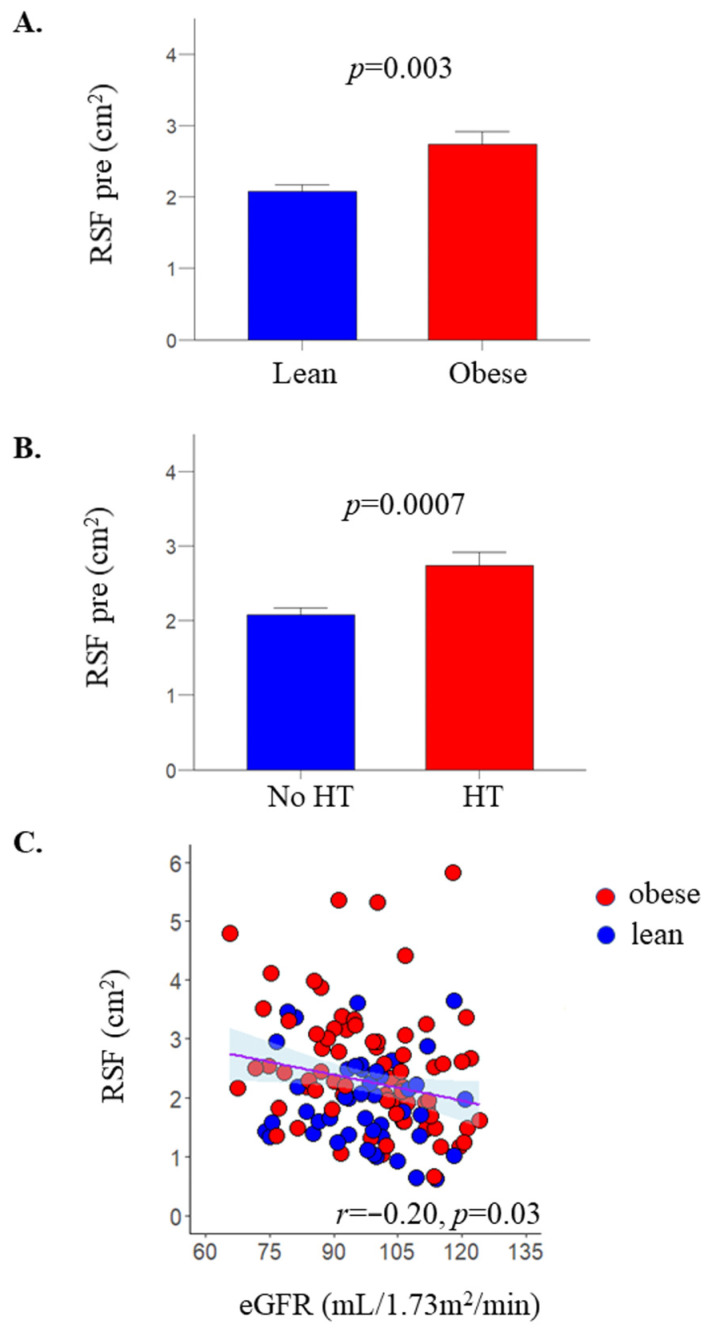
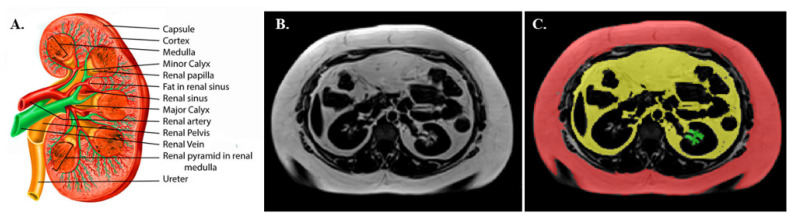
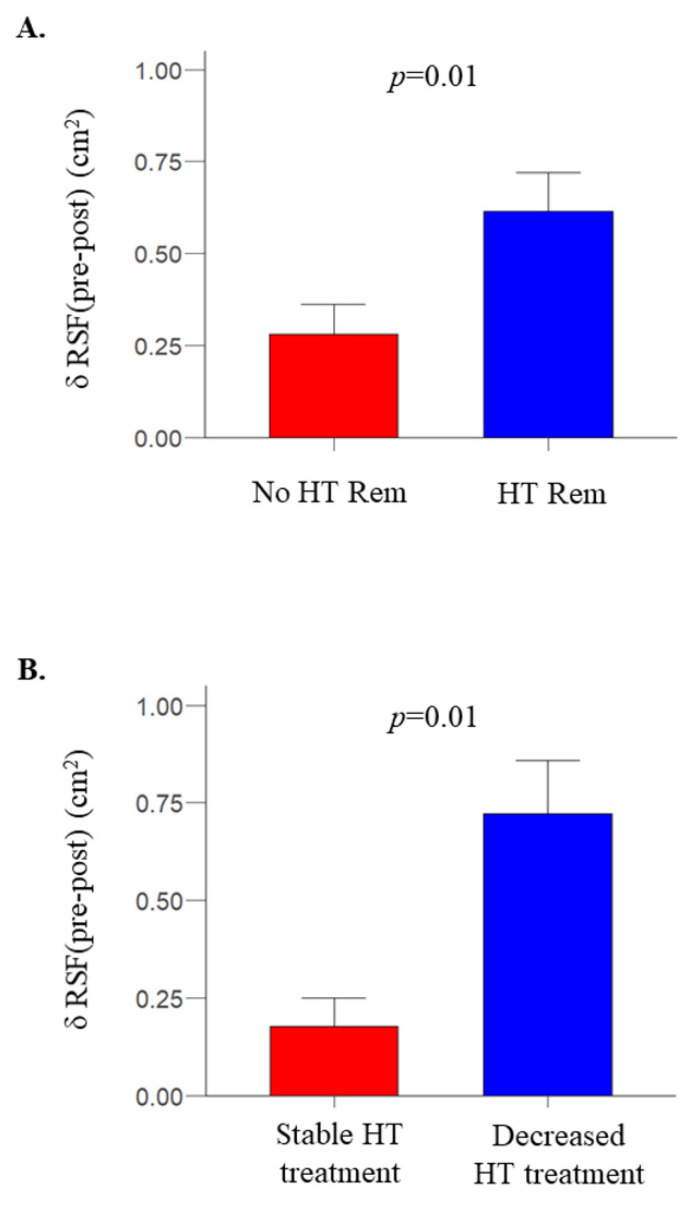
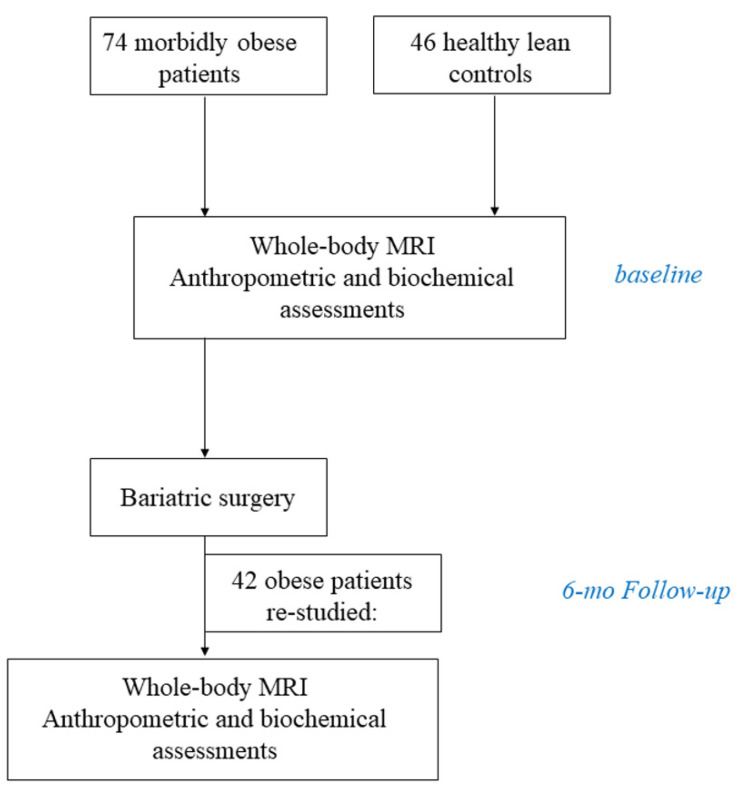
Renal sinus fat is a fat depot at the renal hilum. Because of its location around the renal artery, vein, and lymphatic vessels, an expanded renal sinus fat mass may have hemodynamic and renal implications. We studied whether renal sinus fat area (RSF) associates with hypertension and whether following bariatric surgery a decrease in RSF associates with improvement of hypertension. A total of 74 severely obese and 46 lean controls were studied with whole-body magnetic resonance imaging (MRI). A total of 42 obese subjects were re-studied six months after bariatric surgery. RSF was assessed by two independent researchers using sliceOmatic. Glomerular filtration rate (eGFR) was estimated according to the CKD-EPI (Chronic Kidney Disease Epidemiology Collaboration). Patients with obesity accumulated more RSF compared to lean controls (2.3 [1.7-3.1] vs. 1.8 [1.4-2.5] cm, = 0.03). Patients with hypertension (N = 36) had a larger RSF depot compared to normotensive subjects (2.6 [2.0-3.3] vs. 2.0 [1.4-2.5] cm, = 0.0007) also after accounting for body mass index (BMI). In the pooled data, RSF was negatively associated with eGFR ( = -0.20, = 0.03), whereas there was no association with systolic or diastolic blood pressure. Following bariatric surgery, RSF was reduced (1.6 [1.3-2.3] vs. 2.3 [1.7-3.1] cm, = 0.03) along with other markers of adiposity. A total of 9/27 of patients achieved remission from hypertension. The remission was associated with a larger decrease in RSF, compared to patients who remained hypertensive (-0.68 [-0.74 to -0.44] vs. -0.28 [-0.59 to 0] cm, = 0.009). The accumulation of RSF seems to be involved in the pathogenesis of hypertension in obesity. Following bariatric surgery, loss of RSF was associated with remission from hypertension.
肾窦脂肪是位于肾门处的一个脂肪库。由于其位于肾动脉、静脉和淋巴管周围,肾窦脂肪量增加可能会对血流动力学和肾脏产生影响。我们研究了肾窦脂肪面积(RSF)是否与高血压相关,以及在减肥手术后RSF的减少是否与高血压的改善相关。共有74名严重肥胖者和46名瘦对照者接受了全身磁共振成像(MRI)检查。共有42名肥胖受试者在减肥手术后6个月再次接受研究。RSF由两名独立研究人员使用SliceOmatic进行评估。根据CKD-EPI(慢性肾脏病流行病学协作组)估算肾小球滤过率(eGFR)。与瘦对照者相比,肥胖患者积累了更多的RSF(2.3[1.7 - 3.1] vs. 1.8[1.4 - 2.5]cm,P = 0.03)。在考虑体重指数(BMI)后,高血压患者(N = 36)的RSF库也比血压正常的受试者更大(2.6[2.0 - 3.3] vs. 2.0[1.4 - 2.5]cm,P = 0.0007)。在汇总数据中,RSF与eGFR呈负相关(r = -0.20,P = 0.03),而与收缩压或舒张压无关。减肥手术后,RSF减少(1.6[1.3 - 2.3] vs. 2.3[1.7 - 3.1]cm,P = 0.03),同时肥胖的其他指标也减少了。共有9/27的患者高血压缓解。与仍患有高血压的患者相比,缓解与RSF的更大减少相关(-0.68[-0.74至-0.4] vs. -0.28[-0.59至0]cm,P = 0.009)。RSF的积累似乎参与了肥胖患者高血压的发病机制。减肥手术后,RSF的减少与高血压缓解相关。