Shibasaki Seiji, Nakatani Yuki, Taketani Kazuaki, Karasaki Miki, Matsui Kiyoshi, Ueda Mitsuyoshi, Iwasaki Tsuyoshi
Laboratory of Natural Science, Faculty of Economics, Toyo University, Hakusan, Bunkyo-ku, Tokyo 112-8606, Japan.
Department of Diabetes, Endocrinology and Clinical Immunology, School of Medicine, Hyogo Medical University, Mukogawa-cho, Nishinomiya 663-8501, Japan.
Microorganisms. 2022 Jul 7;10(7):1373. doi: 10.3390/microorganisms10071373.
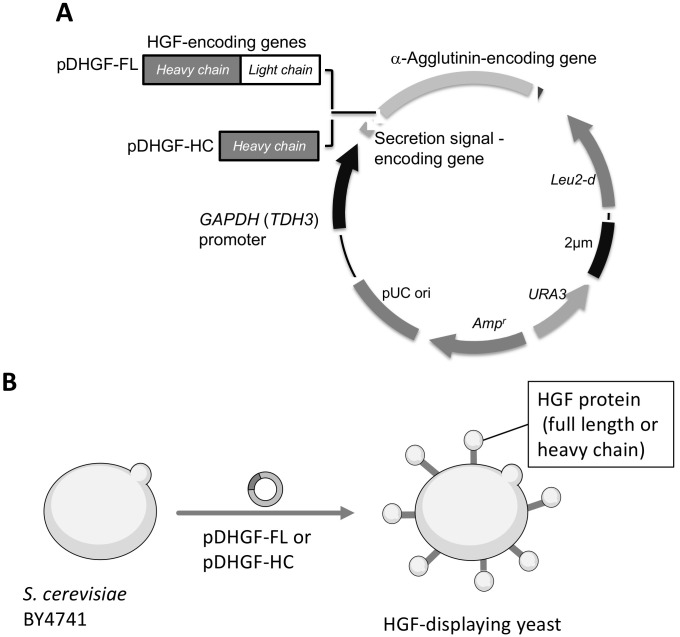
Hepatocyte growth factor (HGF) has been investigated as a regulator for immune reactions caused by transplantation and autoimmune diseases and other biological functions. Previous studies demonstrated that cDNA-encoding HGF administration could inhibit acute graft-versus-host disease (GVHD) after treatment via hematopoietic stem cell transplantation. This study aimed to show the preparation of HGF protein on yeast cell surfaces to develop a tool for the oral administration of HGF to a GVHD mouse model. In this study, full-length HGF and the heavy chain of HGF were genetically fused with α-agglutinin and were successfully displayed on the yeast cell surface. This study suggested that yeast cell surface display engineering could provide a novel administration route for HGF.
肝细胞生长因子(HGF)已作为移植和自身免疫性疾病引起的免疫反应及其他生物学功能的调节剂进行了研究。先前的研究表明,经造血干细胞移植治疗后,给予编码HGF的cDNA可抑制急性移植物抗宿主病(GVHD)。本研究旨在展示在酵母细胞表面制备HGF蛋白,以开发一种向GVHD小鼠模型口服给予HGF的工具。在本研究中,全长HGF和HGF重链与α-凝集素进行基因融合,并成功展示在酵母细胞表面。本研究表明,酵母细胞表面展示工程可为HGF提供一种新的给药途径。