Shipley Alicia, Arida Joseph, Almeria Sonia
Office of Applied Research and Safety Assessment (OARSA), Center for Food Safety and Applied Nutrition (CFSAN), Food and Drug Administration, 8301 Muirkirk Road, Laurel, MD 20708, USA.
Joint Institute for Food Safety and Applied Nutrition (JIFSAN), University of Maryland, College Park, MD 20742, USA.
Microorganisms. 2022 Jul 15;10(7):1431. doi: 10.3390/microorganisms10071431.
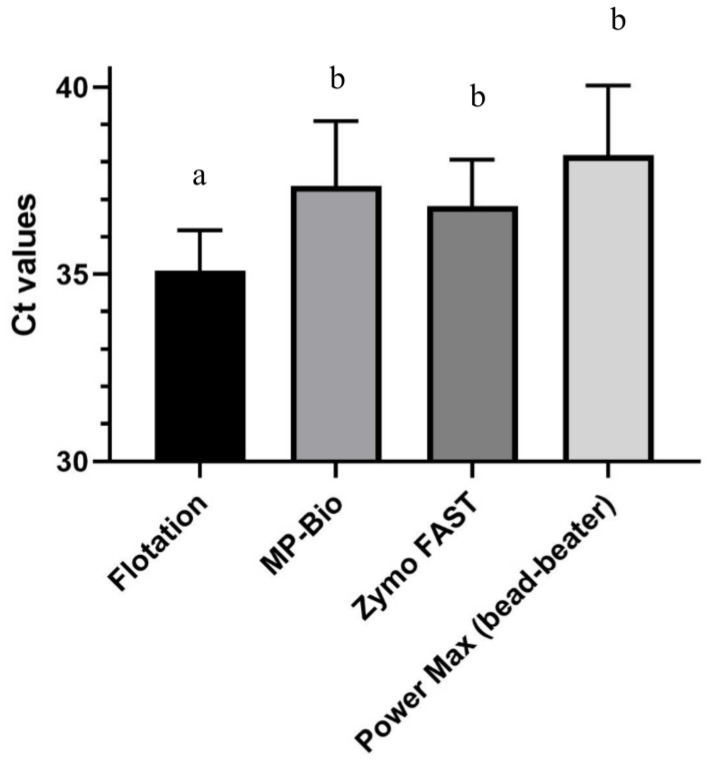
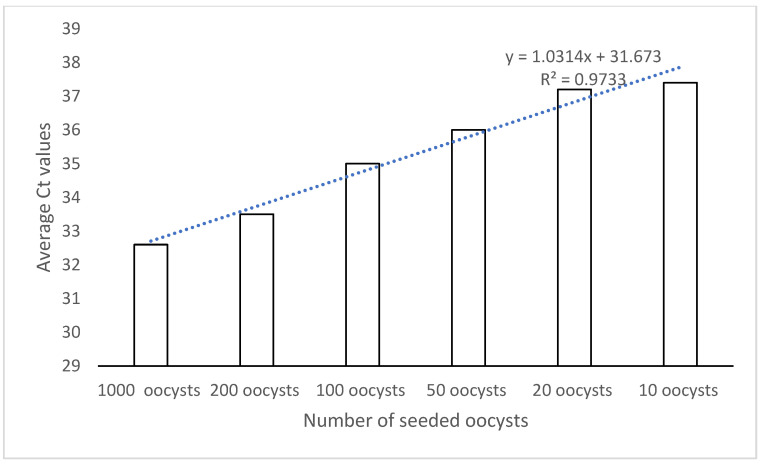
Cyclospora cayetanensis is a protozoan parasite that causes foodborne outbreaks of diarrheal illness (cyclosporiasis) worldwide. Contact with soil may be an important mode of transmission for C. cayetanensis and could play a role in the contamination of foods. However, there is a scarcity of detection methods and studies for C. cayetanensis in soil. Traditional parasitology concentration methods can be useful for the detection of C. cayetanensis, as found for other protozoa parasites of similar size. The present study evaluated a concentration method using flotation in saturated sucrose solution, subsequent DNA template preparation and qPCR following the Bacteriological Analytical Manual (BAM) Chapter 19b method. The proposed flotation method was compared to three commercial DNA isolation kits (Fast DNATM 50 mL SPIN kit for soil (MP Biomedicals, Irvine, CA, USA), Quick-DNATM Fecal/Soil Microbe Midiprep kit (Zymo Research, Irvine, CA, USA) and DNeasy® PowerMax® Soil Kit (Qiagen, Hilden, Germany)) for the isolation and detection of DNA from experimentally seeded C. cayetanensis soil samples (5−10 g with 100 oocysts). Control unseeded samples were all negative in all methods. Significantly lower cycle threshold values (CT) were observed in the 100 oocyst C. cayetanensis samples processed via the flotation method than those processed with each of the commercial DNA isolation kits evaluated (p < 0.05), indicating higher recovery of the target DNA with flotation. All samples seeded with 100 oocysts (n = 5) were positive to the presence of the parasite by the flotation method, and no inhibition was observed in any of the processed samples. Linearity of detection of the flotation method was observed in samples seeded with different levels of oocysts, and the method was able to detect as few as 10 oocysts in 10 g of soil samples (limit of detection 1 oocyst/g). This comparative study showed that the concentration of oocysts in soil samples by flotation in high-density sucrose solutions is an easy, low-cost, and sensitive method that could be implemented for the detection of C. cayetanensis in environmental soil samples. The flotation method would be useful to identify environmental sources of C. cayetanensis contamination, persistence of the parasite in the soil and the role of soil in the transmission of C. cayetanensis.
卡耶塔环孢子球虫是一种原生动物寄生虫,可在全球范围内引发食源性腹泻疾病(环孢子球虫病)暴发。接触土壤可能是卡耶塔环孢子球虫的一种重要传播方式,并且可能在食物污染中起作用。然而,针对土壤中卡耶塔环孢子球虫的检测方法和研究较为匮乏。传统的寄生虫学浓缩方法对于检测卡耶塔环孢子球虫可能有用,就像对其他类似大小的原生动物寄生虫的检测一样。本研究评估了一种使用饱和蔗糖溶液浮选的浓缩方法,随后按照《细菌学分析手册》(BAM)第19b章方法进行DNA模板制备和定量聚合酶链反应(qPCR)。将所提出的浮选方法与三种商业DNA提取试剂盒(用于土壤的Fast DNATM 50 mL SPIN试剂盒(美国加利福尼亚州欧文市MP生物医学公司)、Quick-DNATM粪便/土壤微生物中量制备试剂盒(美国加利福尼亚州欧文市Zymo研究公司)和DNeasy® PowerMax®土壤试剂盒(德国希尔德市Qiagen公司))进行比较,以从实验接种卡耶塔环孢子球虫的土壤样本(5 - 10克,含100个卵囊)中提取和检测DNA。未接种的对照样本在所有方法中均为阴性。通过浮选法处理的含100个卵囊的卡耶塔环孢子球虫样本中观察到的循环阈值(CT)值显著低于使用所评估的每种商业DNA提取试剂盒处理的样本(p < 0.05),表明浮选法对目标DNA的回收率更高。通过浮选法,所有接种100个卵囊的样本(n = 5)均检测出寄生虫存在,并且在任何处理过的样本中均未观察到抑制现象。在接种不同水平卵囊的样本中观察到了浮选法检测的线性关系,该方法能够在10克土壤样本中检测到低至10个卵囊(检测限为1个卵囊/克)。这项比较研究表明,通过在高密度蔗糖溶液中浮选来浓缩土壤样本中的卵囊是一种简便、低成本且灵敏的方法,可用于检测环境土壤样本中的卡耶塔环孢子球虫。浮选法将有助于识别卡耶塔环孢子球虫污染的环境来源、该寄生虫在土壤中的持久性以及土壤在卡耶塔环孢子球虫传播中的作用。