Deng Shaofeng, Liang Hui, Chen Pin, Li Yuwan, Li Zhaoyao, Fan Shuangqi, Wu Keke, Li Xiaowen, Chen Wenxian, Qin Yuwei, Yi Lin, Chen Jinding
Department of Microbiology, Li Ka Shing Faculty of Medicine, The University of Hong Kong, Pokfulam, Hong Kong, China.
State Key Laboratory for Emerging Infectious Diseases, The University of Hong Kong, Pokfulam, Hong Kong, China.
Microorganisms. 2022 Jul 18;10(7):1450. doi: 10.3390/microorganisms10071450.
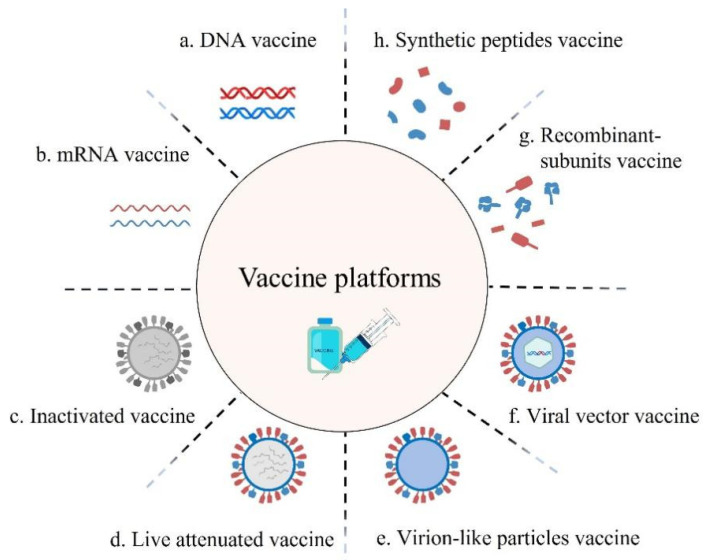
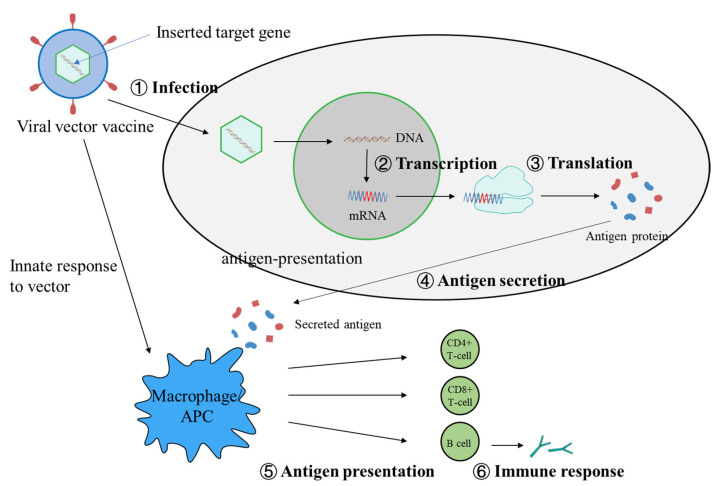
With the accumulation of mutations in SARS-CoV-2 and the continuous emergence of new variants, the importance of developing safer and effective vaccines has become more prominent in combating the COVID-19 pandemic. Both traditional and genetically engineered vaccines have contributed to the prevention and control of the pandemic. However, in recent years, the trend of vaccination research has gradually transitioned from traditional to genetically engineered vaccines, with the development of viral vector vaccines attracting increasing attention. Viral vector vaccines have several unique advantages compared to other vaccine platforms. The spread of Omicron has also made the development of intranasal viral vector vaccines more urgent, as the infection site of Omicron is more prominent in the upper respiratory tract. Therefore, the present review focuses on the development of viral vector vaccines and their application during the COVID-19 pandemic.
随着严重急性呼吸综合征冠状病毒2(SARS-CoV-2)突变的积累以及新变种的不断出现,开发更安全有效的疫苗在抗击2019冠状病毒病(COVID-19)大流行中的重要性日益凸显。传统疫苗和基因工程疫苗都为疫情的防控做出了贡献。然而,近年来,疫苗研究趋势已逐渐从传统疫苗转向基因工程疫苗,其中病毒载体疫苗的研发越来越受到关注。与其他疫苗平台相比,病毒载体疫苗具有若干独特优势。奥密克戎毒株的传播也使得鼻内病毒载体疫苗的研发更加紧迫,因为奥密克戎毒株在上呼吸道的感染部位更为突出。因此,本综述聚焦于病毒载体疫苗的研发及其在COVID-19大流行期间的应用。