El-Far Shaymaa Wagdy, Abo El-Enin Hadel A, Abdou Ebtsam M, Nafea Ola Elsayed, Abdelmonem Rehab
Division of Pharmaceutical Microbiology, Department of Pharmaceutics and Industrial Pharmacy, College of Pharmacy, Taif University, P.O. Box 11099, Taif 21944, Saudi Arabia.
Department of Pharmaceutics and Industrial Pharmacy, College of Pharmacy, Taif University, P.O. Box 11099, Taif 21944, Saudi Arabia.
Pharmaceuticals (Basel). 2022 Jun 30;15(7):816. doi: 10.3390/ph15070816.
Colorectal cancer (CRC) is considered one of the most commonly diagnosed malignant diseases. Recently, there has been an increased focus on using nanotechnology to resolve most of the limitations in conventional chemotherapy. Niosomes have great advantages that overcome the drawbacks associated with other lipid drug delivery systems. They are simple, cheap, and highly stable nanocarriers. This study investigated the effectiveness of using niosomes with their amphiphilic characteristics in the incorporation of both hydrophilic and hydrophobic anticancer drugs for CRC treatment.
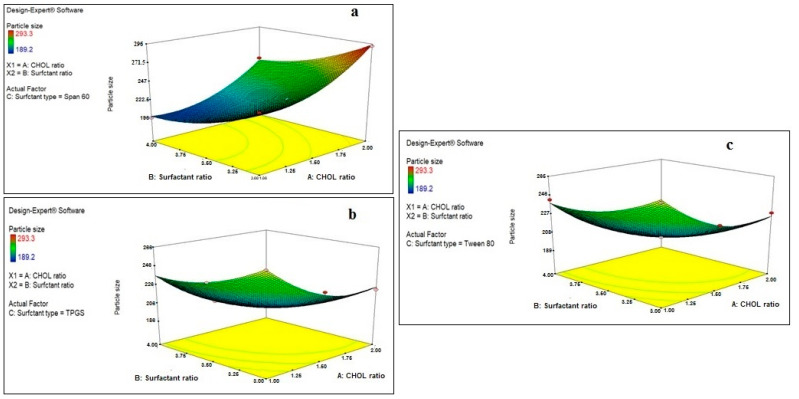
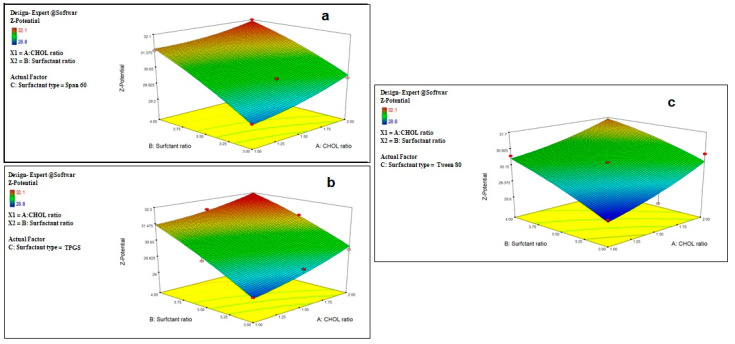
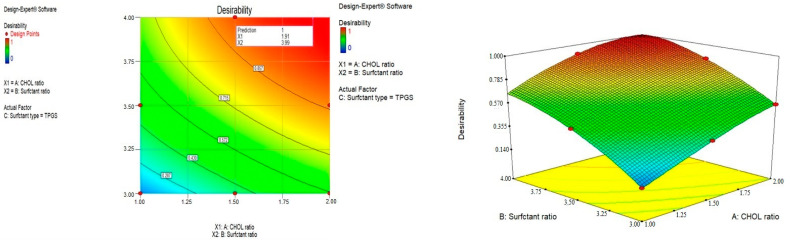
Drug-free niosomes were formulated using a response surface D-optimal factorial design to study the cholesterol molar ratio, surfactant molar ratio and surfactant type effect on the particle size and Z-potential of the prepared niosomes. After numerical and statistical optimization, an optimized formulation having a particle size of 194.4 ± 15.5 nm and a Z-potential of 31.8 ± 1.9 mV was selected to be loaded with Oxaliplatin and Paclitaxel separately in different concentrations. The formulations with the highest entrapment efficiency (EE%) were evaluated for their drug release using the dialysis bag method, in vitro antitumor activity on HT-29 colon cancer cell line and apoptosis activity.
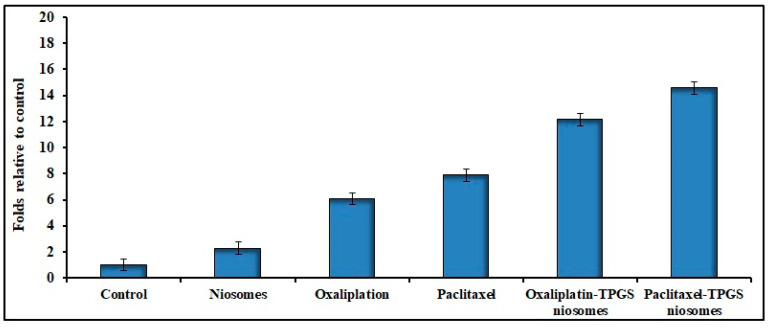
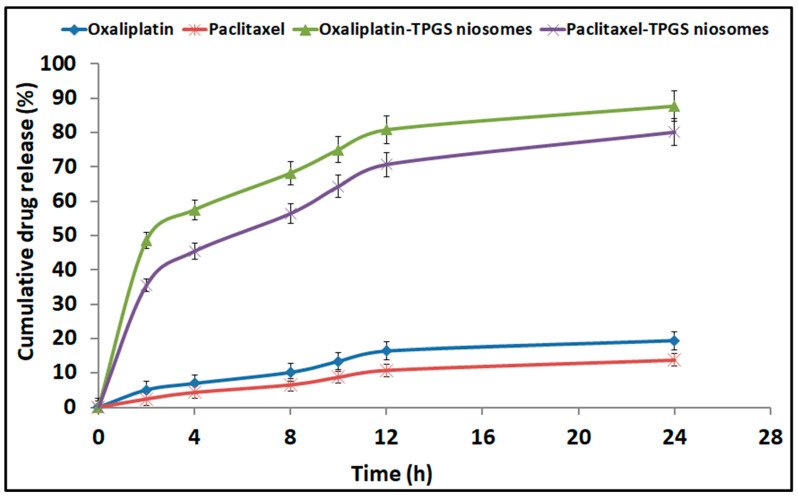
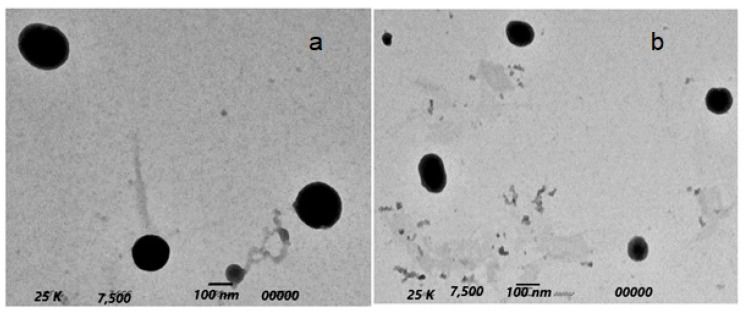
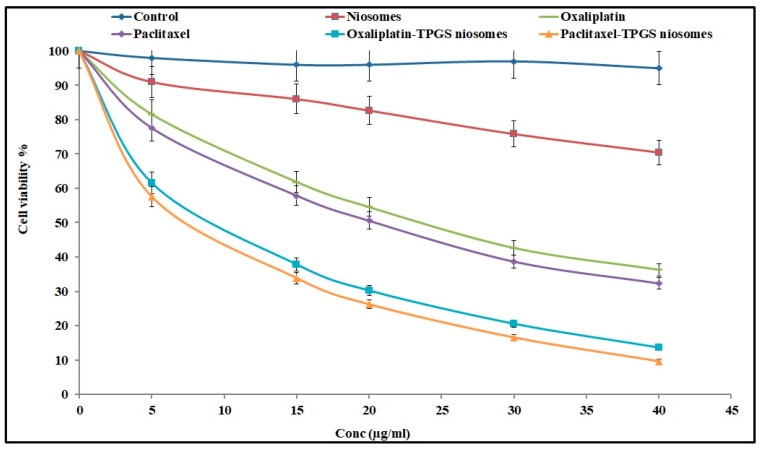
Niosomes prepared using d-α-tocopheryl polyethylene glycol 1000 succinate (TPGS) at a molar ratio 4, cholesterol (2 molar ratio) and loaded with 1 molar ratio of either Oxaliplatin or Paclitaxel provided nanosized vesicles (278.5 ± 19.7 and 251.6 ± 18.1 nm) with a Z-potential value (32.7 ± 1.01 and 31.69 ± 0.98 mV) with the highest EE% (90.57 ± 2.05 and 93.51 ± 2.97) for Oxaliplatin and Paclitaxel, respectively. These formulations demonstrated up to 48 h drug release and increased the in vitro cytotoxicity and apoptosis efficiency of both drugs up to twice as much as free drugs.
These findings suggest that different formulation composition parameters can be adjusted to obtain nanosized niosomal vesicles with an accepted Z-potential. These niosomes could be loaded with either hydrophilic drugs such as Oxaliplatin or hydrophobic drugs such as Paclitaxel. Drug-loaded niosomes, as a unique nanomicellar system, could enhance the cellular uptake of both drugs, resulting in enhanced cytotoxic and apoptosis effects against HT-29 colon cancer cells. Oxaliplatin-niosomes and Paclitaxel-niosomes can be considered promising alternative drug delivery systems with enhanced bioavailability of these two anticancer drugs for colorectal cancer treatment.
结直肠癌(CRC)被认为是最常被诊断出的恶性疾病之一。最近,人们越来越关注利用纳米技术来解决传统化疗中的大多数局限性。非离子表面活性剂囊泡具有诸多优势,克服了与其他脂质药物递送系统相关的缺点。它们是简单、廉价且高度稳定的纳米载体。本研究调查了具有两亲特性的非离子表面活性剂囊泡在包载亲水性和疏水性抗癌药物用于结直肠癌治疗方面的有效性。
采用响应面D - 最优因子设计制备无药物的非离子表面活性剂囊泡,以研究胆固醇摩尔比、表面活性剂摩尔比和表面活性剂类型对所制备非离子表面活性剂囊泡粒径和Z电位的影响。经过数值和统计优化后,选择粒径为194.4 ± 15.5 nm且Z电位为31.8 ± 1.9 mV的优化制剂,分别以不同浓度包载奥沙利铂和紫杉醇。对包封率(EE%)最高的制剂采用透析袋法评估其药物释放情况、对HT - 29结肠癌细胞系的体外抗肿瘤活性和凋亡活性。
使用摩尔比为4的d-α-生育酚聚乙二醇1000琥珀酸酯(TPGS)、摩尔比为2的胆固醇制备的非离子表面活性剂囊泡,包载1摩尔比的奥沙利铂或紫杉醇后,得到纳米级囊泡(分别为278.5 ± 19.7和251.6 ± 18.1 nm),Z电位值分别为(32.7 ± 1.01和31.69 ± 0.98 mV),奥沙利铂和紫杉醇的包封率最高(分别为90.57 ± 2.05和93.51 ± 2.97)。这些制剂显示出长达48小时的药物释放,并使两种药物的体外细胞毒性和凋亡效率提高了两倍,高达游离药物的两倍。
这些发现表明,可以调整不同的制剂组成参数以获得具有可接受Z电位的纳米级非离子表面活性剂囊泡。这些非离子表面活性剂囊泡可以包载亲水性药物如奥沙利铂或疏水性药物如紫杉醇。载药非离子表面活性剂囊泡作为一种独特的纳米胶束系统,可以增强两种药物的细胞摄取,从而增强对HT - 29结肠癌细胞的细胞毒性和凋亡作用。奥沙利铂 - 非离子表面活性剂囊泡和紫杉醇 - 非离子表面活性剂囊泡可被认为是有前景的替代药物递送系统,可提高这两种抗癌药物在结直肠癌治疗中的生物利用度。