Alzoughool Foad, Al-Zghoul Mohammad Borhan, Ghanim Bayan Y, Gollob Michael, Idkaidek Nasir, Qinna Nidal A
Department of Medical Laboratory Sciences, Faculty of Applied Medical Sciences, The Hashemite University, Zarqa 13133, Jordan.
Faculty of Health Sciences, Higher Colleges of Technology, Fujairah Women's College, Fujairah P.O. Box. 25026, United Arab Emirates.
Pharmaceuticals (Basel). 2022 Jul 14;15(7):863. doi: 10.3390/ph15070863.
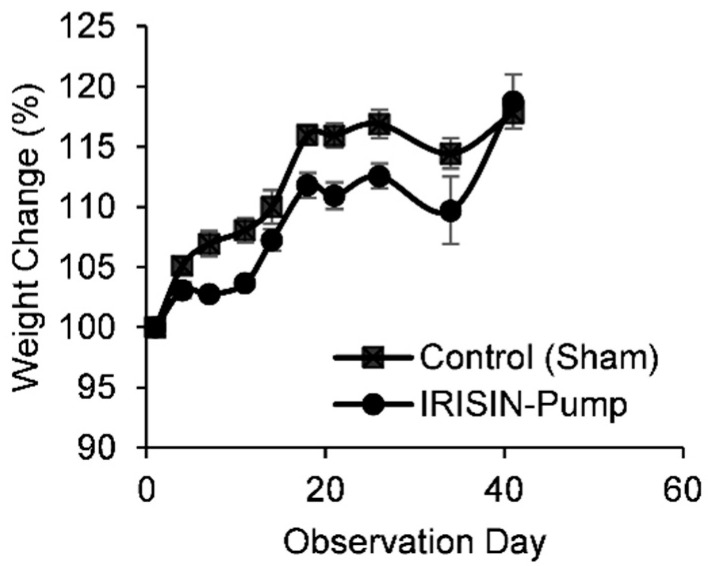
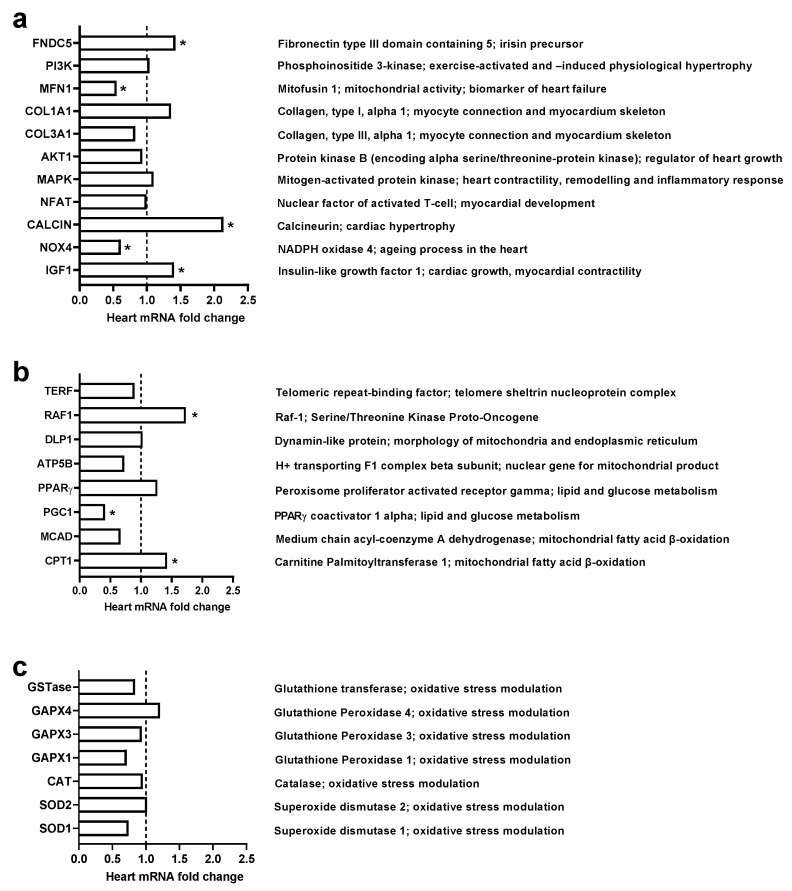
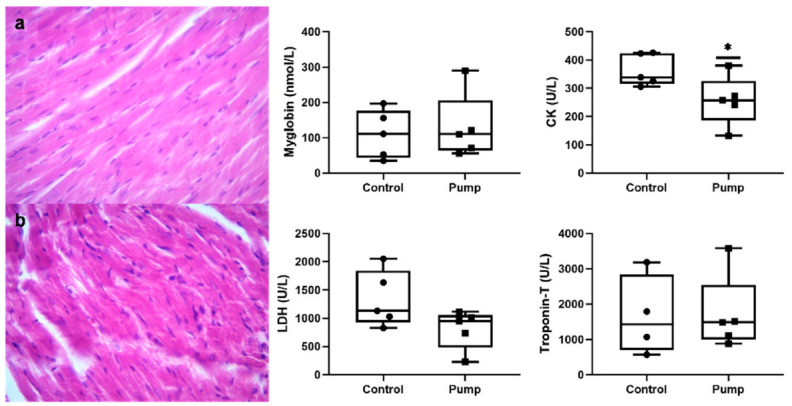
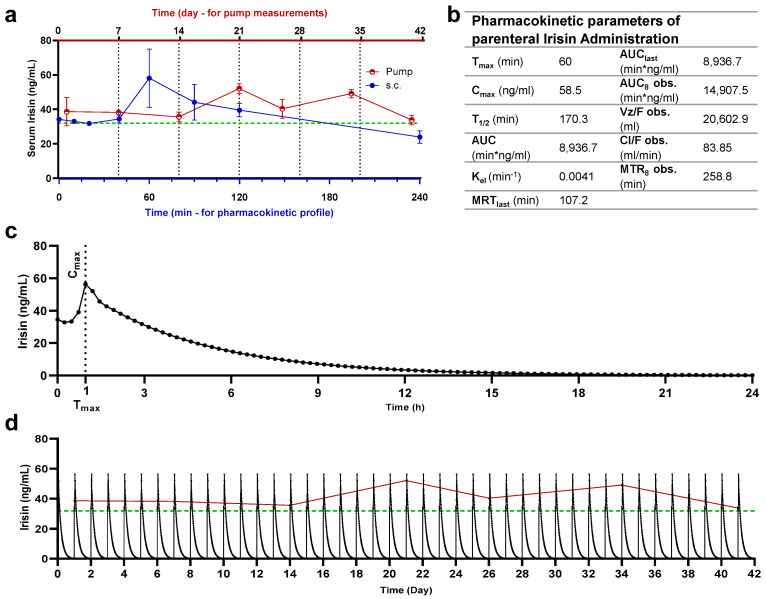
Irisin, encoded by the FNDC5 (fibronectin type III domain containing 5) gene, is a novel myokine that has been implicated as an essential mediator of exercise benefits. Effects of irisin on heart physiology is still ambiguous. This study aimed to evaluate the impact of exogenous administration of irisin on heart physiology and the pharmacokinetic profile of pump-administered irisin. To do so, Sprague Dawley rats were implanted with an irisin-loaded osmotic pump (5 μg/kg/day) for 42 days, and other animals were administered with single bolus subcutaneous injections of irisin (5 µg/kg). Body weights and blood samples were collected weekly for 42 days for serum irisin quantification and histopathology. Clinical biochemistry analyses were performed. Heart mRNA expression was assessed in 26 selected genes. Chronic interventional exogenous irisin significantly reduced body weight without affecting the heart myocyte size and significantly reduced creatine kinase enzyme level. Blood CBC, serum biochemistry, and heart morphology were normal. Gene expression of FNCD5, Raf1, CPT1, IGF-1, and CALCIN, encoding for heart physiology, increased while PGC1, Nox4, and Mfn1 significantly decreased. Nevertheless, irisin increased the expression of cardioprotective genes and inhibited some genes that harm heart physiology. Administration of irisin promotes myocardial functions and could be translated into clinical settings after preclinical profiling.
鸢尾素由FNDC5(含III型纤连蛋白结构域5)基因编码,是一种新型的肌动蛋白,被认为是运动益处的重要介质。鸢尾素对心脏生理的影响仍不明确。本研究旨在评估外源性给予鸢尾素对心脏生理的影响以及泵注鸢尾素的药代动力学特征。为此,将Sprague Dawley大鼠植入载有鸢尾素的渗透泵(5μg/kg/天),持续42天,其他动物则单次皮下注射鸢尾素(5μg/kg)。每周收集体重和血样,持续42天,用于血清鸢尾素定量和组织病理学检查。进行临床生化分析。评估26个选定基因的心脏mRNA表达。长期介入性外源性鸢尾素显著降低体重,但不影响心肌细胞大小,并显著降低肌酸激酶水平。血常规、血清生化和心脏形态均正常。编码心脏生理相关的FNCD5、Raf1、CPT1、IGF-1和CALCIN的基因表达增加,而PGC1、Nox4和Mfn1显著降低。然而,鸢尾素增加了心脏保护基因的表达,并抑制了一些损害心脏生理功能基因的表达。给予鸢尾素可促进心肌功能,经临床前分析后可转化应用于临床。