Mukubwa Grady K, Safari Justin B, Walker Roderick B, Krause Rui W M
Department of Chemistry, Faculty of Science, Rhodes University, P.O. Box 94, Grahamstown 6140, Eastern Cape, South Africa.
Department of Pharmaceutics, Faculty of Pharmaceutical Sciences, University of Kinshasa, Kinshasa XI B.P. 212, Democratic Republic of the Congo.
Pharmaceutics. 2022 Jun 21;14(7):1318. doi: 10.3390/pharmaceutics14071318.
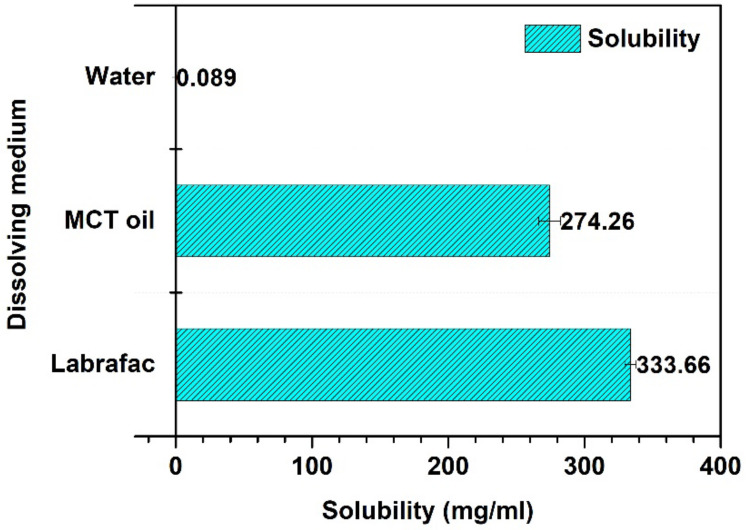
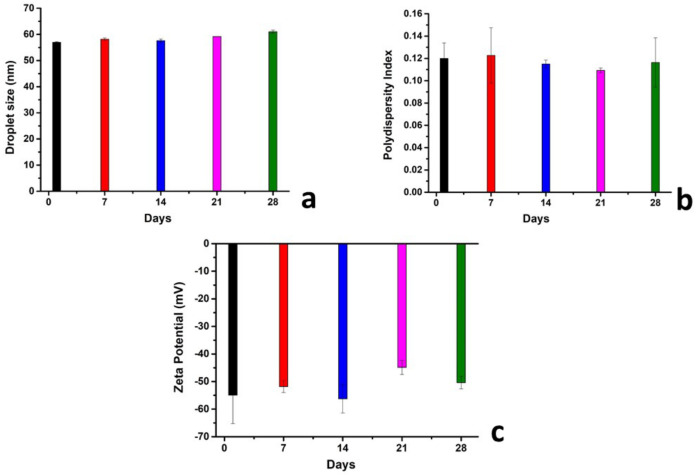
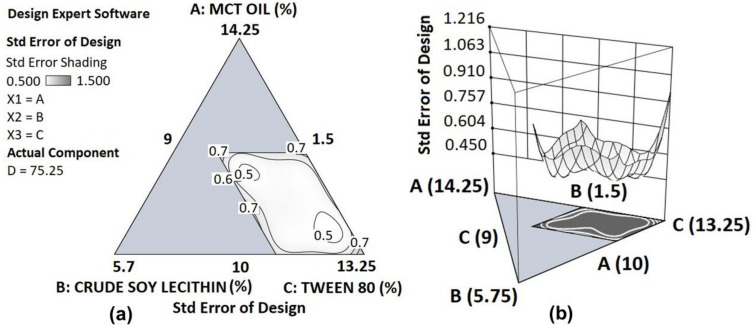
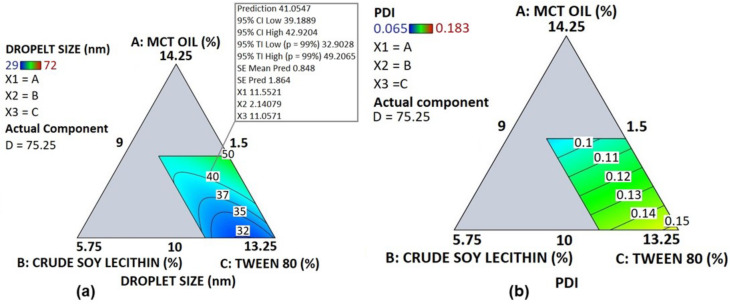
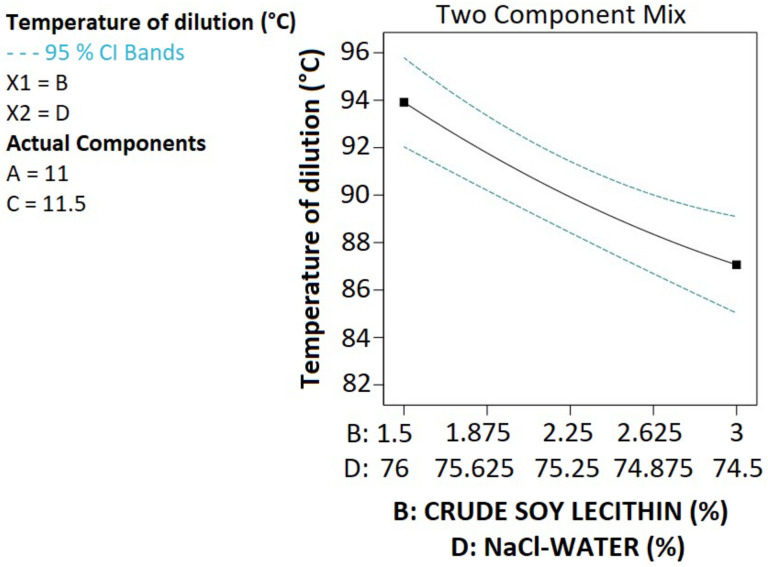
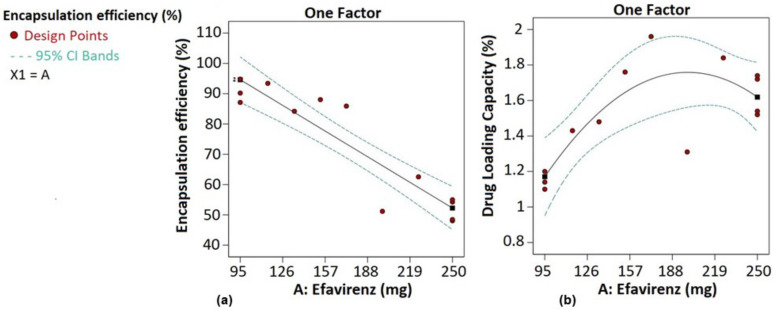
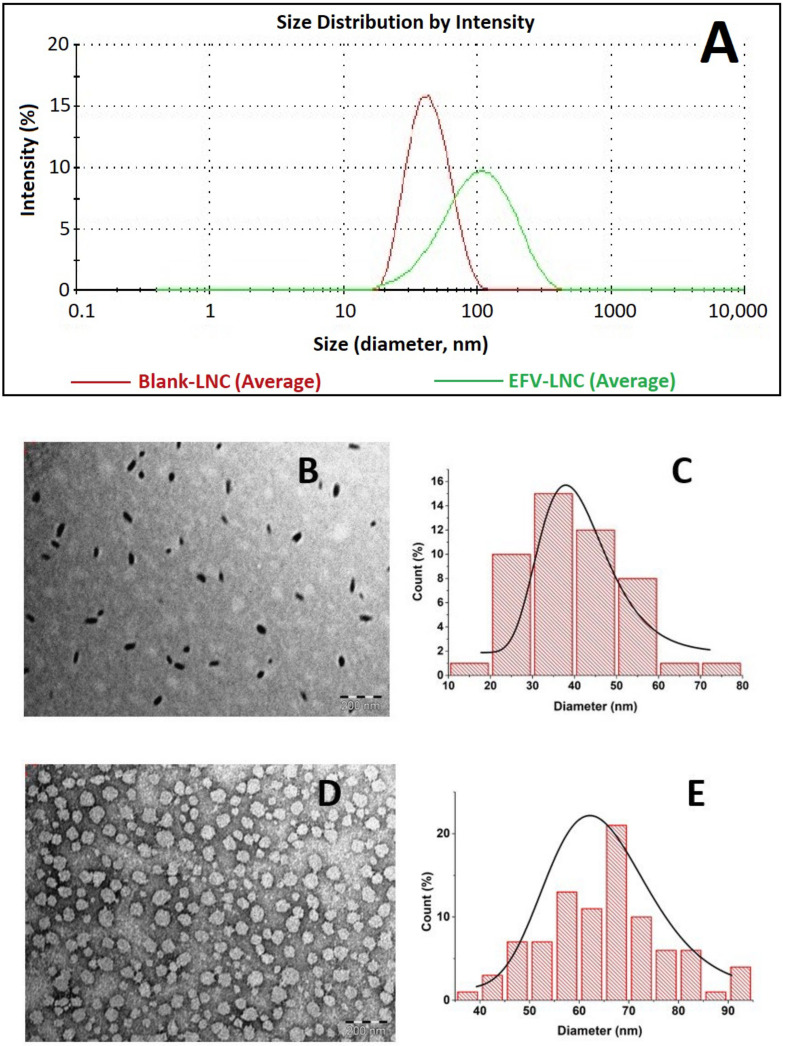
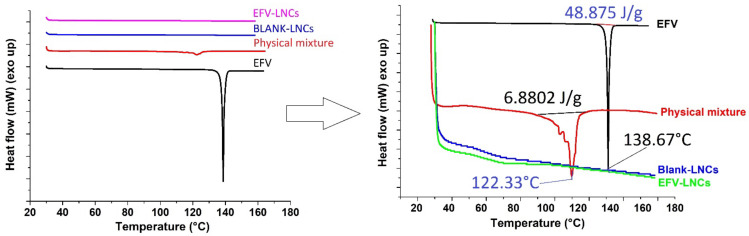
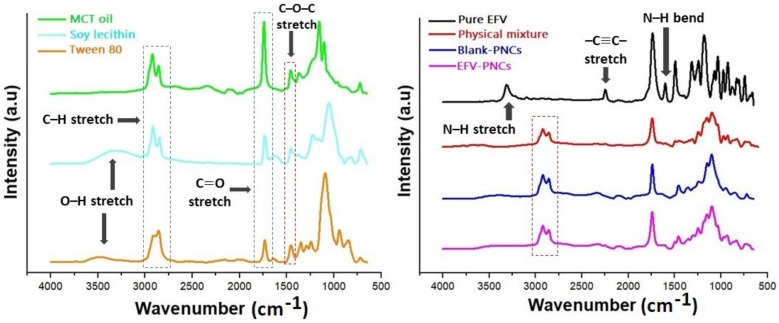
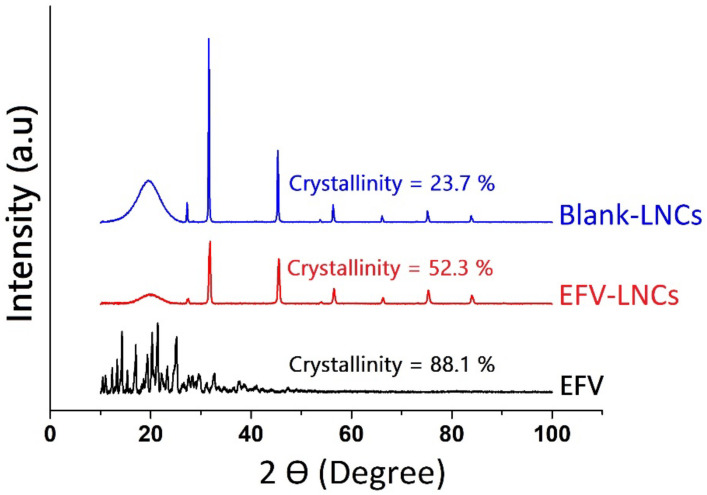
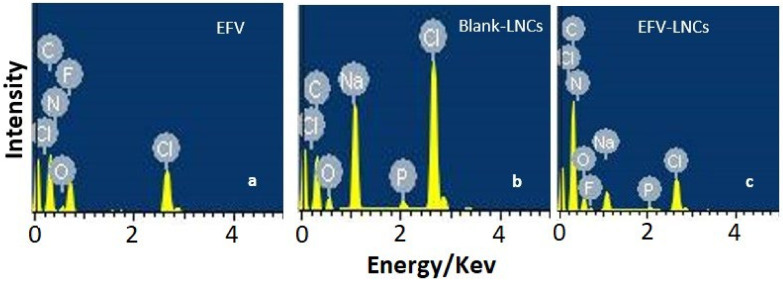
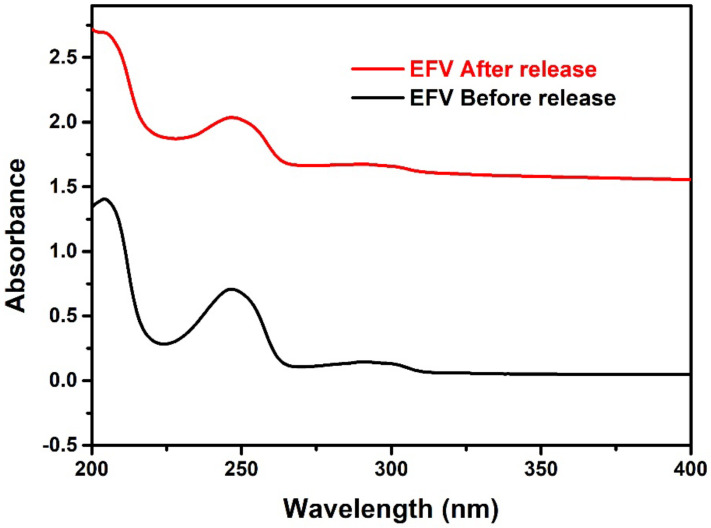
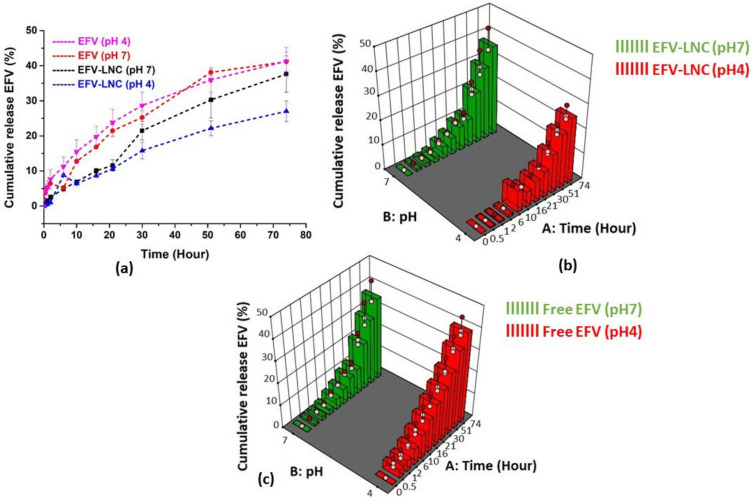
Despite their incredible contribution to fighting viral infections, antiviral viral resistance is an increasing concern and often arises due to unfavorable physicochemical and biopharmaceutical properties. To address this kind of issue, lipid nanocapsules (LNC) are developed in this study, using efavirenz (EFV) as a drug model. EFV solubility was assessed in water, Labrafac Lipophile and medium chain triglycerides oil (MCT oil). EFV turned out to be more soluble in the two latter dissolving media (solubility > 250 mg/mL); hence, given its affordability, MCT oil was used for LNC formulation. LNC were prepared using a low-energy method named phase inversion, and following a design of experiments process. This one resulted in polynomial models that predicted LNC particle size, polydispersity index and zeta potential that were, respectively, around 50 nm, below 0.2 and below −33 mV, for the optimized formulations. Once synthesized, we were able to achieve an encapsulation efficacy of 87%. On the other hand, high EFV release from the LNC carrier was obtained in neutral medium as compared to acid milieu (pH 4) with, respectively, 42 and 27% EFV release within 74 h. Other characterization techniques were applied and further supported the successful encapsulation of EFV in LNCs in an amorphous form. Stability studies revealed that the developed LNC were quite stable over the period of 28 days. Ultimately, LNCs have been demonstrated to improve the biopharmaceutical properties of EFV and could therefore be used to fight against antiviral resistance.
尽管抗病毒药物在对抗病毒感染方面做出了巨大贡献,但抗病毒耐药性问题日益受到关注,这通常是由于不良的物理化学和生物药剂学性质所致。为了解决这类问题,本研究以依法韦仑(EFV)为药物模型,开发了脂质纳米胶囊(LNC)。评估了EFV在水、亲脂性Labrafac和中链甘油三酯油(MCT油)中的溶解度。结果表明,EFV在后面两种溶解介质中的溶解度更高(溶解度>250mg/mL);因此,鉴于其价格可承受,MCT油被用于LNC制剂的制备。LNC采用一种名为相转变的低能量方法,并按照实验设计流程制备。这一过程产生了多项式模型,该模型预测优化后的制剂中LNC的粒径、多分散指数和zeta电位分别约为50nm、低于0.2和低于-33mV。合成后,我们实现了87%的包封率。另一方面,与酸性环境(pH4)相比,在中性介质中LNC载体对EFV的释放率较高,在74小时内EFV的释放率分别为42%和27%。还应用了其他表征技术,进一步支持了EFV以无定形形式成功包封在LNC中。稳定性研究表明,所开发的LNC在28天内相当稳定。最终,已证明LNC可改善EFV的生物药剂学性质,因此可用于对抗抗病毒耐药性。