Peña-Morán Omar Aristeo, Jiménez-Pérez Jesús, Cerón-Romero Litzia, Rodríguez-Aguilar Maribel
División de Ciencias de la Salud, Universidad Autónoma del Estado de Quintana Roo, Chetumal 77039, Quintana Roo, Mexico.
División Académica de Ciencias Básicas, Universidad Juárez Autónoma de Tabasco, Cunduacán 86690, Tabasco, Mexico.
Plants (Basel). 2022 Jul 8;11(14):1805. doi: 10.3390/plants11141805.
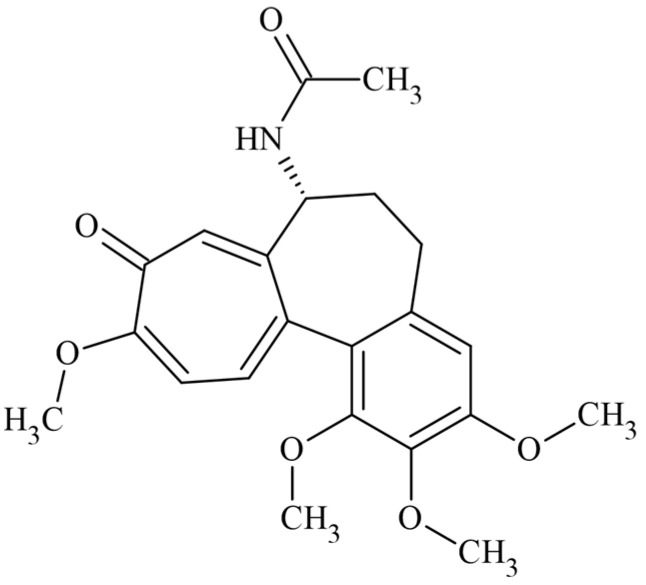
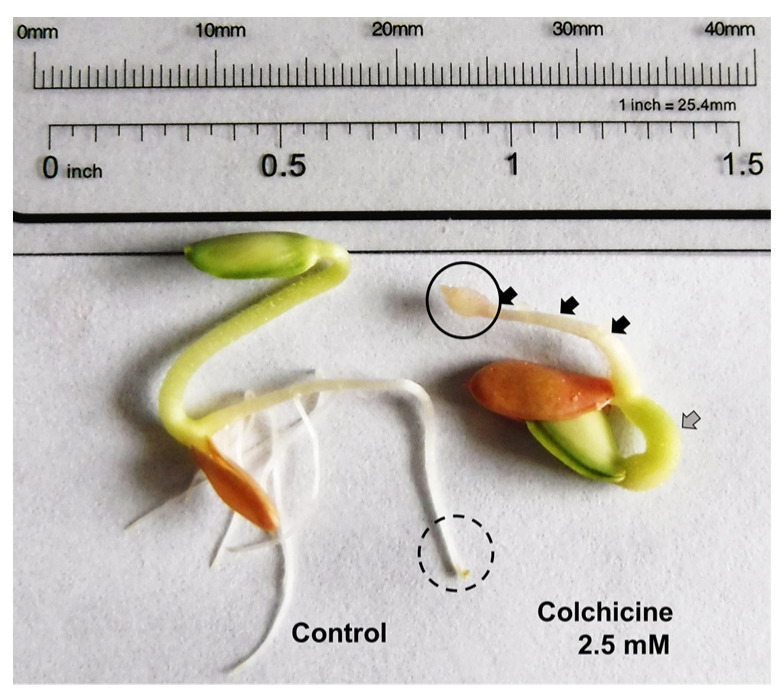
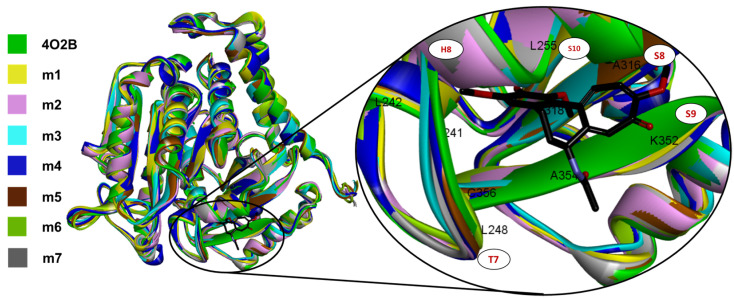
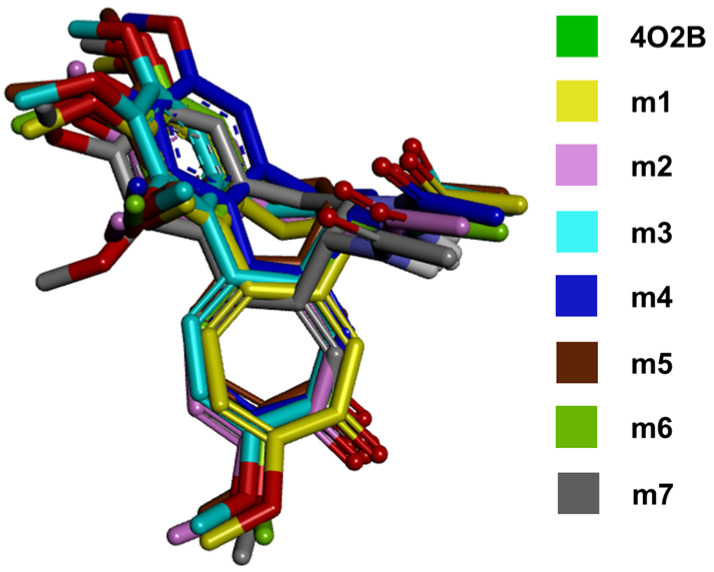
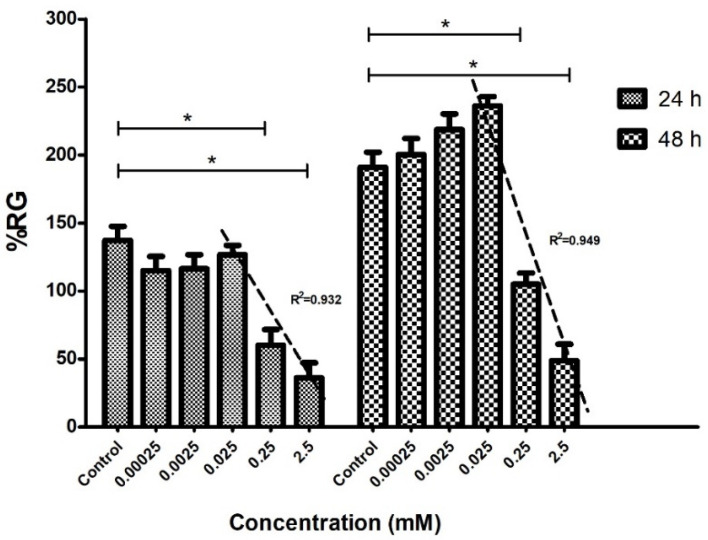
Many tests are used to determine the toxic activity of miscellaneous substances, and those that are simple, fast, and inexpensive are useful for screening compounds with applications in different fields. The root growth inhibition test is an example of acute toxicity determinations. On the other hand, colchicine has been used as a herbicide to generate polyploids in plant species finally reaching the environment; for this reason, colchicine could become a point of attention in ecotoxicology. This work established that , at the colchicine binding site (CBS) in tubulin, shares 100% similarity with humans. Colchicine was docked on seven computational models of the αβ-tubulin heterodimer, allowing us to understand a possible conformation in tubulin to trigger its antimitotic effect. Furthermore, an in vitro phytotoxicity assay of colchicine-treated cucumber radicles indicated a hormetic-type concentration-dependent response with macroscopic changes in radicles and hypocotyl. These results support the highly preserved grade of tubulins in several species, and using microtubule inhibitors could require attention in ecotoxicological issues. The root growth test could help evaluate small molecules (colchicine analogs), chiefly by CBS interactions, a known druggable site, still a target in the search for antimitotic compounds.
许多测试用于确定各种物质的毒性活性,那些简单、快速且廉价的测试对于筛选在不同领域有应用的化合物很有用。根生长抑制试验是急性毒性测定的一个例子。另一方面,秋水仙碱已被用作除草剂,最终在植物物种中产生多倍体并进入环境;因此,秋水仙碱可能成为生态毒理学中的一个关注点。这项工作表明,在微管蛋白的秋水仙碱结合位点(CBS)与人类具有100%的相似性。秋水仙碱与αβ-微管蛋白异二聚体的七个计算模型对接,使我们能够了解微管蛋白中可能触发其抗有丝分裂作用的构象。此外,秋水仙碱处理黄瓜胚根的体外植物毒性试验表明,胚根和下胚轴出现宏观变化,呈现出剂量效应型的浓度依赖性反应。这些结果支持了微管蛋白在多个物种中的高度保守性,并且在生态毒理学问题中使用微管蛋白抑制剂可能需要引起关注。根生长试验有助于评估小分子(秋水仙碱类似物),主要通过CBS相互作用,这是一个已知的可成药位点,仍然是寻找抗有丝分裂化合物的靶点。