Yan Xuan, Yao Haiyan, Luo Jun, Li Zhihua, Wei Junchao
School of Stomatology, Nanchang University, Nanchang 330006, China.
School of Chemistry, Nanchang University, Nanchang 330031, China.
Polymers (Basel). 2022 Jul 20;14(14):2940. doi: 10.3390/polym14142940.
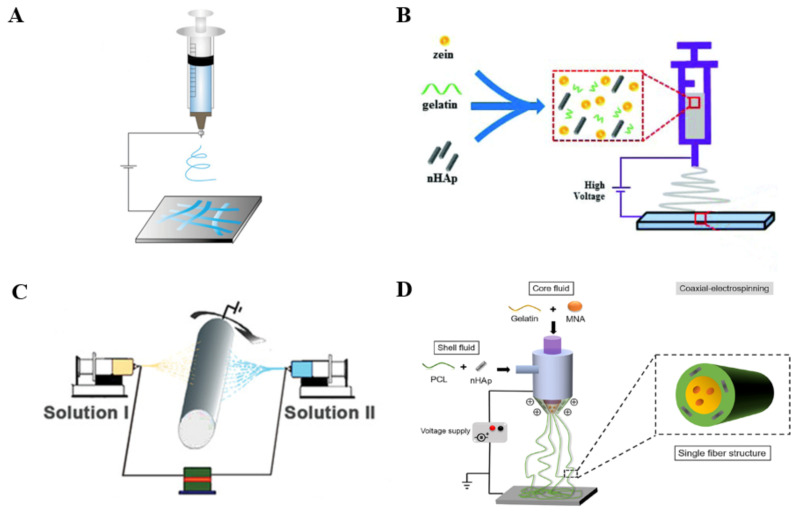
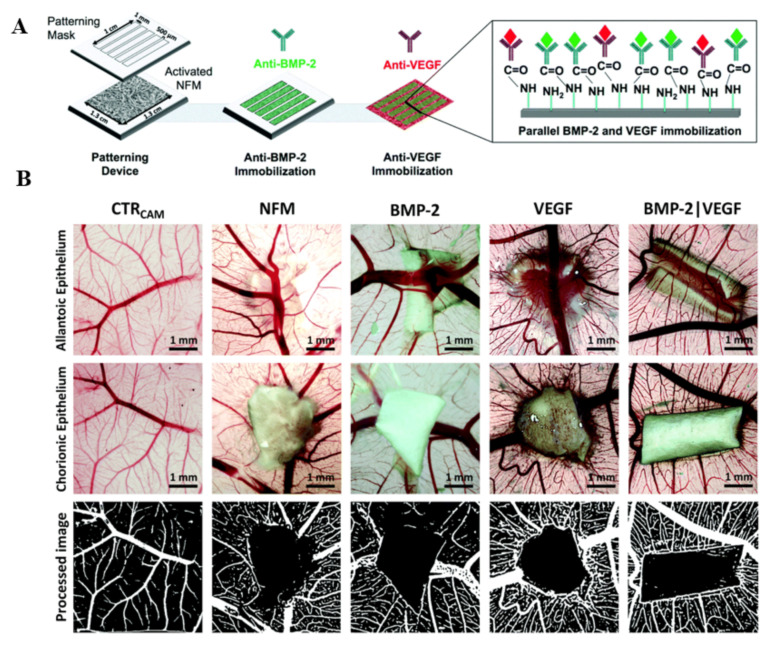
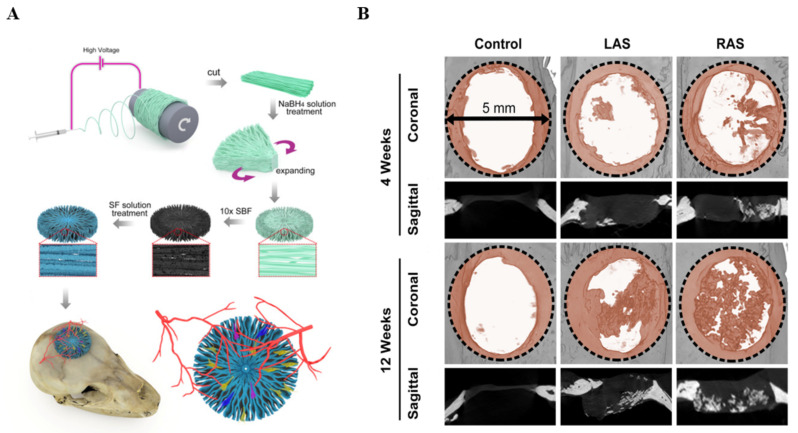
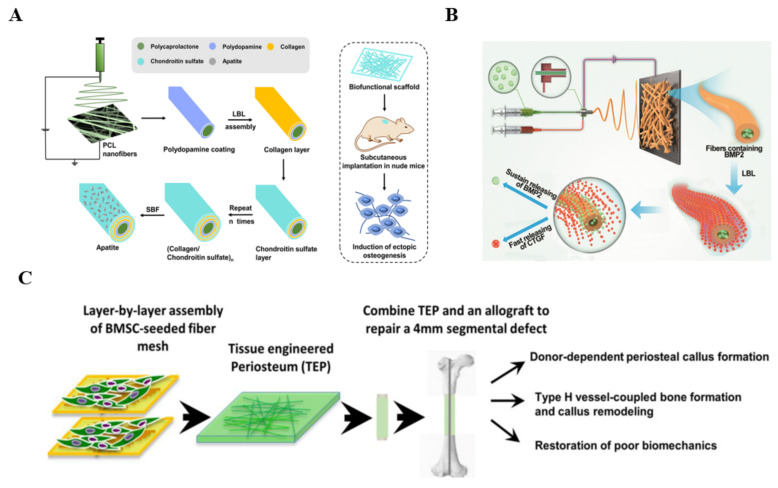
Bone-tissue engineering is an alternative treatment for bone defects with great potential in which scaffold is a critical factor to determine the effect of bone regeneration. Electrospun nanofibers are widely used as scaffolds in the biomedical field for their similarity with the structure of the extracellular matrix (ECM). Their unique characteristics are: larger surface areas, porosity and processability; these make them ideal candidates for bone-tissue engineering. This review briefly introduces bone-tissue engineering and summarizes the materials and methods for electrospining. More importantly, how to functionalize electrospun nanofibers to make them more conducive for bone regeneration is highlighted. Finally, the existing deficiencies of functionalized electrospun nanofibers for promoting osteogenesis are proposed. Such a summary can lay the foundation for the clinical practice of functionalized electrospun nanofibers.
骨组织工程是一种治疗骨缺损的替代方法,具有巨大潜力,其中支架是决定骨再生效果的关键因素。电纺纳米纤维因其与细胞外基质(ECM)结构相似而在生物医学领域被广泛用作支架。它们的独特特性包括:更大的表面积、孔隙率和可加工性;这些使其成为骨组织工程的理想候选材料。本文综述简要介绍了骨组织工程,并总结了电纺的材料和方法。更重要的是,重点介绍了如何使电纺纳米纤维功能化以使其更有利于骨再生。最后,提出了功能化电纺纳米纤维促进成骨的现有不足。这样的总结可为功能化电纺纳米纤维的临床应用奠定基础。