Department of Automation and Electronics, Faculty of Engineering, University of Rijeka, 51000 Rijeka, Croatia.
Faculty of Mathematics, Natural Sciences and Information Technologies, University of Primorska, 6000 Koper, Slovenia.
Sensors (Basel). 2022 Jul 10;22(14):5162. doi: 10.3390/s22145162.
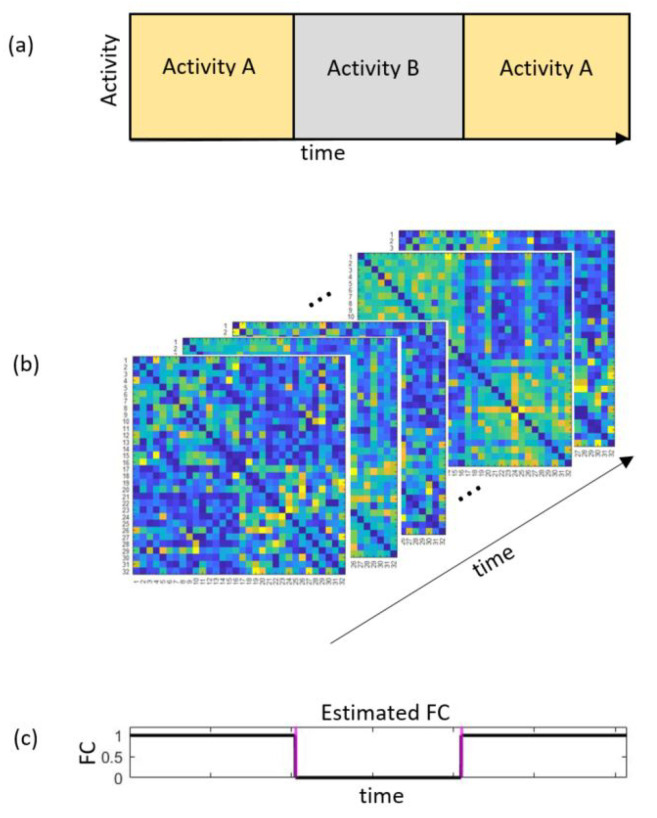
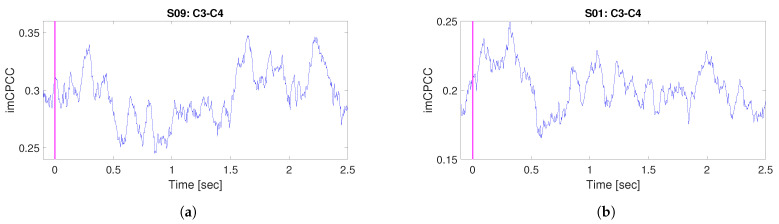
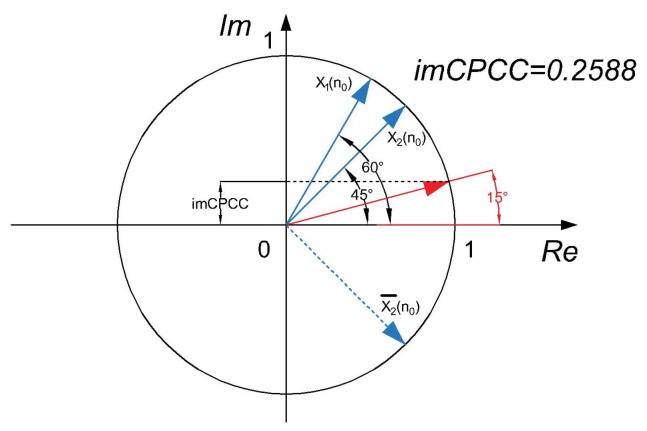
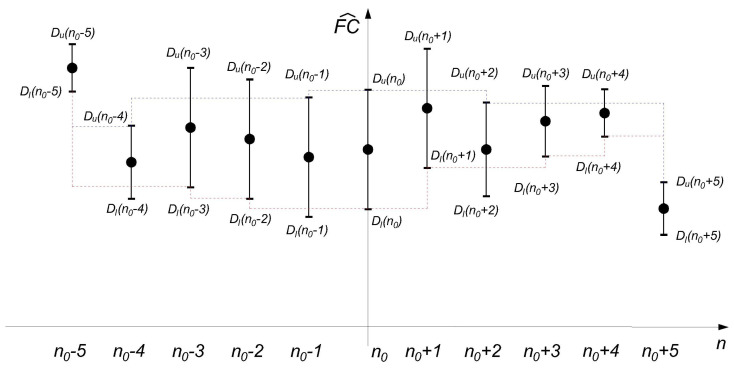
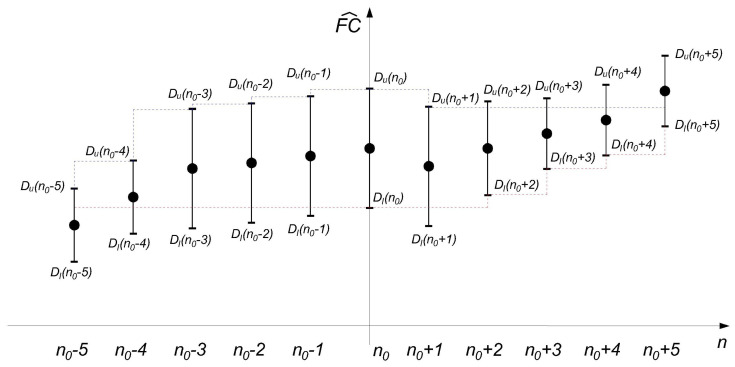
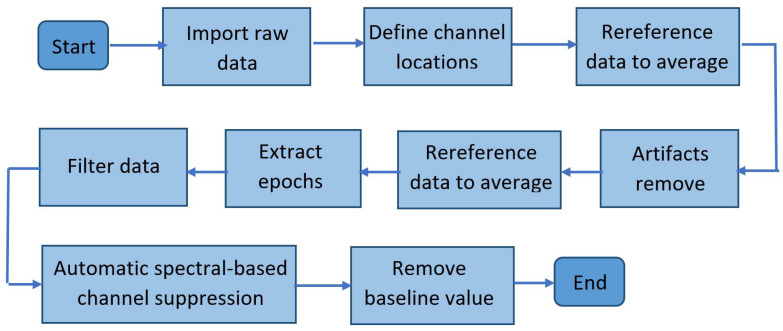
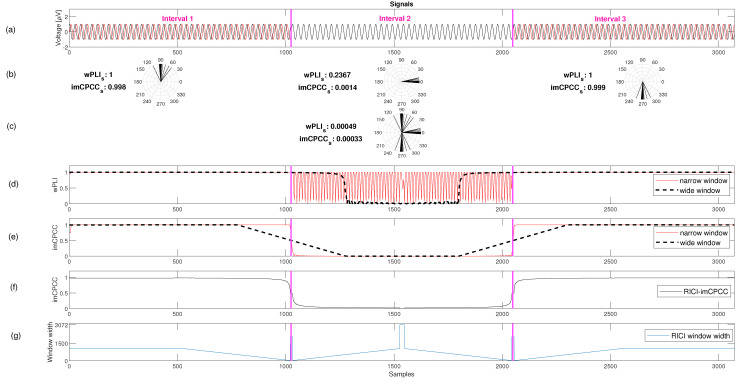
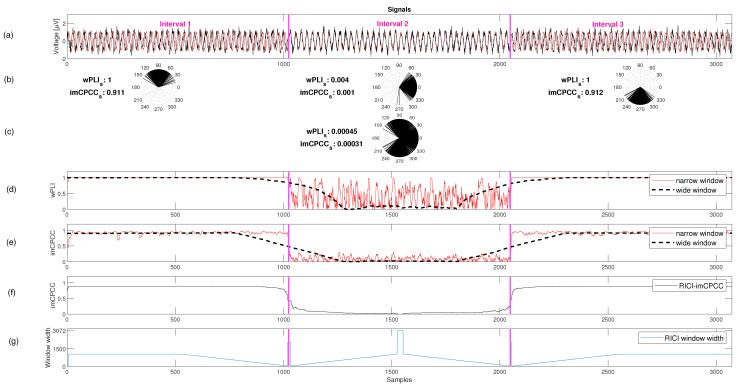
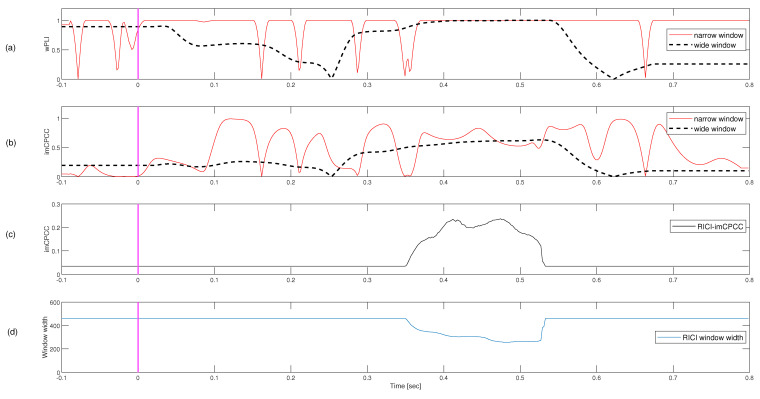
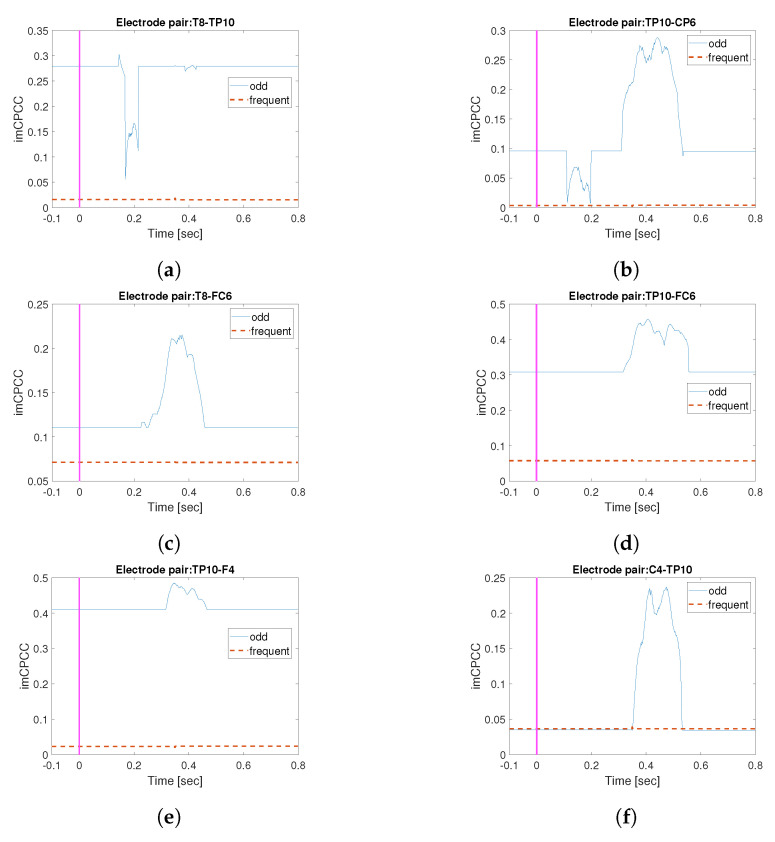
In this paper, we propose a new method to study and evaluate the time-varying brain network dynamics. The proposed method (relative intersection of confidence intervals for the imaginary component of the complex Pearson correlation coefficient) is based on an adaptive window size and the imaginary part of the complex Pearson correlation coefficient. It reduces the weaknesses of the existing method of constant sliding window analysis with narrow and wide windows. These are the low temporal precision and low reliability for short connectivity periods for wide windows, and high susceptibility to noise for narrow windows, all resulting in low estimation accuracy. The proposed method overcomes these shortcomings by dynamically adjusting the window width using the rule, which is based on the statistical properties of the area around the observed sample. In this paper, we compare the with the existing constant sliding window analysis method and describe its advantages. First, the mathematical principles are established. Then, the comparison between the existing and the proposed method using synthetic and real electroencephalography () data is presented. The results show that the proposed method has improved temporal resolution and estimation accuracy compared to the existing method and is less affected by the noise. The estimation error energy calculated for the method on synthetic signals was lower by a factor of 1.22 compared to the error of the constant sliding window analysis using narrow window size , by a factor of 2.87 compared to using wide window size , by a factor of 6.69 compared to using narrow window size , and by a factor of 4.72 compared to using wide window size . Analysis of the real signals shows the ability of the proposed method to detect a response and to detect a decrease in dynamic connectivity due to desynchronization and blockage of mu-rhythms.
在本文中,我们提出了一种新的方法来研究和评估时变脑网络动力学。所提出的方法(复皮尔逊相关系数虚部置信区间的相对交集)基于自适应窗口大小和复皮尔逊相关系数的虚部。它减少了现有固定窗口分析方法的弱点,包括窄窗口和宽窗口的时间精度低和短连接期可靠性低,以及窄窗口对噪声敏感,所有这些都会导致估计精度低。该方法通过使用基于观察样本周围统计特性的规则动态调整窗口宽度来克服这些缺点。在本文中,我们将比较现有的固定滑动窗口分析方法,并描述其优势。首先,建立了数学原理。然后,展示了使用合成和真实脑电图(EEG)数据对现有方法和提出的方法的比较。结果表明,与现有方法相比,所提出的方法具有更高的时间分辨率和估计准确性,并且受噪声的影响更小。与使用窄窗口大小的固定滑动窗口分析相比,所提出的方法在合成信号上计算的估计误差能量降低了 1.22 倍,与使用宽窗口大小的固定滑动窗口分析相比降低了 2.87 倍,与使用窄窗口大小的固定滑动窗口分析相比降低了 6.69 倍,与使用宽窗口大小的固定滑动窗口分析相比降低了 4.72 倍。对真实信号的分析表明,该方法能够检测到 响应,并能够检测到由于去同步和 mu 节律阻塞导致的动态连接性降低。