Ekezie Winifred, Awwad Samy, Krauchenberg Arja, Karara Nora, Dembiński Łukasz, Grossman Zachi, Del Torso Stefano, Dornbusch Hans Juergen, Neves Ana, Copley Sian, Mazur Artur, Hadjipanayis Adamos, Grechukha Yevgenii, Nohynek Hanna, Damnjanović Kaja, Lazić Milica, Papaevangelou Vana, Lapii Fedir, Stein-Zamir Chen, Rath Barbara
Vienna Vaccine Safety Initiative e.V., 10437 Berlin, Germany.
Department of Epidemiology and Public Health, University of Nottingham, Nottingham NG5 1PB, UK.
Vaccines (Basel). 2022 Jun 28;10(7):1038. doi: 10.3390/vaccines10071038.
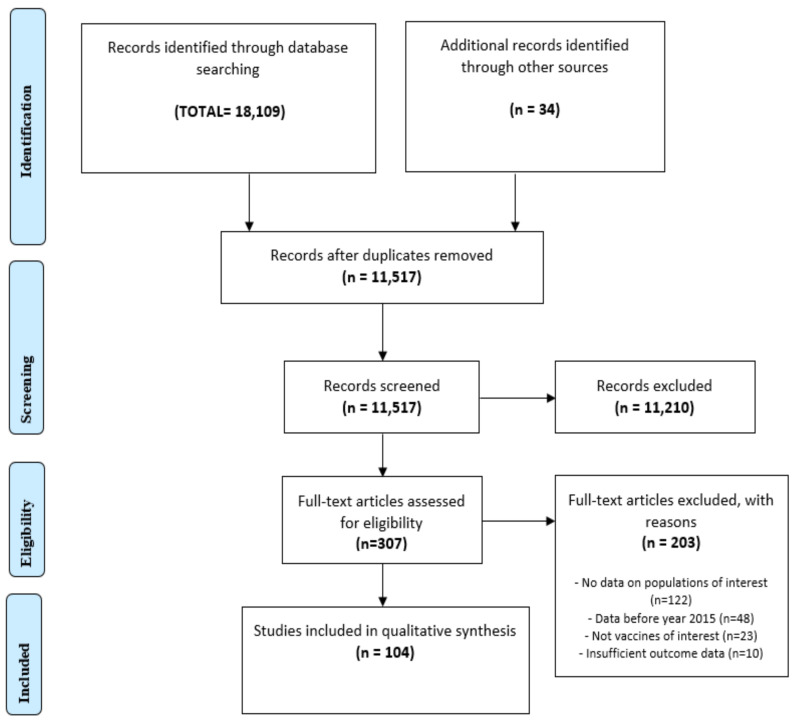
Vaccination has a significant impact on morbidity and mortality. High vaccination coverage rates are required to achieve herd protection against vaccine-preventable diseases. However, limited vaccine access and hesitancy among specific communities represent significant obstacles to this goal. This review provides an overview of critical factors associated with vaccination among disadvantaged groups in World Health Organisation European countries. Initial searches yielded 18,109 publications from four databases, and 104 studies from 19 out of 53 countries reporting 22 vaccine-preventable diseases were included. Nine groups representing the populations of interest were identified, and most of the studies focused on asylum seekers, refugees, migrants and deprived communities. Recall of previous vaccinations received was poor, and serology was conducted in some cases to confirm protection for those who received prior vaccinations. Vaccination coverage was lower among study populations compared to the general population or national average. Factors that influenced uptake, which presented differently at different population levels, included health service accessibility, language and vaccine literacy, including risk perception, disease severity and vaccination benefits. Strategies that could be implemented in vaccination policy and programs were also identified. Overall, interventions specific to target communities are vital to improving uptake. More innovative strategies need to be deployed to improve vaccination coverage among disadvantaged groups.
疫苗接种对发病率和死亡率有重大影响。要实现群体免疫以预防疫苗可预防疾病,就需要高疫苗接种覆盖率。然而,特定社区疫苗可及性有限和存在犹豫情绪是实现这一目标的重大障碍。本综述概述了世界卫生组织欧洲国家弱势群体中与疫苗接种相关的关键因素。初步检索从四个数据库中获得了18109篇文献,纳入了来自53个国家中19个国家的104项研究,这些研究报告了22种疫苗可预防疾病。确定了代表感兴趣人群的九个群体,大多数研究集中在寻求庇护者、难民、移民和贫困社区。对之前接种疫苗的回忆情况不佳,在某些情况下进行了血清学检测以确认曾接种疫苗者的免疫保护情况。与普通人群或全国平均水平相比,研究人群中的疫苗接种覆盖率较低。影响疫苗接种率的因素在不同人群层面表现各异,包括卫生服务可及性、语言和疫苗知识,其中疫苗知识包括风险认知、疾病严重程度和疫苗接种益处。还确定了可在疫苗接种政策和项目中实施的策略。总体而言,针对目标社区的干预措施对于提高疫苗接种率至关重要。需要部署更具创新性的策略来提高弱势群体的疫苗接种覆盖率。