Laboratory of Immunopharmacology, Oswaldo Cruz Institute (IOC), Oswaldo Cruz Foundation (Fiocruz), Rio de Janeiro 21040-900, Brazil.
National Institute for Science and Technology on Innovation on Neglected Diseases (INCT/IDN), Center for Technological Development in Health (CDTS), Oswaldo Cruz Foundation (Fiocruz), Rio de Janeiro 21040-900, Brazil.
Viruses. 2022 Jun 30;14(7):1458. doi: 10.3390/v14071458.
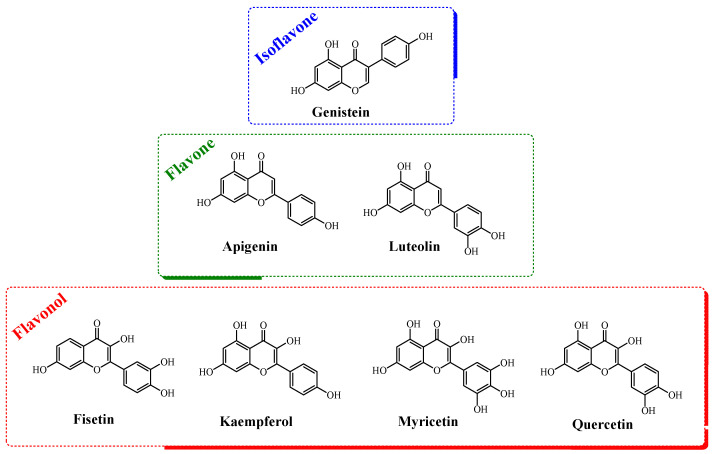
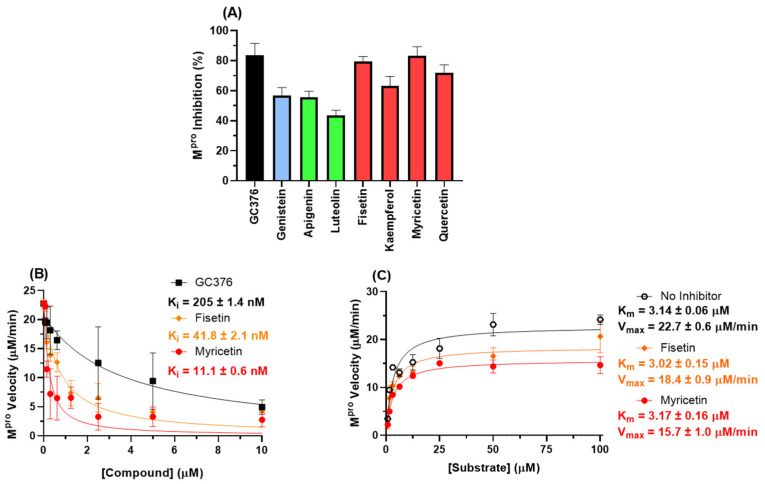
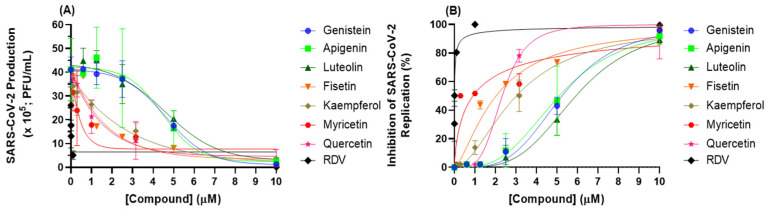
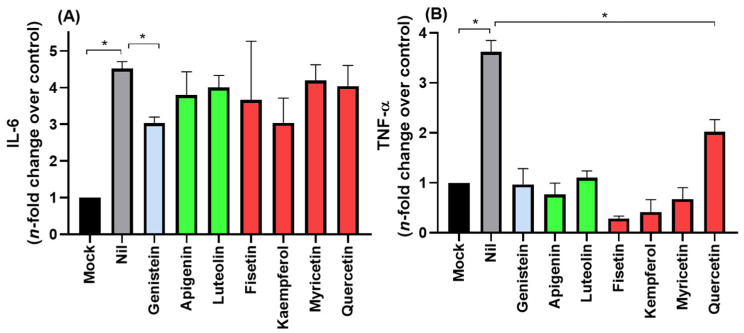
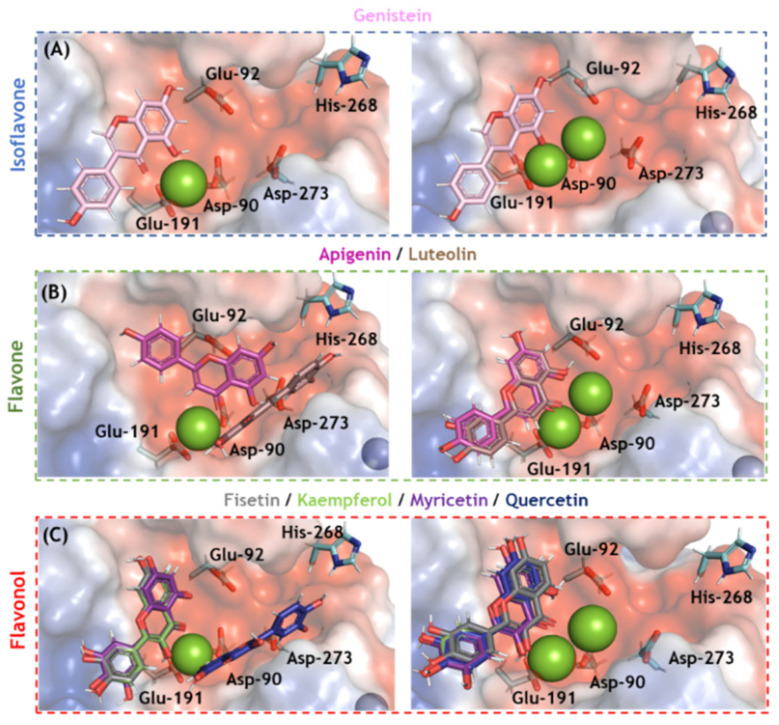
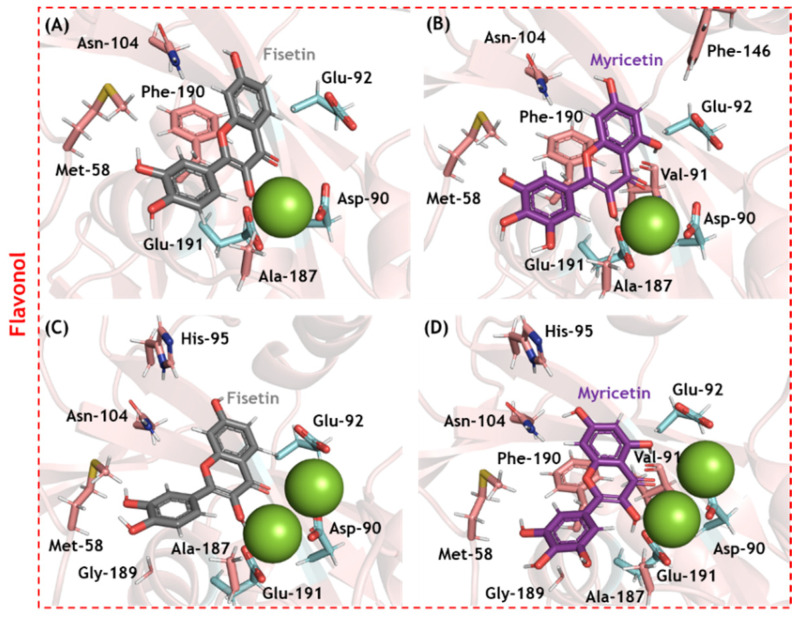
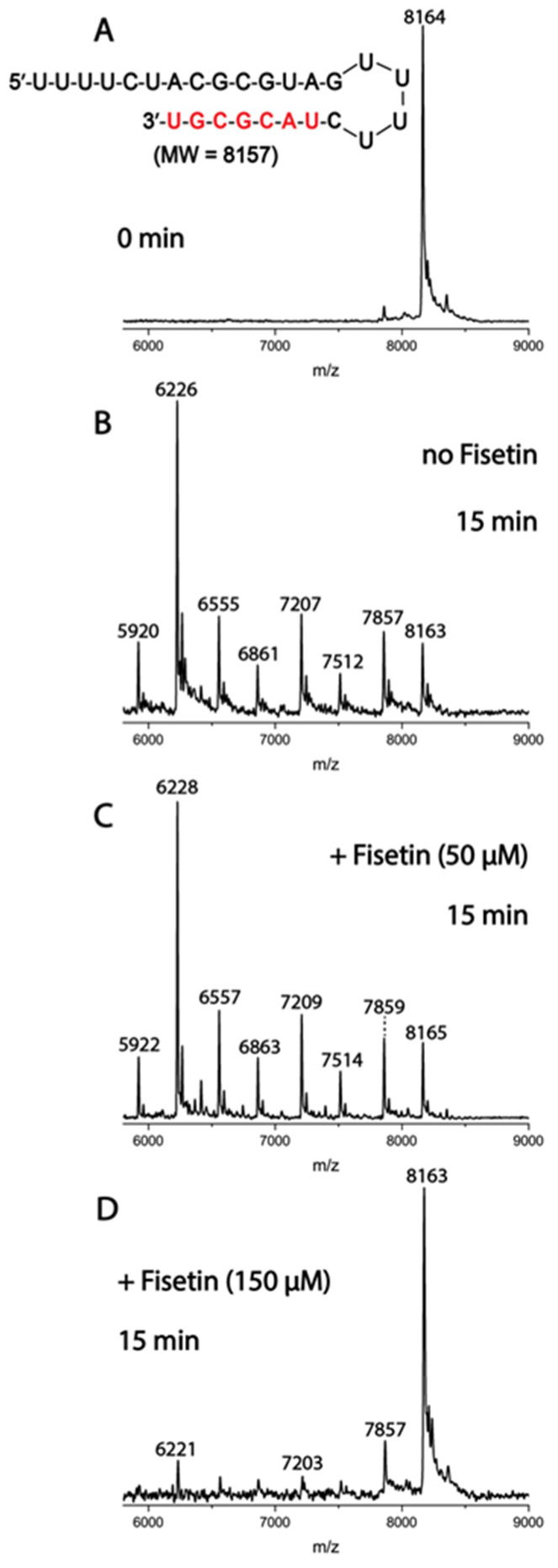
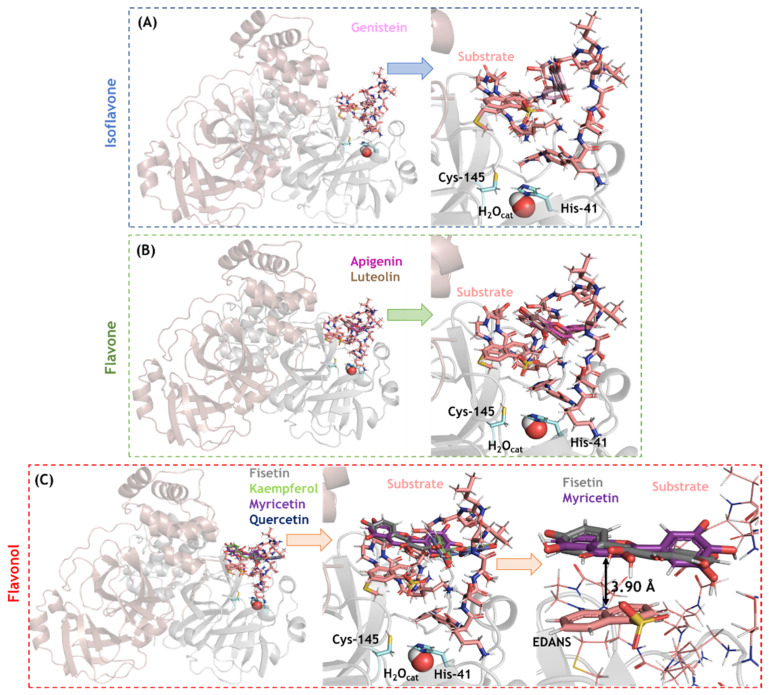
Despite the fast development of vaccines, severe acute respiratory syndrome coronavirus 2 (SARS-CoV-2) is still circulating and generating variants of concern (VoC) that escape the humoral immune response. In this context, the search for anti-SARS-CoV-2 compounds is still essential. A class of natural polyphenols known as flavonoids, frequently available in fruits and vegetables, is widely explored in the treatment of different diseases and used as a scaffold for the design of novel drugs. Therefore, herein we evaluate seven flavonoids divided into three subclasses, isoflavone (genistein), flavone (apigenin and luteolin) and flavonol (fisetin, kaempferol, myricetin, and quercetin), for COVID-19 treatment using cell-based assays and in silico calculations validated with experimental enzymatic data. The flavonols were better SARS-CoV-2 inhibitors than isoflavone and flavones. The increasing number of hydroxyl groups in ring B of the flavonols kaempferol, quercetin, and myricetin decreased the 50% effective concentration (EC) value due to their impact on the orientation of the compounds inside the target. Myricetin and fisetin appear to be preferred candidates; they are both anti-inflammatory (decreasing TNF-α levels) and inhibit SARS-CoV-2 mainly by targeting the processability of the main protease (M) in a non-competitive manner, with a potency comparable to the repurposed drug atazanavir. However, fisetin and myricetin might also be considered hits that are amenable to synthetic modification to improve their anti-SARS-CoV-2 profile by inhibiting not only M, but also the 3'-5' exonuclease (ExoN).
尽管疫苗发展迅速,但严重急性呼吸综合征冠状病毒 2(SARS-CoV-2)仍在传播,并产生逃避体液免疫反应的关注变体(VoC)。在这种情况下,寻找抗 SARS-CoV-2 化合物仍然是必不可少的。一类被称为类黄酮的天然多酚,广泛存在于水果和蔬菜中,在治疗各种疾病中得到广泛探索,并被用作设计新型药物的支架。因此,本文我们使用基于细胞的测定法和经过实验酶数据验证的计算方法,评估了分为三类的七种类黄酮,即异黄酮(染料木黄酮)、黄酮(芹菜素和木樨草素)和黄酮醇(漆黄素、山奈酚、杨梅素和槲皮素),用于治疗 COVID-19。与异黄酮和黄酮类化合物相比,黄酮醇类化合物对 SARS-CoV-2 的抑制作用更好。黄酮醇类化合物中 B 环上羟基数量的增加降低了 50%有效浓度(EC)值,因为它们影响了化合物在靶标内的取向。山奈酚、槲皮素和杨梅素似乎是更优选的候选物;它们都具有抗炎作用(降低 TNF-α 水平),并且主要通过非竞争性方式抑制主蛋白酶(M)的加工来抑制 SARS-CoV-2,其效力与重新利用的药物阿扎那韦相当。然而,漆黄素和杨梅素也可能被认为是具有合成修饰潜力的命中物,通过抑制不仅 M,还可以改善其抗 SARS-CoV-2 特性3'-5' 外切核酸酶(ExoN)。