Kouatcho Francois Djitie, Rusu Razvan Mihail Radu, Mohamadou Bachirou, Aoudou Bobga, Pop Ioan Mircea, Usturoi Marius Giorgi, Tinkeu Léonard S Ngamo
Department of Science and Technology of Organic Agriculture, Faculty of Sciences / School of Chemical Engineering and Mineral Industries, University of Ngaoundéré, Ngaoundéré, Cameroon.
Department of Management of Animal Productions, Faculty of Food and Animal Sciences, Iaşi University of Life Sciences, Iaşi, Romania.
J Adv Vet Anim Res. 2022 Jun 28;9(2):310-322. doi: 10.5455/javar.2022.i598. eCollection 2022 Jun.
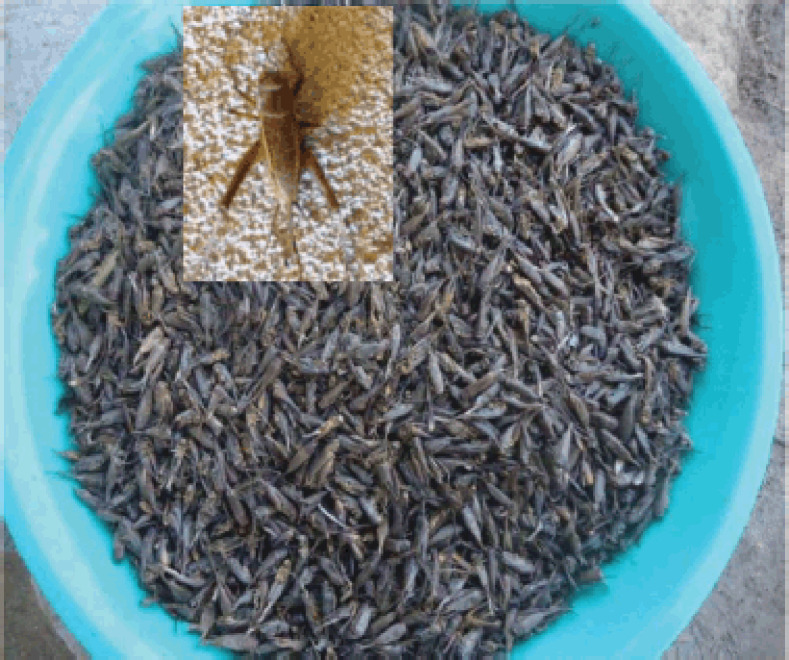
Quail production is ranked as an important alternative animal protein source in Cameroon. One of the main constraints of this production is the quality of feed, which lacks protein that is regularly supplied by fish meal. To avoid disagreements due to the constant shortage of fish meal, alternative protein sources are needed, and among them are crickets (). The goal of this study was to find out how well Japanese quails could be raised if fish meal was replaced with cricket meal.
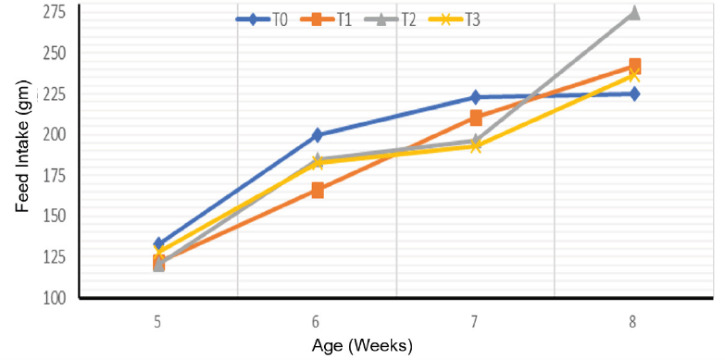
A total of 192, 4-week-old quails were divided into 12 similar sets of 8 females and 8 males. The Four experimental diets (T00, T15, T30, and T45) were all formulated based on the level (0%, 15%, 30%, and 45%, respectively) of fish meal substitution with cricket meal in the basal diet (crude protein: 20.18% and ME: 3,013.78 kcal/kg) and randomly assigned to three sets in a completely randomized design consisting of four treatments each repeated three times. Growth, carcass, and some reproduction parameters were collected. The data were analyzed using one-way analysis of variance and the Duncan test, with a significance level of 5%.
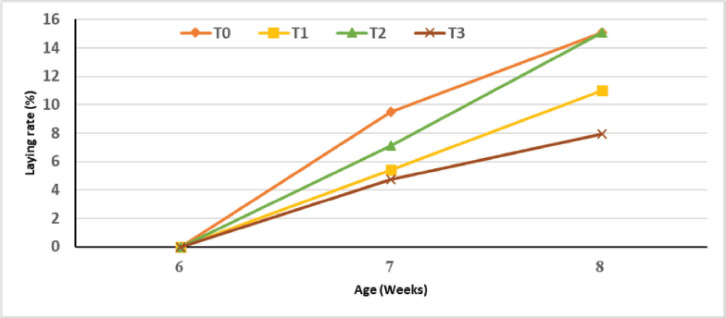
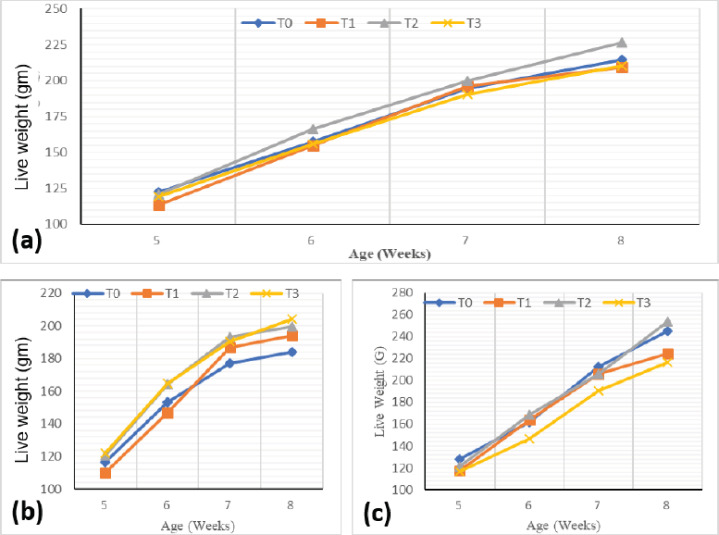
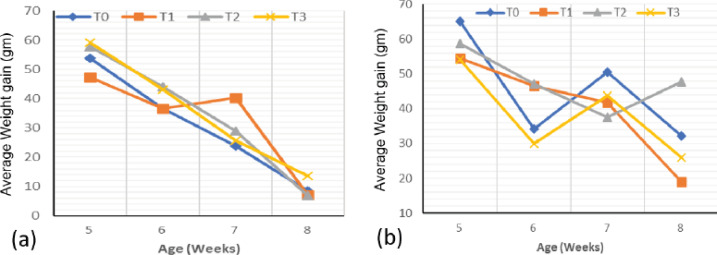
Cricket meal diets increased body weight in males (204.32 ± 5.69 gm for T45) and regardless of the sex (226.72 ± 29.45 gm for T30) compared to 184.17 ± 3.11 gm and 214.55 ± 32.77 gm for the control group, respectively. In females, substitution at 30% increased body weight (253.80 ± 6.48 gm), while 45% induced a reduction (216.67 ± 6.49 gm) when compared to the control group value (244.92 ± 6.07 gm). Carcass yield and the proportion of different parts were not significantly affected by the experimental diets. Liver proportions were significantly higher at 15% and 35% cricket meal incorporation compared to 45%. First songs and egg laying were recorded at 7 weeks with T15, which also led to improved egg laying performance compared to the other treatments. Ovaries were poorly developed in the T45 females compared to the other treatments.
Cricket flour might be a good candidate as a locally available protein source to substitute fish meal in the Japanese quail's diet at the finisher and reproductive stages, and the level of 30% seems to be more efficient.
鹌鹑养殖在喀麦隆被视为一种重要的替代性动物蛋白来源。这种养殖方式的主要制约因素之一是饲料质量,饲料缺乏由鱼粉定期提供的蛋白质。为避免因鱼粉持续短缺而产生的分歧,需要替代蛋白质来源,其中包括蟋蟀粉。本研究的目的是了解用蟋蟀粉替代鱼粉时,日本鹌鹑的养殖效果如何。
总共192只4周龄的鹌鹑被分成12组,每组8只雌性和8只雄性。四种实验日粮(T00、T15、T30和T45)均根据基础日粮(粗蛋白:20.18%,代谢能:3013.78千卡/千克)中用蟋蟀粉替代鱼粉的水平(分别为0%、15%、30%和45%)配制而成,并在完全随机设计中随机分配到三组,每组包含四种处理,每种处理重复三次。收集生长、胴体和一些繁殖参数。数据采用单因素方差分析和邓肯检验进行分析,显著性水平为5%。
与对照组分别为184.17±3.11克和214.55±32.77克相比,蟋蟀粉日粮使雄性鹌鹑体重增加(T45组为204.32±5.69克),且无论性别如何(T30组为226.72±29.45克)。在雌性鹌鹑中,30%的替代率使体重增加(253.80±6.48克),而45%的替代率则导致体重下降(216.67±6.49克),与对照组体重(244.92±6.07克)相比。实验日粮对胴体产量和不同部位的比例没有显著影响。与45%相比,掺入15%和35%蟋蟀粉时肝脏比例显著更高。T15组在7周龄时记录到首次鸣叫和产蛋,与其他处理相比,其产蛋性能也有所提高。与其他处理相比,T45组雌性鹌鹑的卵巢发育不良。
蟋蟀粉可能是一种很好的候选本地可用蛋白质来源,可在日本鹌鹑育肥期和繁殖期的日粮中替代鱼粉,30%的替代水平似乎更有效。